

Global Markets React After Tensions Ease
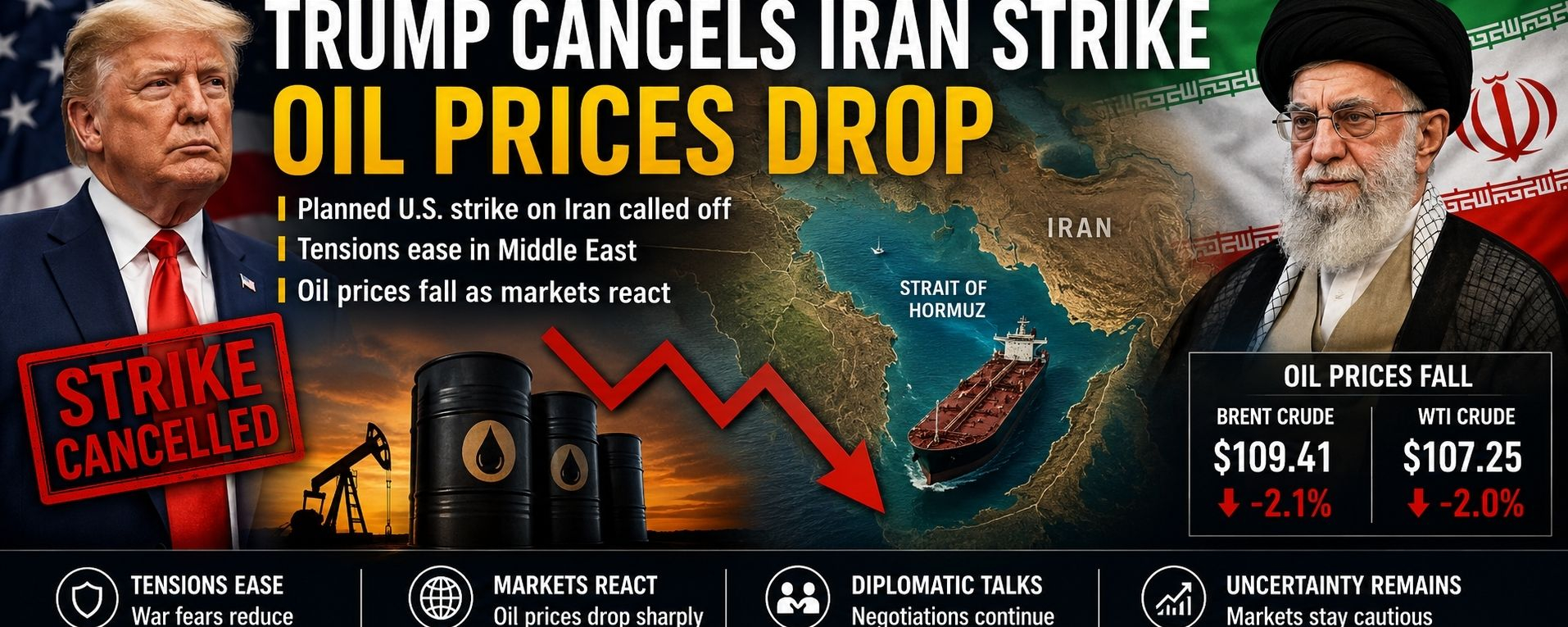
Oil prices fell sharply after U.S. President Donald Trump decided to cancel a planned military strike on Iran, easing fears of an immediate conflict in the Middle East. The announcement came at a time when global markets were already under pressure from rising geopolitical tensions and concerns over oil supply disruptions.
The sudden change in direction surprised investors and energy traders around the world. For days, markets had been preparing for the possibility of a direct military confrontation that could affect global oil shipments and send fuel prices even higher.
Instead, Trump’s decision created temporary relief across financial markets, causing crude oil prices to drop within hours.
Trump Pulls Back From Military Action
According to international reports, the United States had been preparing for a possible strike on Iranian targets before Trump decided to pause the operation. Diplomatic communication between several countries reportedly helped slow the situation before it escalated further.
Trump later indicated that there was still a chance for negotiations and that he wanted to avoid a larger regional conflict if diplomacy remained possible.
Even though the strike was canceled, military forces in the region remain on alert. Officials have made it clear that the situation could change quickly if tensions rise again.
Iran also responded cautiously, warning that any future military action would be met with a strong response while still signaling openness to continued discussions.
Why Oil Prices Fell So Quickly
Oil prices reacted immediately because traders believed a military conflict involving Iran could threaten global energy supplies.
The biggest concern was the Strait of Hormuz, one of the world’s most important shipping routes for oil exports. A large portion of global crude oil passes through this narrow waterway every day. Any disruption there could create serious supply problems for countries that rely heavily on imported energy.
When news spread that the planned strike had been canceled, investors began pulling money out of panic-driven oil trades. As fears of immediate war faded, crude prices moved lower.
Brent crude and U.S. oil futures both recorded noticeable declines after the announcement.
The Middle East Still Holds the Power to Move Markets
The situation once again showed how sensitive global markets are to events in the Middle East.
Even rumors of military escalation in the region can quickly affect oil prices, shipping costs, stock markets, and inflation worldwide. Energy traders closely monitor political developments involving Iran because the country sits near critical international trade routes.
In recent weeks, rising tensions had already added a “war premium” to oil prices. Investors feared that attacks on oil facilities, shipping lanes, or military assets could reduce global supply.
Trump’s decision temporarily removed some of that pressure, but analysts say the risk has not disappeared completely.
Investors Remain Careful
Although oil prices dropped, financial markets are still moving cautiously.
Investors understand that the situation remains unstable and could shift again with a single political statement or military incident. Traders are continuing to watch diplomatic talks, naval activity, and official comments from both Washington and Tehran.
Many analysts believe the market reaction reflects short-term relief rather than a long-term solution.
Energy companies and shipping firms are also remaining careful because any future escalation near key oil routes could quickly reverse the current decline in prices.
Diplomacy Now Becomes the Main Focus
Following the cancellation of the strike, attention has shifted toward diplomatic efforts aimed at reducing tensions between the two countries.
International leaders are reportedly encouraging both sides to continue discussions rather than move toward direct confrontation. The goal is to prevent instability that could damage global trade, energy markets, and regional security.
At the same time, neither side appears willing to fully step back. Military readiness remains high, and political rhetoric continues to stay strong.
This creates an uncertain environment where diplomacy and military pressure are happening at the same time.
What Could Happen Next
The next few days may be critical for both global politics and energy markets.
If negotiations continue successfully, oil prices could stabilize further and investor confidence may improve. However, if talks fail or tensions rise again, markets could quickly return to panic mode.
For now, Trump’s decision has provided temporary relief to global markets, but the overall situation remains fragile.
The sharp reaction in oil prices proves how deeply connected geopolitics and global energy markets have become. A single decision involving the Middle East can still impact economies, businesses, and consumers across the world within minutes.