
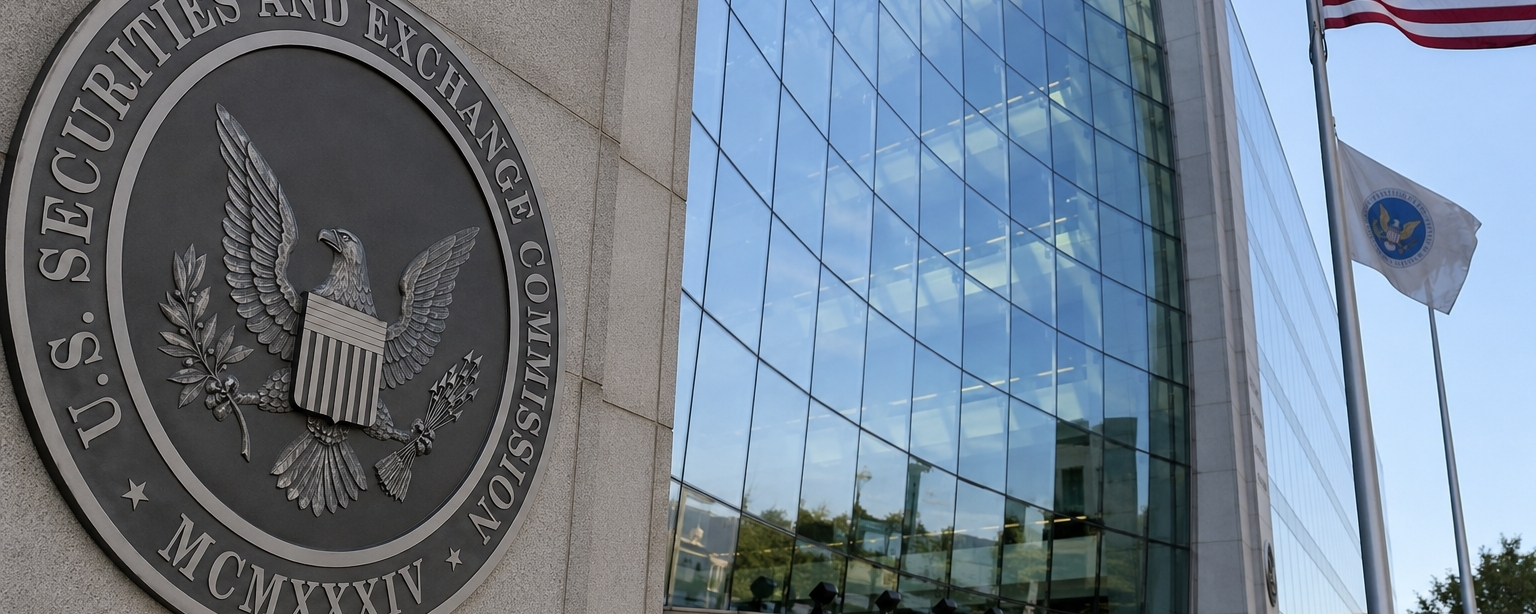
The U.S. Securities and Exchange Commission is reportedly preparing to introduce a major regulatory exemption that could accelerate the growth of tokenized stocks across the digital asset industry. According to multiple reports circulating within financial and crypto markets, the exemption could be announced as early as this week, potentially opening the door for blockchain-based trading of traditional equities under a more defined legal framework.
The development is already drawing significant attention from both Wall Street firms and crypto infrastructure companies, many of which have spent years exploring how tokenization could modernize capital markets.
Tokenized stocks are blockchain-based representations of publicly traded shares. Instead of owning a traditional stock certificate through a brokerage alone, investors hold digital tokens that mirror the value of real-world equities. These assets can potentially trade around the clock, settle faster than conventional markets, and integrate directly with decentralized finance platforms.
For years, regulatory uncertainty in the United States has limited widespread adoption. Several firms attempted to launch tokenized equity products during previous crypto market cycles, but concerns around securities laws, custody requirements, and investor protections prevented the sector from scaling meaningfully.
The anticipated SEC exemption could change that dynamic dramatically.
Market analysts believe the proposal may provide temporary or conditional relief allowing approved companies to issue and trade tokenized securities without facing the same regulatory barriers that previously stalled innovation. While the exact details remain unclear, industry observers expect strict compliance requirements involving custody, disclosure standards, anti-money laundering controls, and investor verification.
If implemented, the exemption could become one of the most important regulatory developments for the tokenization industry since the approval of spot Bitcoin ETFs.
Several major crypto firms and fintech companies have already positioned themselves for the potential shift. Platforms focused on real-world asset tokenization have expanded aggressively throughout the past year, betting that regulators would eventually create clearer pathways for compliant blockchain-based securities markets.
The move also reflects a broader trend emerging across global finance. Financial institutions increasingly view tokenization as a long-term infrastructure upgrade rather than a speculative crypto experiment. Banks, asset managers, and exchanges are exploring how blockchain technology can reduce settlement delays, improve transparency, and lower operational costs in traditional markets.
Supporters argue that tokenized stocks could eventually make investing more accessible worldwide by enabling fractional ownership and faster cross-border trading. Critics, however, continue to warn about liquidity fragmentation, cybersecurity risks, and the possibility of regulatory loopholes if oversight remains inconsistent.
The timing of the exemption is particularly notable as competition between the United States, Europe, the Middle East, and parts of Asia intensifies around digital asset innovation. Jurisdictions including Singapore, Hong Kong, and the United Arab Emirates have already moved more aggressively in creating frameworks for tokenized financial products.
A formal SEC exemption would signal that the United States is becoming more willing to integrate blockchain infrastructure into mainstream financial markets rather than keeping the sector at regulatory arm’s length.
Crypto investors are now watching closely for an official announcement, as the decision could influence not only tokenized equities but the broader future of real-world assets on-chain. Many analysts believe the outcome may shape how traditional finance and decentralized technology converge over the next decade.
#Ecoprotocol$76.7MHack #SECTokenizedStockExemption #RussiaDumaCryptoMonitoringBill #SpaceXEyes2TIPO #TokenizedRWAReach$31.4B