

OpenLedger isn’t just positioning itself as “AI on-chain”it’s attempting to redefine where value accrues in the AI stack. Most traders are still anchored to the idea that tokens capture value from usage volume. OpenLedger flips that assumption by targeting training data and model contribution flows as the primary economic layer. That’s a different game entirely. If the protocol succeeds, the highest-value actors won’t be end users or even application developers it will be data providers and model optimizers. That shifts how capital should be tracked: not through TVL, but through data ingress velocity and model update frequency.

The decision to align with Ethereum standards isn’t about compatibility it’s about liquidity parasitism. OpenLedger doesn’t need to bootstrap a native ecosystem from scratch; it can tap directly into existing wallet infrastructure, L2 throughput, and smart contract composability. In practice, that means capital can rotate into OpenLedger-native primitives without friction, especially from idle liquidity sitting in L2 yield strategies. Watch for bridging patterns: if OpenLedger contracts begin attracting stablecoin flows during low-volatility periods, it’s a signal that traders are treating AI-model yield as an alternative to DeFi carry.
What’s underappreciated is how “on-chain model training” changes gas economics. Training is not inference it’s iterative, state-heavy, and expensive. If OpenLedger truly executes this on-chain, it creates a predictable demand sink for blockspace. That’s structurally different from NFT mint spikes or memecoin bursts. It’s sustained, algorithmic demand. For traders, this matters because it creates a baseline fee floor. If OpenLedger usage scales, you’ll see a divergence between chains optimized for burst throughput and those capable of handling persistent computational load. That divergence becomes tradable at the L1/L2 token level.

There’s also a hidden arbitrage layer forming between off-chain AI and on-chain AI systems. Today, most AI value accrues off-chain in closed systems. OpenLedger introduces a pricing surface for models and agents that can be directly observed and traded against. If a model deployed on OpenLedger underperforms relative to its off-chain equivalent, you get a measurable inefficiency. That opens the door for strategies where participants deploy slightly improved models purely to capture spread similar to how MEV searchers exploit price discrepancies. The difference is that here, the “edge” is model quality, not latency.
Token incentives in this system won’t behave like typical emissions schedules. If rewards are tied to data contribution or model performance, you’re effectively creating a market where alpha itself is tokenized. That has a reflexive effect: better participants earn more tokens, which they can reinvest into better infrastructure or data acquisition, widening the gap. This leads to centralization pressure not at the validator level, but at the intelligence layer. For traders, the implication is clear: early distribution metrics will be misleading. You need to track concentration of high-performing contributors, not just token holder distribution.
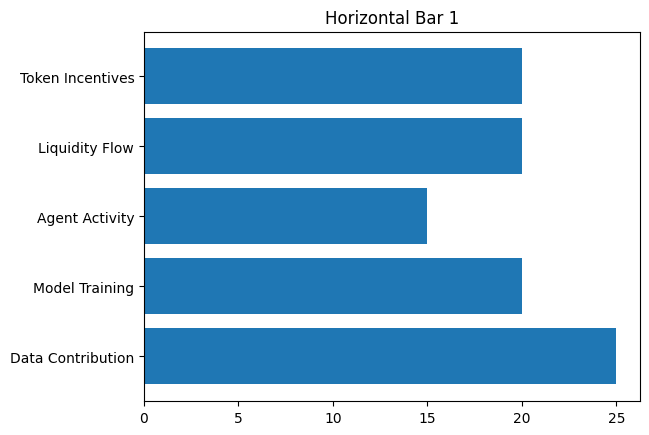
Another angle most are missing is agent deployment as a capital allocator. If OpenLedger agents can operate autonomously on-chain, they become participants in DeFi, not just tools. That means they can provide liquidity, execute arbitrage, or rebalance portfolios. Now imagine multiple competing agents, each trained on different datasets, interacting in the same liquidity pools. You’re no longer dealing with human-driven flows you’re dealing with model-driven reflexivity. Liquidity conditions could change faster and more systematically than in traditional DeFi, because agents don’t hesitate or second-guess.
From a market structure perspective, OpenLedger introduces a new category of “productive assets.” In DeFi, capital is either idle (sitting in wallets) or semi-productive (earning yield through lending or LPing). Here, models and data become productive assets that can generate continuous returns. That changes how capital rotation works. Instead of cycling between narratives (DeFi → NFTs → memecoins), capital may start allocating based on computational productivity. If a model consistently generates returns, it becomes a magnet for capital, similar to how high-yield vaults attract deposits.
There’s also a risk vector that isn’t being priced in: model failure cascades. If multiple agents rely on similar training data or architectures, a shared flaw could propagate across the system. In trading terms, that’s correlation risk at the intelligence layer. If a widely used model starts making suboptimal decisions, you could see synchronized liquidity withdrawals or mispriced trades. This is مشابه to oracle failures, but harder to detect because the failure isn’t a single data point it’s embedded in decision logic.

Finally, the real signal to watch isn’t announcements or partnerships it’s on-chain behavior under stress. When markets turn risk-off, do participants continue funding model training? Do agents keep deploying capital, or do they retreat to stable positions? If OpenLedger maintains activity during drawdowns, it means the system has intrinsic value beyond speculation. If activity collapses, then it’s just another narrative layer riding market sentiment.
Right now, OpenLedger sits at the intersection of two capital flows: speculative crypto liquidity and the massive, still off-chain AI economy. The project’s success depends on whether it can convert intelligence into a yield-bearing primitive that traders actually trust. If it does, it won’t just be another chain it’ll be a new venue where alpha itself is traded, priced, and compounded.
