
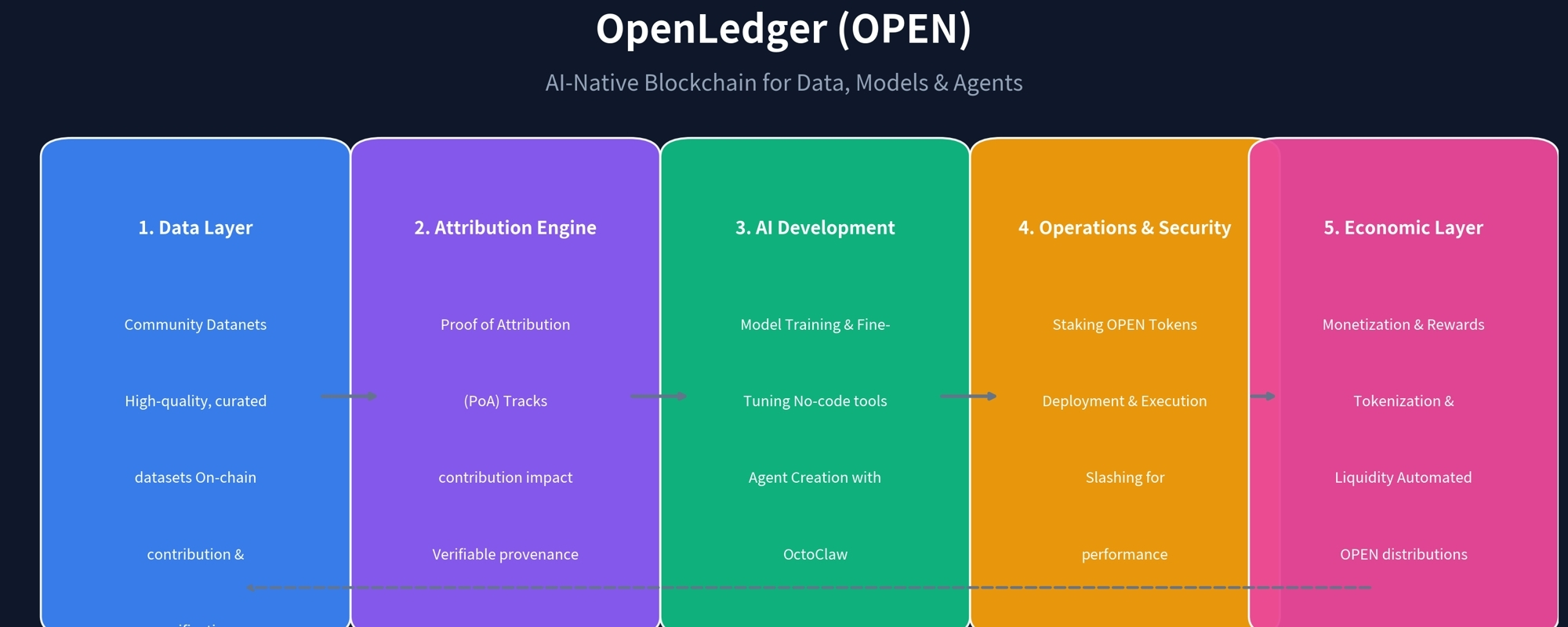
I've been following blockchain projects that tackle real problems in emerging tech, and OpenLedger stands out for its focused approach to making data, models, and AI agents actually ownable and rewarding. In a world where massive AI systems often train on vast datasets without clear credit or compensation to contributors, this project tries to change that dynamic through on-chain transparency and incentives.
What draws me in is how OpenLedger builds an EVM-compatible environment specifically tuned for AI workloads. Since its mainnet launch in November 2025, the team has emphasized practical tools over hype. You can see this in features like Datanets — community-driven networks where people contribute, curate, and refine datasets for specialized models. These aren't just storage; they're collaborative spaces designed for high-quality, domain-focused data that powers training and fine-tuning.
At the heart of it is their Proof of Attribution system. It tracks how individual data points influence model outputs, creating verifiable records that enable automatic, fair rewards in OPEN tokens. This feels like a meaningful step toward "Payable AI," where creators and contributors can monetize their work without relying on centralized gatekeepers. It's not abstract — it's baked into the protocol for models, agents, and interactions.
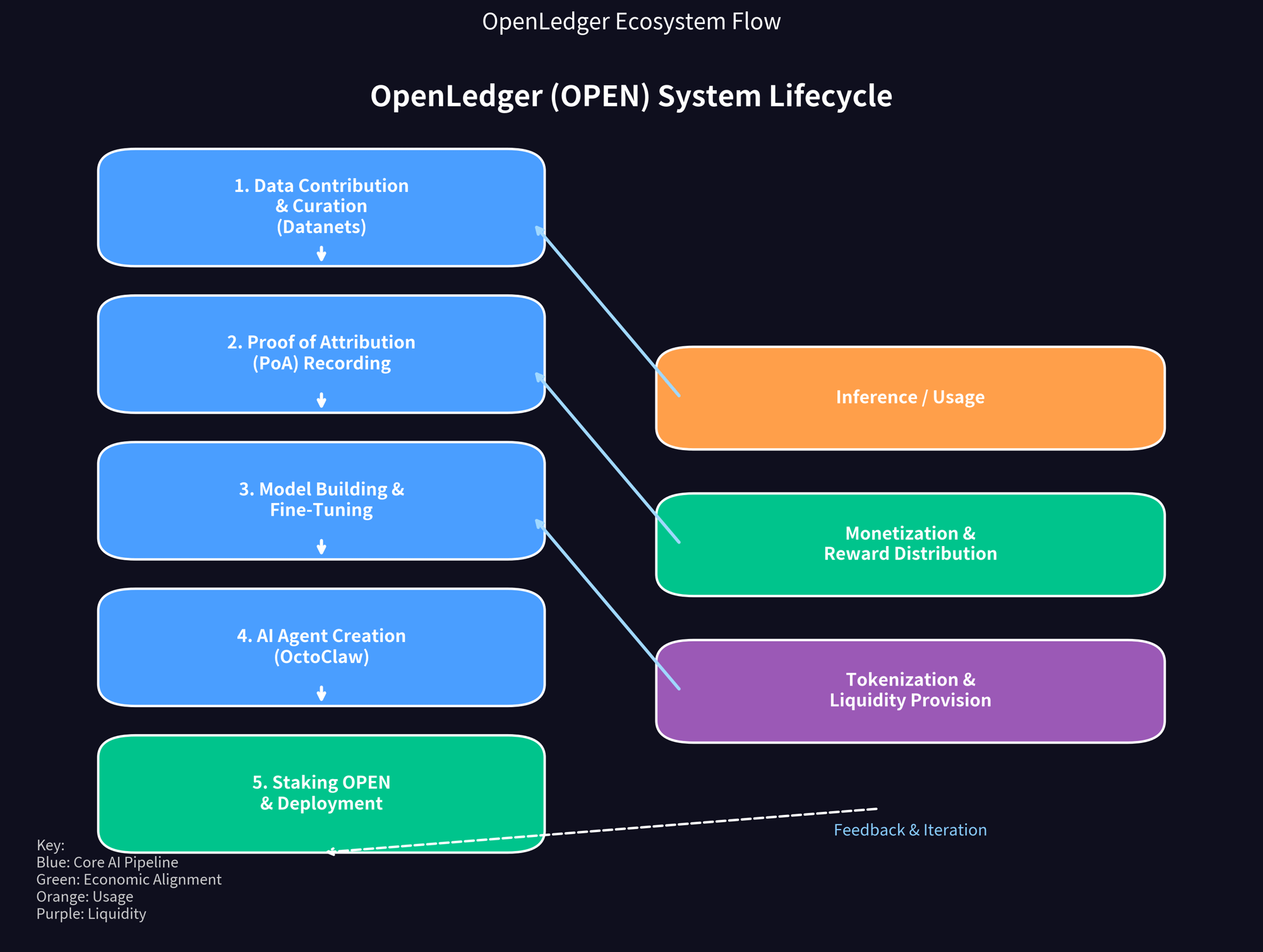
Staking adds another layer of alignment. To run AI agents or participate in key network functions, users stake OPEN, with the potential for slashing if performance falls short. This helps ensure reliability in an ecosystem where agents handle real tasks. I've noticed it encourages thoughtful participation rather than pure speculation, tying token utility directly to network quality and governance.
One tool that caught my attention recently is OctoClaw, now live for building, automating, and executing AI agents in real time. It lowers the barrier for developers and enthusiasts to experiment with on-chain intelligence, whether for workflows, data tasks, or more complex automations. Combined with the broader ecosystem — including model marketplaces and liquidity mechanisms — it creates pathways to turn static AI assets into composable, tradable ones.
Looking at some numbers that stood out to me:
Recent 30-day protocol fees reached around $57,000–$58,000, with daily figures hovering near $2,100. These come mainly from AI credit purchases and datanet creation paid in OPEN — early signals of actual paid usage rather than just test activity.
Staking levels remain modest relative to the overall market cap, suggesting significant headroom for growth as more agents and participants lock tokens for operations and security.
Circulating supply sits around 215–220 million out of a 1 billion total, with the token trading in the $0.20–$0.22 range recently and a market cap near $44–46 million. This structure supports gradual utility-driven demand as features mature.
Trading volumes have shown strong liquidity on major exchanges, often reflecting sustained interest in the AI-blockchain narrative.
Post-mainnet indicators, including tool releases like OctoClaw and ongoing datanet activity, point to a shift from earlier testnet engagement (which saw substantial transactions) toward live ecosystem building.
What I appreciate is the project's measured progress. Backed by solid investors and focused on verifiable attribution plus staking incentives, OpenLedger seems positioned to capture incremental adoption in decentralized AI. Of course, the space is competitive, and success will depend on growing real usage in datanets, agent deployments, and developer integration. Low current staking and traditional TVL highlight that the focus remains on AI-specific flows, which could evolve positively with time.
Reflecting on the Potential
Spending time with the details, OpenLedger feels like one of the more thoughtful attempts to bridge AI's data hunger with blockchain's strengths in ownership and incentives. The combination of Datanets, Proof of Attribution, agent staking, and tools like OctoClaw offers clear ways for participants to engage and benefit.
As metrics around fees, staking, and on-chain activity develop further, they'll reveal how well the vision translates into everyday usage. For anyone interested in AI infrastructure or decentralized economies, it's worth watching how OPEN's ecosystem unfolds. The journey is early, but the foundations look promising.
