
Most people still misunderstand why so many Play to Earn ecosystems collapsed after their initial hype cycle.The problem was never gaming itself. The problem was that many projects treated players like temporary liquidity instead of long term ecosystem participants.Rewards became inflationary, user growth slowed, token emissions exploded, and entire in game economies started depending on constant new entrants just to survive.
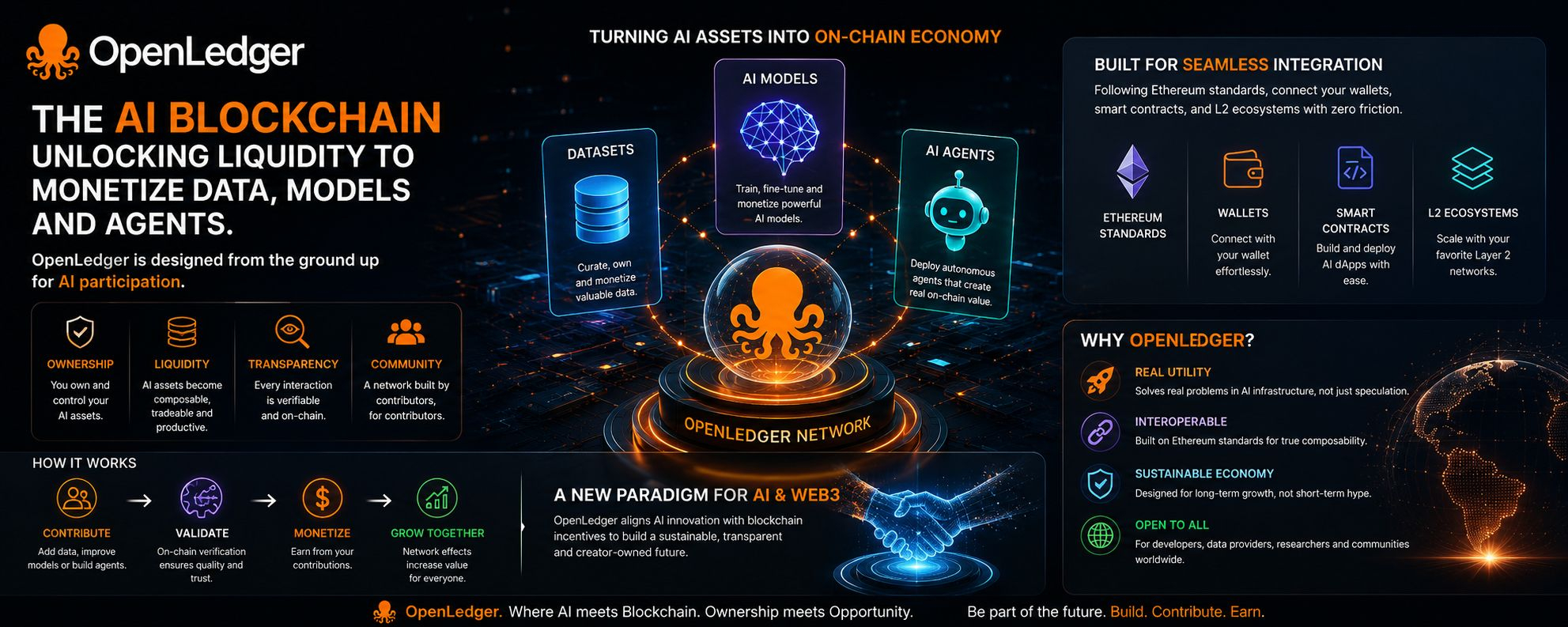
That model was never sustainable. OpenLedger is interesting because it approaches value creation from a completely different angle. Instead of building an economy around repetitive farming loops, OpenLedger focuses on something with real and growing demand which is AI infrastructure, decentralized data, models, and autonomous agents operating directly on chain. That changes the foundation entirely.Traditional Play to Earn ecosystems often struggled because in game assets had limited utility outside their own ecosystem.
Once speculation faded, liquidity disappeared with it. OpenLedger attempts to solve this by making AI assets composable, accessible, and monetizable across a broader decentralized framework. Datasets, AI models, and intelligent agents are not isolated resources anymore. They become productive on chain assets that developers, builders, and ecosystems can actually integrate into real applications.
This is where the comparison becomes important. Older gaming ecosystems depended heavily on user excitement. OpenLedger is positioning itself around infrastructure demand. That distinction matters because infrastructure survives market cycles better than narratives alone. Another issue with many Play to Earn ecosystems was friction. Complex onboarding, disconnected wallets, and limited interoperability pushed away mainstream users and developers. OpenLedger avoids this mistake by aligning with Ethereum standards from the start.
Wallet connectivity, smart contract compatibility, and Layer 2 integrations become significantly smoother, which lowers the barrier for adoption. The strongest ecosystems are usually the ones developers can build on without rebuilding everything from zero. OpenLedger understands that. What personally stands out to me is the timing.AI is becoming one of the fastest growing technological sectors globally, while blockchain continues searching for practical use cases beyond speculation. OpenLedger sits directly between those two trends.
That creates a positioning advantage many projects simply do not have. It also feels more sustainable because contribution itself can become part of the economy. In older Play to Earn systems, value extraction was often one directional. Players farmed rewards and sold them. Here, contributors helping improve datasets, models, and AI functionality could become active participants in ecosystem growth rather than temporary reward hunters.
That creates stronger alignment between the network and its users. The market is also evolving.People are no longer impressed by empty promises or short term token incentives.They want ecosystems with utility, scalability, and long term relevance. Projects that survive the next cycle will likely be the ones solving real coordination and infrastructure problems rather than relying purely on speculation.
OpenLedger appears to understand that shift early. This does not mean execution risk disappears. Every emerging ecosystem faces challenges around adoption, scalability, and competition. But compared to many previous Play to Earn ecosystems, the foundation feels far more practical because the focus is not just entertainment or token velocity.It is about enabling decentralized AI participation at scale.
That is a much larger market opportunity.The most successful blockchain ecosystems of the future may not be the loudest ones.They may be the ones quietly building systems people eventually depend on every day without even realizing blockchain is underneath.That is why OpenLedger feels different to me. Not because it promises fast rewards, but because it is trying to build infrastructure that could remain relevant long after speculative hype disappears.