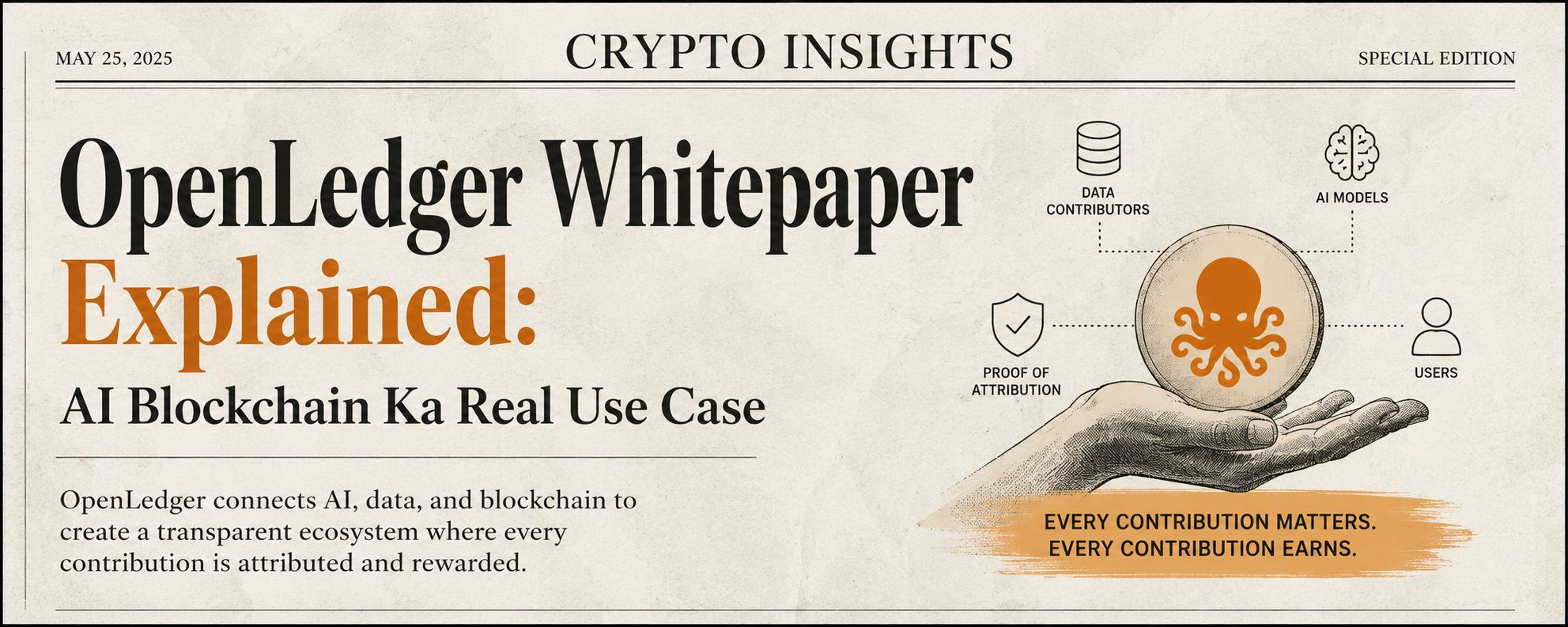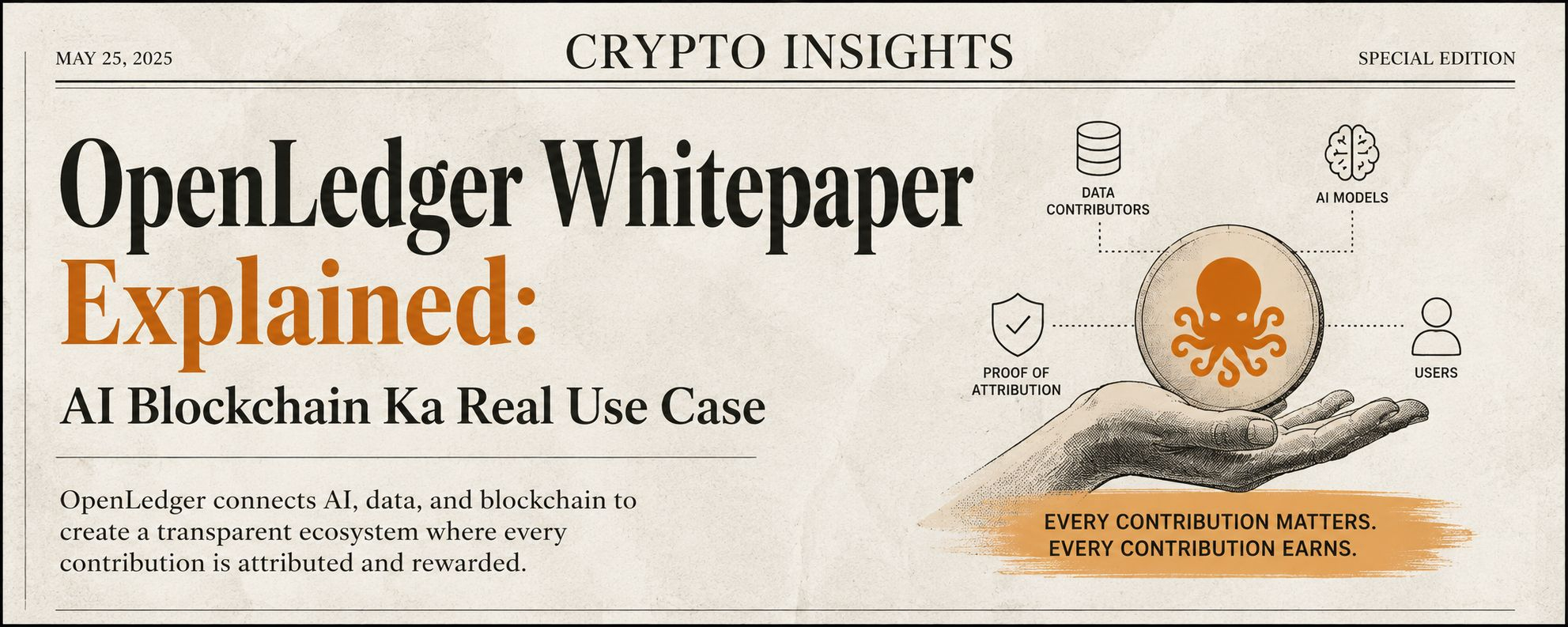

Jab maine pehli baar OpenLedger ka whitepaper padha, mujhe ye normal AI coin narrative jaisa nahi laga.
Main AI projects me usually models, agents aur speed wale claims dekhta hoon, lekin yahan focus different tha: data kisne diya, model ne us data ko kaise use Kiya, aur value wapas kahan flow honi chahiye. Ye simple idea hai, par AI ke current phase me kaafi real hai.
Aaj AI ka problem sirf intelligence nahi hai. Problem ownership aur traceability ka hai. Models internet, private datasets, human feedback aur domain notes par build hote hain, lekin output ke time user ko mostly final answer dikhta hai.
Kis contributor ka data useful tha, kis model ne kya use kiya, aur reward kis direction me jaana chahiye, ye part invisible reh jata hai.
Mere liye yahi unfair point hai. AI output ek single machine ka kaam nahi hota; ye countless small inputs ka combined result hota hai. Jab attribution unclear hoti hai, contributors ke liye motivation weak padti hai, low-quality data system me aa sakta hai, aur misinformation trace karna difficult ho jata hai.
Ek simpal analogy ye hai: agar ek research book me hundred authors ka kaam use hua ho, to sirf cover designer ko credit dena complete truth nahi hoga.
Network ka main Idea isi gap ko address karta hai. Proof of Attribution ko ek cryptographic mechanism ke roop me explain kiya gaya hai, jahan data contributions AI model outputs se link hote hain, records on-chain immutable rehte hain, aur contributors ko data impact ke basis par credit aur reward mil sakta hai.
Iska matlab ye nahi ki every answer perfect ban jayega. Matlab ye hai ki chain ek verifiable trail create karne ki koshish karti hai.
Datanets is design ka practical data layer lagte hain. Inko decentralized data networks ke form me describe kiya gaya hai, jo domain-specific datasets ko aggregate, validate aur distribute karte hain for specialized AI model training and fine-tuning.
General models har niche problem ke liye enough nahi hote; domain-specific AI ko clean, relevant aur traceable data chahiye.
Layer by layer dekha jaye to base chain ko sirf balances record nahi karne. Usse dataset metadata, contributor claims, model IDs, inference events, attribution references aur reward settlement jaisi state maintain karni hoti hai.
State model yahan normal transfer ledger se zyada detailed ban jata hai.
Consensus selection ka role bhi sirf block banane tak limited nahi rehta. Validators ya participants ko agree karna hota hai ki contribution valid hai ya nahi, model activity registered state se match kar rahi hai ya nahi, inference event acceptable hai ya nahi, aur settlement kis participant tak flow karega.
Model layer me developers models ko register, train aur publish kar sakte hain; once registered, model network par accessible ho sakta hai and inference usage se earn kar sakta hai.
Iska effect ye hai ki model ek loose off-chain file nahi rehta, balki on-chain identity ke saath attach hota hai.
Cryptographic flow ka real value attribution trail me dikhta hai. User query karta hai, model indexed sources se relevant data retrieve karta hai, output me used information incorporate hoti hai, aur utilized data points attribution tracking ke liye cryptographically logged kiye jaate hain.
RAG Attribution me response ke piche citations ya metadata ho sakte hain, aur data providers ko relevance ke basis par incentives mil sakte hain.
Is design se AI magic box ke bajay accounting system ke saath connect hota hai. Main ise perfect solution nahi bolunga, kyunki attribution measurement difficult hai. Ek data point ka actual influence quantify karna easy nahi hota, similar datasets overlap kar sakte hain, aur bad actors low-quality content push kar sakte hain.
But at least framework problem ko visible banata hai.
Utility side par $OPEN ka role bhi same logic follow karta hai. Token ko gas, model registration, inference calls, validator communication, governance triggers, contributor rewards, model access aur inference payments ke liye use kiya jaata hai. Utility tab meaningful hoti hai jab data publish ho, models use hon, inference calls aayein, validators coordinate karein, aur governance manage ho.
Price discussion ko main prediction ki tarah nahi dekhna chahunga. Better frame demand and utility ka hai. Agar fees actual usage se aati hain, staking or validator participation security ko support karta hai, governance protocol ko shape karti hai, aur inference payments contributors, model owners aur infrastructure ke beech distribute hote hain, to market utility signals ko evaluate karega.
Mujhe whitepaper ka strongest point ye lagta hai ki ye AI ko sirf output economy nahi, contribution economy ke roop me dekhta hai. Aaj final answer sabse visible hota hai, but future me source quality, contributor credibility aur verifiable provenance bhi important ho sakte hain. Main is idea ko hype angle se nahi, infrastructure angle se dekh raha hoon.
Real test adoption, data quality, attribution accuracy aur developer experience par hoga. Use case clear hai: AI ke piche jo human and data contribution hidden hota hai, usko measurable, traceable aur economically connected banana.