Artificial intelligence is changing the world at an incredible pace. Every day, people create data, train AI systems, develop intelligent tools, and contribute to technologies that continue making machines smarter. However, while AI keeps growing, one important question often gets ignored: who actually benefits from the value AI creates? In many cases, users provide data, developers build systems, and communities contribute knowledge, yet most rewards remain concentrated within large centralized platforms. OpenLedger (OPEN) is trying to introduce a different approach by creating an ecosystem where contributors can participate in the value generated by AI.
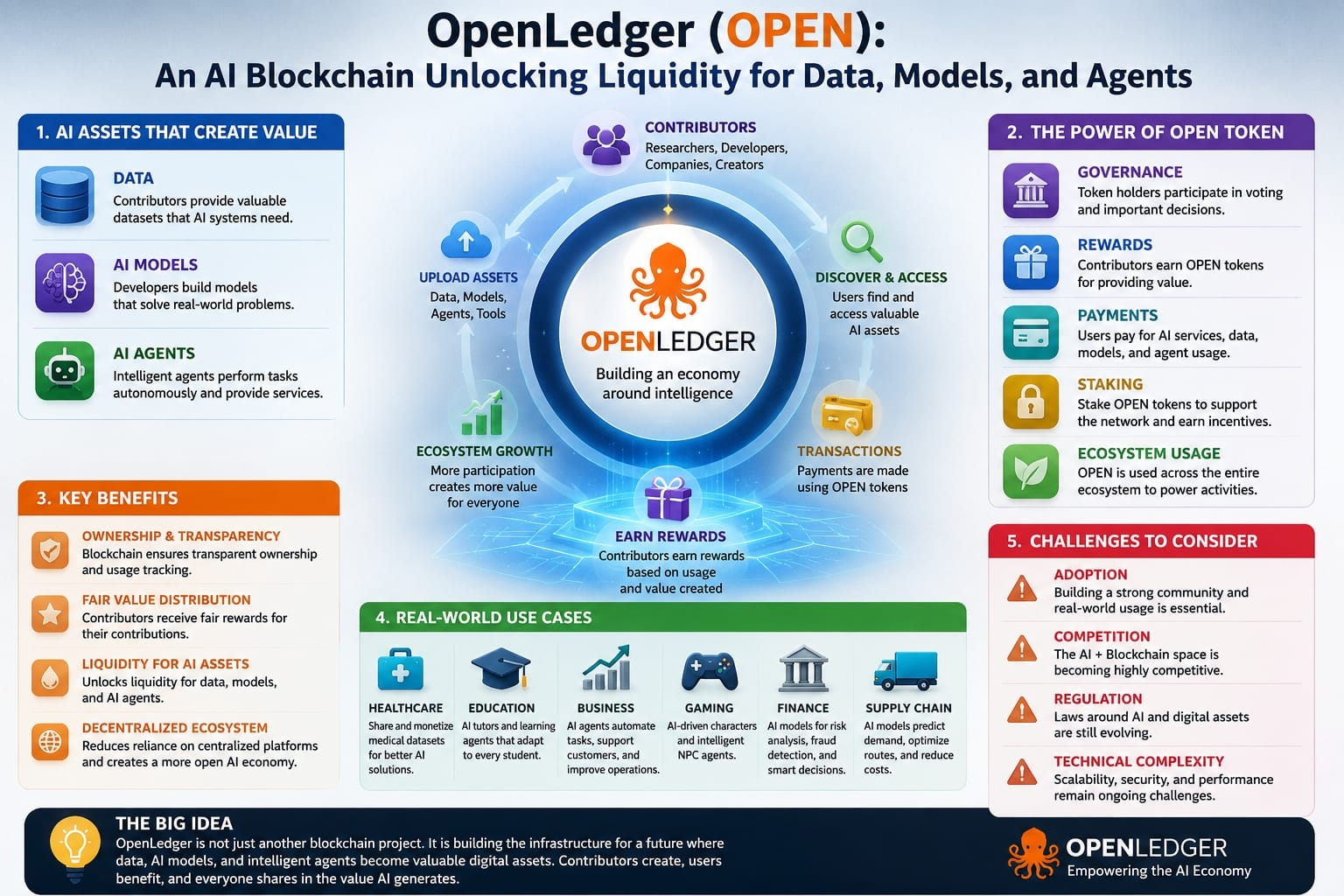
OpenLedger is an AI-focused blockchain designed to unlock liquidity for data, AI models, and AI agents. While that may sound technical at first, the concept becomes easier when viewed from a practical perspective. Imagine someone builds a useful AI model, creates valuable datasets, or develops an intelligent AI assistant. Normally, monetizing these resources can be difficult unless a large company acquires or hosts them. OpenLedger aims to create a system where these assets can become accessible, usable, and economically active. Instead of remaining locked inside isolated platforms, they can generate value continuously.
The idea behind OpenLedger becomes more interesting because it combines artificial intelligence with blockchain technology. AI and blockchain solve completely different problems. AI brings intelligence and automation, while blockchain provides transparency, ownership tracking, and decentralized coordination. OpenLedger merges these technologies so contributors can build and share AI assets while maintaining a more transparent and reward-driven structure. Rather than depending entirely on centralized systems, blockchain acts as a trusted layer that records activity and supports transactions within the ecosystem.
One of the most discussed ideas around OpenLedger is monetizing data, models, and AI agents. Data is often called the fuel of artificial intelligence because AI systems rely heavily on information to learn and improve. Imagine a researcher gathering valuable medical datasets or a company collecting important transportation information. Instead of that data remaining underutilized, OpenLedger could allow contributors to provide access and receive rewards whenever others benefit from it.
The same concept applies to AI models. Suppose a developer creates an AI tool capable of helping farmers detect crop diseases using smartphone images. That model provides real-world value. Through OpenLedger, users could access it, and the creator could continue receiving compensation based on usage. Rather than selling a product once, the AI model becomes a living digital asset capable of generating ongoing activity.
AI agents introduce another layer of opportunity. Intelligent assistants capable of performing tasks independently are becoming increasingly common. Customer support bots, research assistants, scheduling systems, and autonomous tools already exist today. OpenLedger creates an environment where these agents can potentially operate, provide services, and create value while their creators earn rewards.
The OPEN token acts as the foundation of the ecosystem. It functions as more than a cryptocurrency because it supports participation across the network. The token can be used for payments, governance participation, staking opportunities, rewards, and broader ecosystem activities. Contributors who provide useful resources may receive OPEN incentives, users can pay for services using the token, and community members may participate in governance decisions that shape the future direction of the platform.
What makes OpenLedger particularly interesting is that it appears focused on creating infrastructure around AI ownership rather than simply following technology trends. Many projects combine popular concepts because they attract attention, but OpenLedger seems built around a larger idea: creating an economy around intelligence itself. As AI continues becoming integrated into everyday life, ownership and value distribution may become major discussions across technology industries.
Of course, challenges remain. Building strong technology is only part of the journey. Adoption, competition, regulations, and ecosystem growth will all play important roles in determining long-term success. The AI and blockchain sectors already contain many ambitious projects competing for attention. Turning vision into practical adoption will likely become one of the largest tests for OpenLedger.
Still, the project introduces a question that feels increasingly important: if people contribute data, build models, and create intelligent systems, should they also share in the value generated by AI? OpenLedger appears to be building infrastructure around that idea. Whether it ultimately becomes a major force or not, the direction itself reflects a shift toward a future where intelligence may become not only technology, but also an entirely new digital economy.