

Look, AI is exploding right now. Everybody sees it. Every week there’s a new model, a new AI startup, another billion-dollar funding round, another thread on X claiming AGI is around the corner. And honestly? Most people still don’t realize where the real fight is happening.
It’s not just about who builds the smartest model.
It’s about who owns the infrastructure behind intelligence itself.
That’s the part people don’t talk about enough.
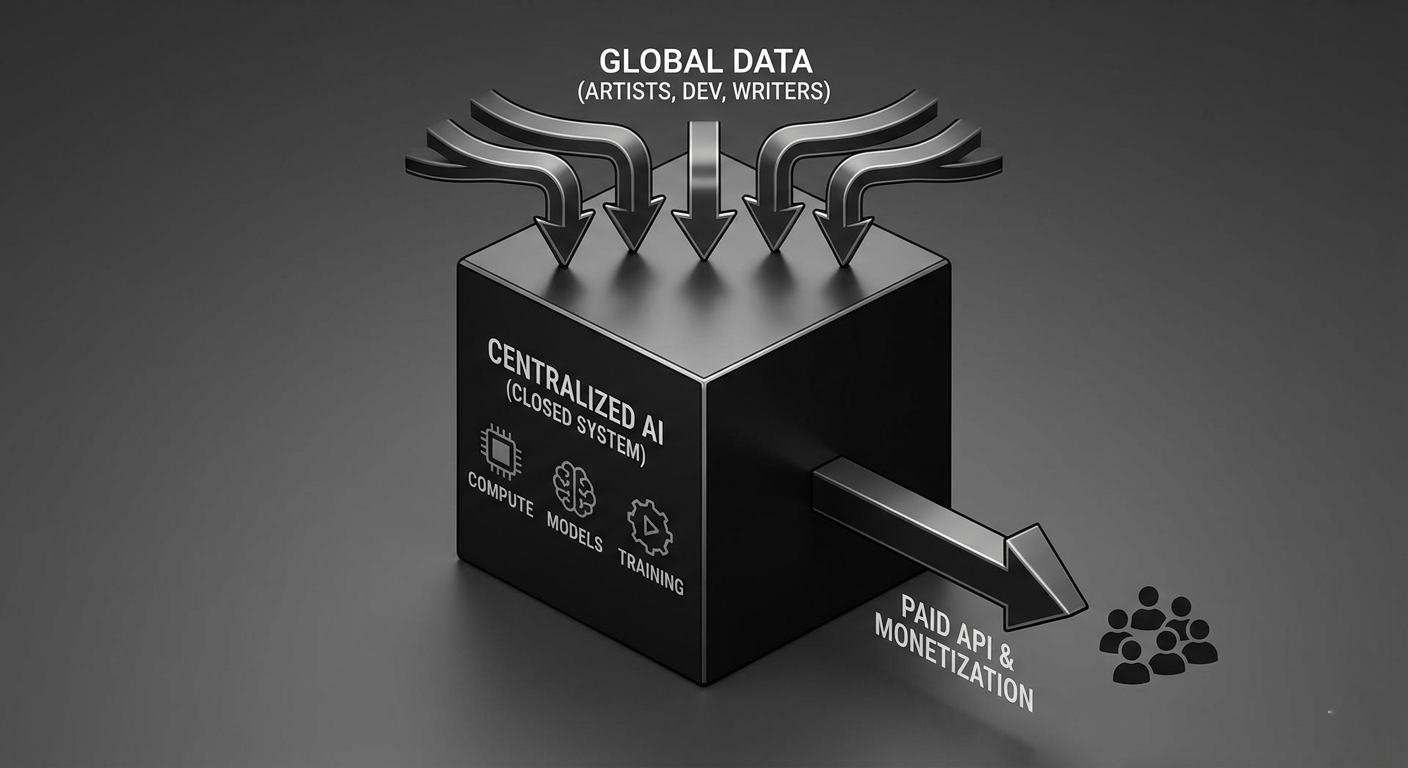
Right now, a handful of massive companies control almost everything in AI. They own the compute. They own the cloud servers. They own the training pipelines. They own the APIs. They scrape the data. Then they package everything into closed systems and charge everybody else to use it.
And here’s the weird part. The internet basically feeds these systems for free.
Artists post art. Developers upload code. Writers publish content. Users generate endless behavioral data every second.
AI companies absorb all of it at industrial scale.
Then they monetize it.
That’s where OpenLedger comes in, and honestly, whether people like the project or not, the core idea behind it is way bigger than most crypto narratives floating around right now.
OpenLedger calls itself the AI Blockchain. At first glance that sounds like another buzzword-heavy crypto pitch. We’ve seen thousands of those. AI + blockchain became the easiest marketing combo on earth the second ChatGPT went mainstream.
But here’s the thing.
OpenLedger isn’t just trying to stick AI tools onto an existing blockchain and hope people buy the story. They’re trying to build infrastructure specifically designed for AI participation from day one. That’s a very different approach.
The idea is pretty simple when you strip away the hype.
Instead of AI living inside centralized black boxes controlled by giant corporations, OpenLedger wants data, models, and AI agents to operate inside decentralized systems where ownership, attribution, and monetization happen on-chain.
And honestly… that makes sense.
Because AI is heading toward a future where autonomous systems won’t just answer questions or generate pictures. They’ll run businesses. They’ll execute trades. They’ll manage workflows. They’ll negotiate contracts. Some already do.
That sounds insane until you realize we’re already halfway there.
People still think of AI as chatbots. That mindset is outdated now.
AI agents are becoming economic actors.
That changes everything.
Historically, blockchain and AI grew separately. Bitcoin focused on digital money. Ethereum brought smart contracts and decentralized applications into the picture. Meanwhile AI kept evolving inside centralized tech companies because training large models required insane amounts of infrastructure and money.
The two worlds barely connected properly.
Some crypto projects experimented with decentralized compute. Others tried AI marketplaces or GPU-sharing systems. Most of them honestly felt fragmented. Interesting ideas. Weak execution.
OpenLedger’s pitch is broader.
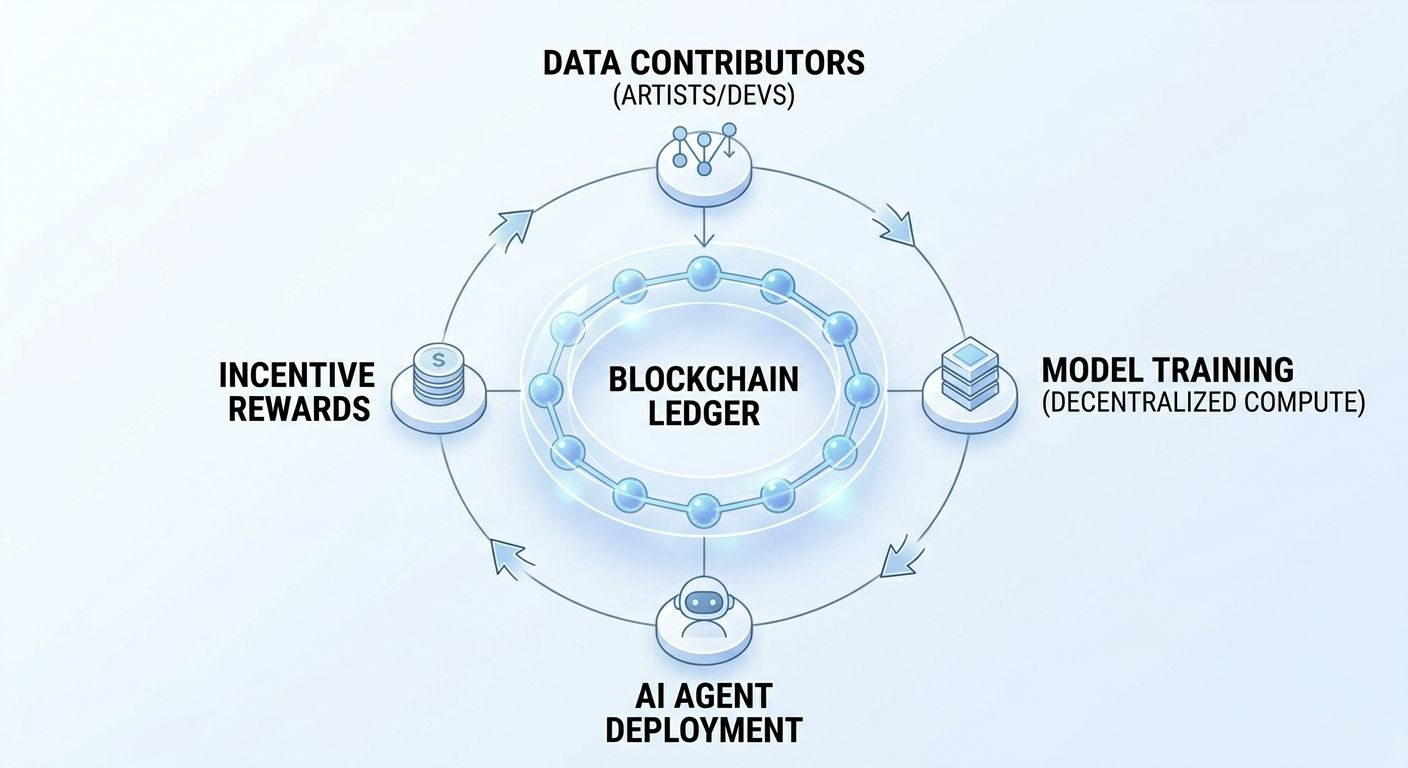
They want the whole AI lifecycle connected on-chain: data monetization, model training, agent deployment, economic incentives, ownership systems, verification layers, everything.
Big vision. Very hard execution.
And this is where things get tricky.
Because building blockchain infrastructure for AI isn’t easy at all. Actually, it’s brutally difficult.
AI workloads are heavy. Really heavy.
Training advanced models requires massive compute resources, flexible storage systems, low latency, and serious scalability. Traditional blockchains struggle with basic throughput during meme coin seasons, so asking them to support intelligent autonomous systems at scale? That’s another level entirely.
Still, OpenLedger’s thesis hits on a real problem.
Data ownership.
Honestly, AI companies built trillion-dollar opportunities on top of internet-scale data extraction. That’s basically what happened. The debate around copyright, attribution, and training data isn’t going away either. If anything, it’s getting uglier.
Writers are angry. Artists are angry. Developers are angry. Publishers are suing companies. Governments are stepping in.
And most users still don’t fully understand how much of their digital behavior feeds AI systems every day.
OpenLedger wants to change the economics around that.
The idea is that datasets become trackable on-chain assets. Contributors could potentially register data, verify usage, license access, and receive rewards whenever models use their datasets for training or applications.
That’s where it gets interesting.
Because if you create real economic incentives around data contribution, you potentially unlock decentralized AI ecosystems that don’t depend entirely on centralized corporations.
Imagine niche industries building community-owned datasets together: medical research, financial analytics, scientific data, supply chain systems, specialized enterprise intelligence.
That’s a very different future from today’s model where a few companies absorb most of the value.
Now let’s talk about AI agents because honestly this might become the biggest part of the whole story.
People underestimate how fast autonomous agents are evolving.
Right now they’re rough around the edges. Sometimes they break. Sometimes they hallucinate nonsense. Sometimes they confidently destroy workflows in the dumbest ways possible. I’ve seen this before with emerging tech cycles. Early versions always look messy until suddenly they don’t.
Then adoption explodes.
OpenLedger seems to understand where this is heading.
If autonomous AI agents start handling economic activity trading assets, interacting with DeFi protocols, coordinating logistics, managing businesses then infrastructure matters a lot. You need verification systems. You need transparent execution histories. You need programmable incentives.
Otherwise the whole system becomes chaos.
Blockchain actually fits surprisingly well here.
That’s why the combination of AI and blockchain keeps resurfacing no matter how many people dismiss it as hype.
AI creates intelligence. Blockchain creates coordination and trust.
Simple.
Not easy. But simple.
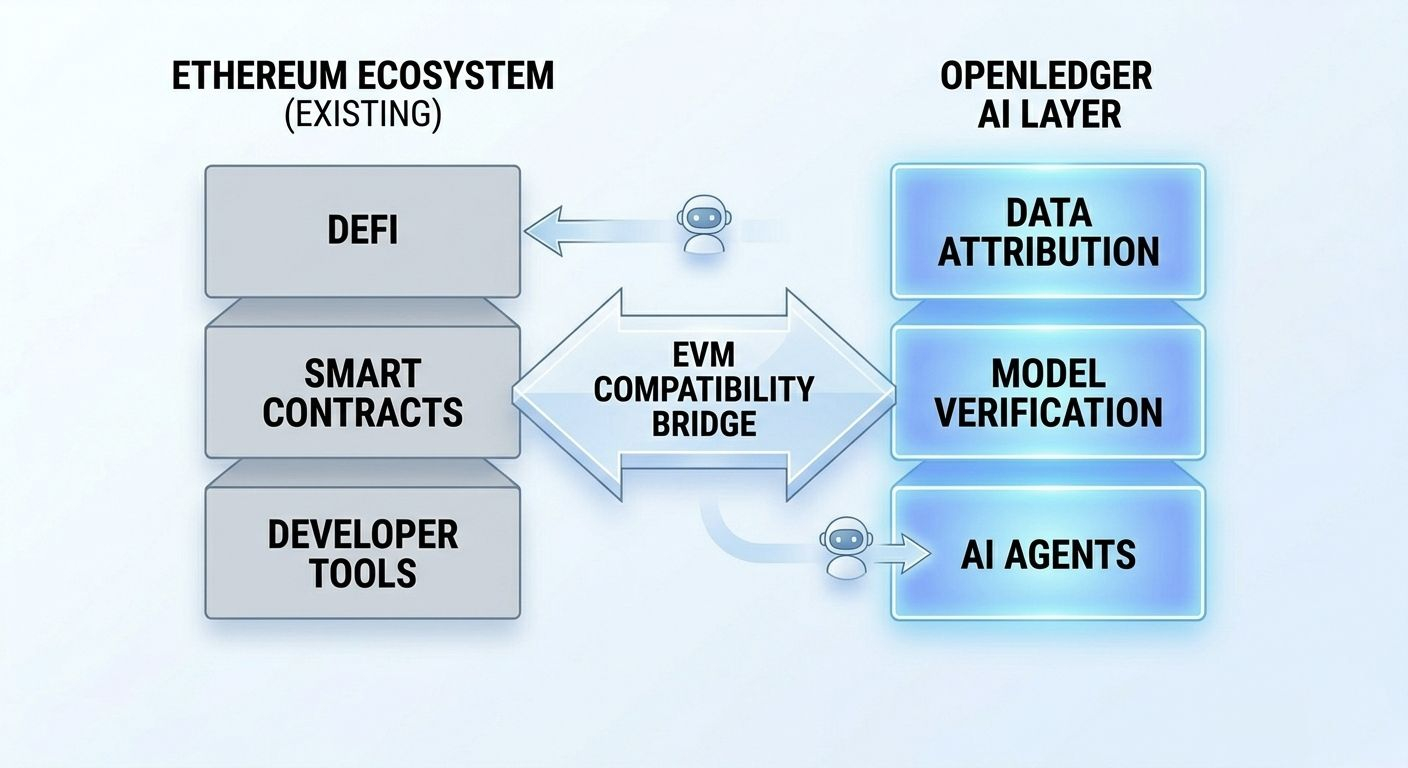
Another smart move from OpenLedger is its Ethereum compatibility. Honestly, this part matters more than flashy AI marketing.
Ethereum still dominates smart contract infrastructure. It has the developers, liquidity, tooling, applications, Layer 2 ecosystems, and network effects. Most developers don’t want to abandon all of that just to join isolated ecosystems with no traction.
OpenLedger following Ethereum standards lowers friction massively.
Developers can potentially connect wallets, smart contracts, decentralized apps, and Layer 2 systems without rebuilding entire infrastructures from scratch.
People underestimate how important that is.
Crypto history is full of technically impressive projects that died because nobody wanted to migrate ecosystems over to them. Technology alone doesn’t win. Distribution wins. Network effects win.
Always.
Now, let’s be real for a second.
There’s also massive risk here.
The decentralized AI space is becoming crowded fast. Every week another project claims it’s building the future of decentralized intelligence. Some are legitimate. Some are clearly just farming hype because AI became the hottest narrative in tech.
OpenLedger still has to prove execution.
That’s the hard part.
Anybody can publish a vision document. Building scalable infrastructure people actually use? Completely different game.
And regulation could get ugly too.
AI regulation is already heating up globally. Governments are focusing on copyright issues, AI safety, autonomous systems, data privacy, algorithmic accountability, all of it. Blockchain regulation alone already creates headaches across jurisdictions. Combine both industries together and suddenly you’re operating inside a legal gray zone nobody fully understands yet.
Here’s a question almost nobody can answer cleanly right now:
If an autonomous AI agent operating on-chain causes financial damage, who’s responsible?
The developer? The user? The protocol? The dataset contributors? Nobody?
See the problem?
Still, even with all those challenges, I think people dismiss decentralized AI too quickly.
Mostly because they’re looking at today’s limitations instead of where things are clearly heading.
The internet itself went through this pattern repeatedly.
At first websites looked primitive. Then social media looked trivial. Then mobile apps looked overhyped. Then cloud computing changed everything quietly in the background.
AI infrastructure could follow the same trajectory.
And honestly, the centralized AI model we have right now probably doesn’t survive forever in its current form. It’s too concentrated. Too closed. Too dependent on a handful of companies controlling the entire stack.
Open ecosystems eventually emerge because developers and users want ownership, flexibility, and economic participation.
That pressure keeps building.
That’s why projects like OpenLedger matter even if they’re still early.
They’re not just building another blockchain. They’re experimenting with the economic structure of future AI systems themselves.
That’s the real story here.
Not token prices. Not short-term hype cycles. Not influencer threads pretending every AI coin will 100x overnight.
The bigger question is this:
Who owns intelligence in the future?
Because we’re moving toward a world where AI agents interact with humans, businesses, markets, and decentralized systems constantly. Data becomes capital. Models become assets. Autonomous systems become participants inside digital economies.
And whoever builds the infrastructure layer underneath that shift could end up controlling something massive.
Maybe OpenLedger becomes one of those foundational layers.
Maybe it doesn’t.
But the direction behind the idea? That part feels very real.