

@OpenLedger #OpenLedger ...I’ll be honest, I’m tired of AI tokens pretending to be infrastructure.
Maybe that sounds harsh..
But if you’ve been in crypto long enough, you know the pattern.
A flashy whitepaper.
A few AI buzzwords.
Some decentralized future talk.
Then a token with zero reason to exist beyond speculation.
I’ve fallen for that before.
One of my worse trades this year was buying into an AI narrative purely because everyone on my timeline was acting like it was obvious alpha. No research. Just vibes. My PNL deserved prison.
So when I started looking into OpenLedger, I was skeptical by default.
And honestly? That’s probably the right mindset.
But this project feels a bit different.
Not because it’s guaranteed to dominate anything.
Because it’s actually trying to solve a real coordination problem between AI and Web3.
That’s much harder. And much more interesting.
So what exactly is OpenLedger?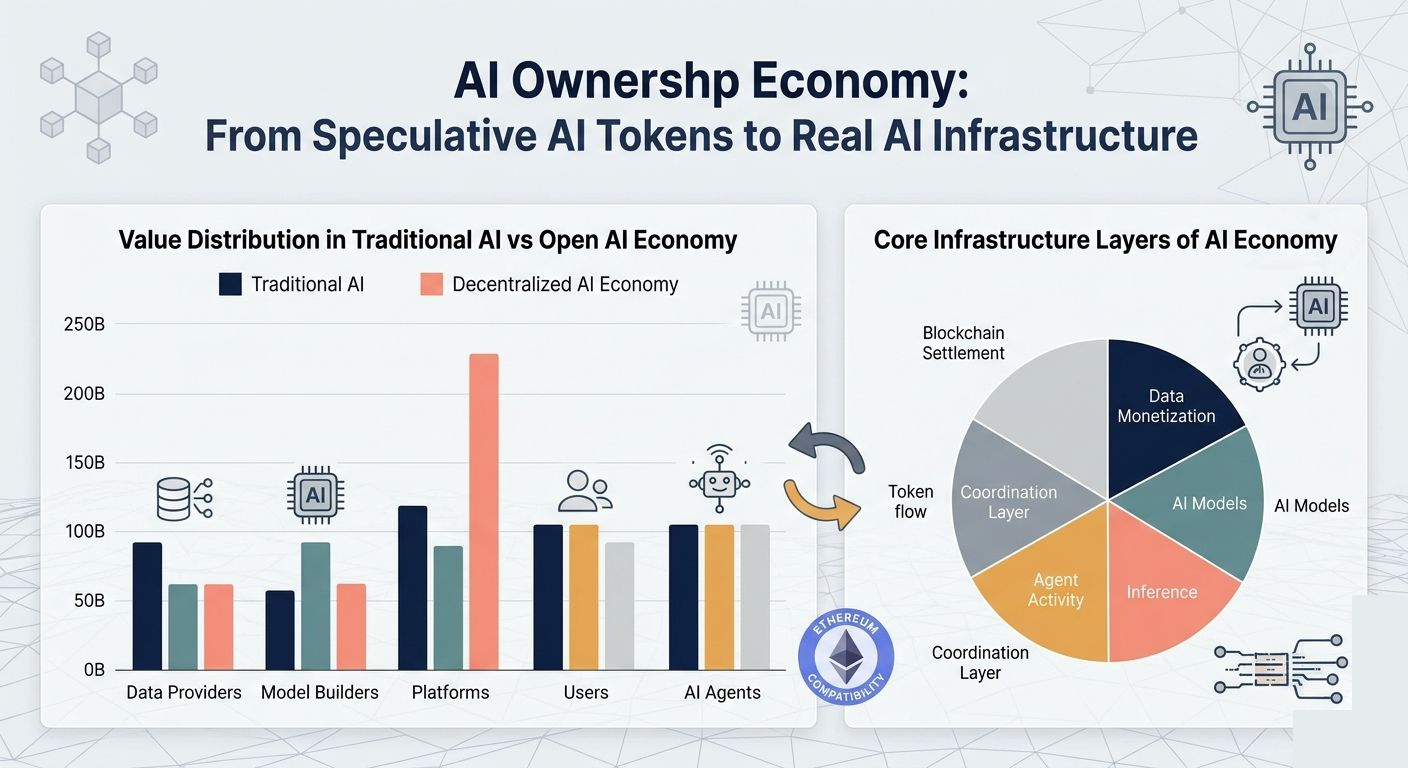
If I had to explain it without sounding like a blockchain brochure…
OpenLedger is an AI blockchain built to help data, AI models, and autonomous agents become economic assets.
That’s the clean version.
Instead of AI value being captured entirely by centralized systems, OpenLedger’s idea is that contributors, builders, and participants can be part of the value loop.
Which feels very Web3.
Because what’s the point of decentralization if the most valuable AI infrastructure ends up controlled by a handful of closed platforms?
That contradiction has been bugging me for a while.
Why the AI blockchain angle actually makes sense here.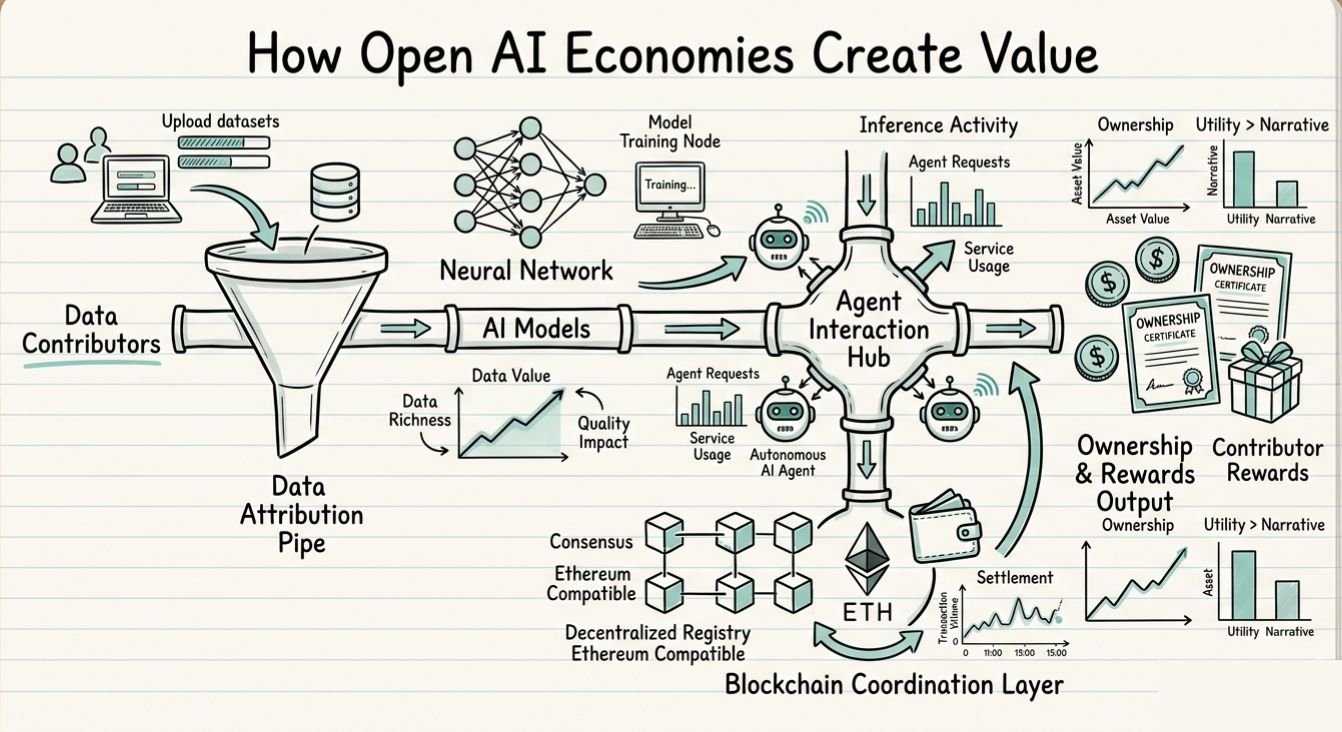
A lot of projects slap AI onto branding because it gets attention.
This feels less cosmetic.
AI runs on resources.
Data.
Models.
Inference.
Agent interactions.
Coordination.
Those things create economic activity.
And economic activity usually needs rules, incentives, ownership, and settlement.
That’s literally where blockchain works best.
So OpenLedger’s thesis seems to be:
if AI becomes an active economic participant, maybe it needs its own blockchain-native infrastructure.
That’s not a dumb thesis.
The Ethe-reum compatibility part matters way more than people realize
This is where I started paying more attention.
OpenLedger being EVM-compatible isn’t just a technical checkbox.
It’s survival strategy.
I’ve watched technically better ecosystems fail because builders didn’t want to learn an entirely alien environment.
Developers are lazy.
Not in a bad way.
They optimize for speed.
If wallets already work.
If Ethe-reum tooling already feels familiar.
If smart contract logic doesn’t require brain surgery.
That lowers friction massively.
And lower friction usually wins.
That’s just crypto history.
Utility is where things get interesting
This is where OpenLedger either proves itself or gets exposed.
Because narratives are easy.
Utility isn’t.
A few areas where I actually see potential:
Data monetization
Right now, users generate ridiculous amounts of useful data.
Most of that value gets extracted elsewhere.
If OpenLedger creates cleaner attribution and monetization rails for data contributors, that’s meaningful.
Not glamorous.
But meaningful.
AI model ownership
This part is fascinating.
Instead of useful AI models living inside closed boxes forever, there’s a path where access, contribution, and monetization become transparent.
That changes incentives.
A lot.
Autonomous AI agents
This sounds futuristic until you realize it’s already slowly happening.
Agents transacting, interacting, executing logic.
Messy today?
Absolutely.
But weirdly believable.
OpenLedger seems positioned around that future.
My actual doubt
Here’s where I stop sounding optimistic.
Decentralized incentives are hard.
Really hard.
Building infrastructure is one thing.
Getting real developers, real users, and real economic activity is another.
Crypto is full of beautiful architecture nobody uses.
Also… centralized AI moves stupidly fast.
Way faster than decentralized ecosystems usually do.
That’s a legitimate challenge.
If OpenLedger can’t make decentralized coordination feel efficient, people will choose convenience.
Every time.
Why I still think it’s worth watching.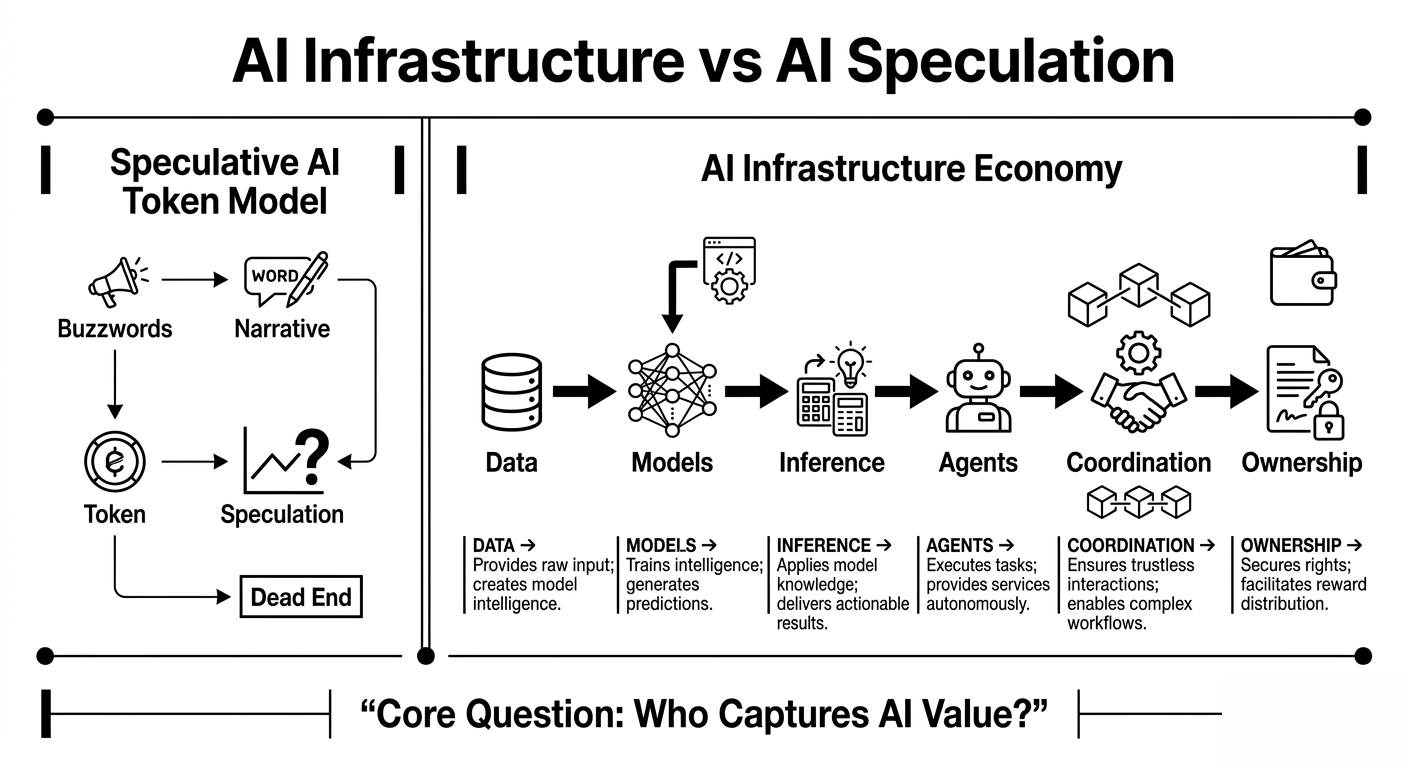
Because at least the problem makes sense.
That already separates it from half the market.
I’m not looking at OpenLedger like some guaranteed moon setup.
That mindset ruins judgment.
I’m looking at it as a serious experiment around ownership in AI-native economies.
And honestly, I’d rather study projects attempting hard infrastructure problems than another meme narrative pretending to be innovation.
Today especially, with AI hype getting noisier by the hour, that feels like the smarter place to spend attention.
@OpenLedger #openledger $OPEN #OpenLedger $EDEN $ZEST