
I remember the first time I truly understood what “public” means on the internet it means everyone can see it, but it also means anyone can take it. I’d published a long, painstakingly researched blog post years ago, and forgot about it. Then generative AI arrived, and I started noticing that certain AI tools were producing eerily specific phrasing that sounded like my old work. I couldn’t prove it, of course. The original text had been sucked into the great data vacuum, chewed up, and spit out without a footnote. That moment didn’t just annoy me; it rewired how I think about digital ownership.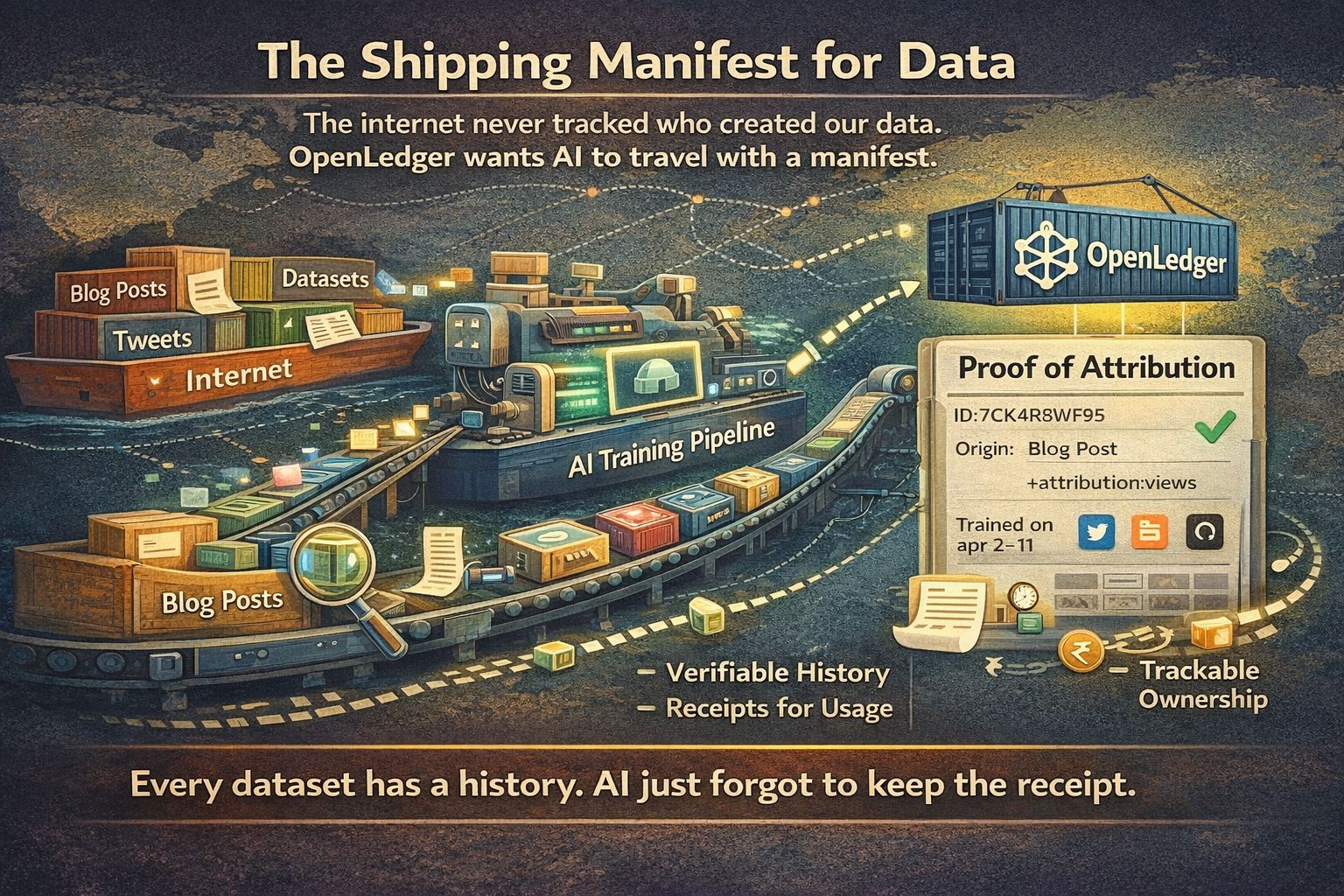
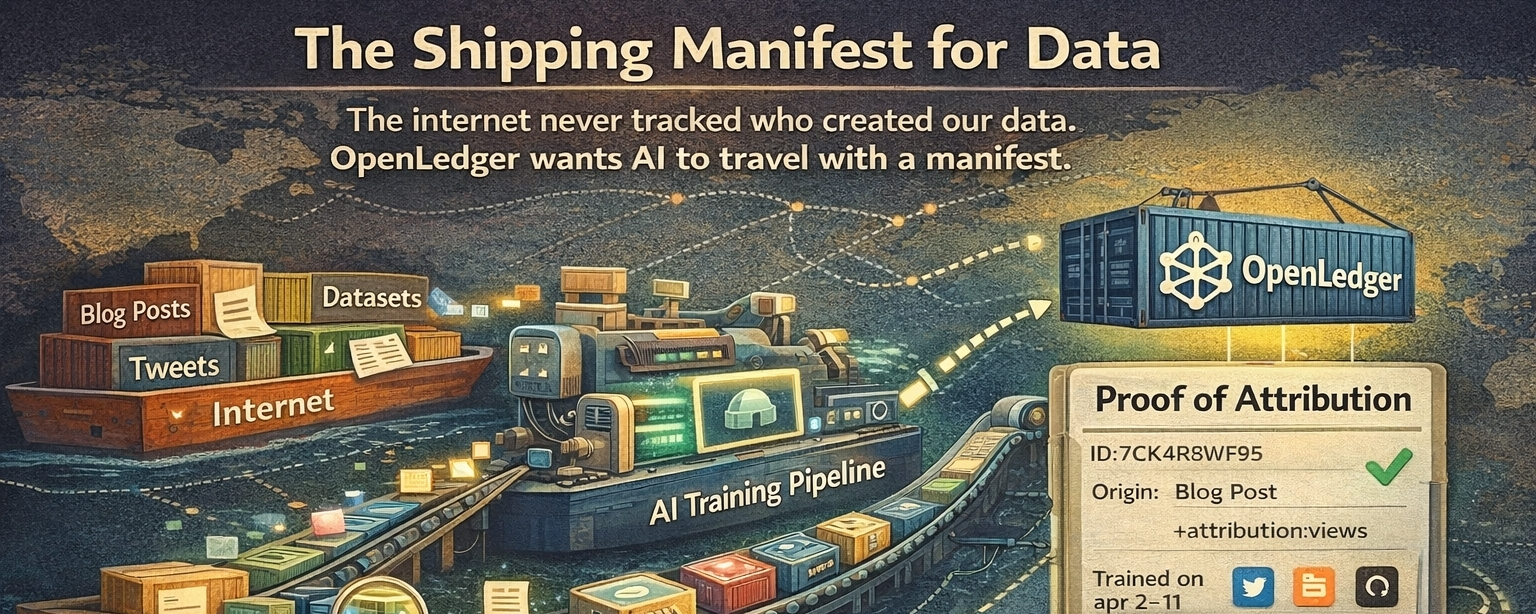
That’s why OpenLedger’s core idea stayed with me long after I closed the whitepaper. I’m not drawn to the project because of its tokenomics or its list of investors, which plenty of people are already dissecting. What holds my attention is the strange, almost old-fashioned principle it’s resurrecting: the idea that information has a lineage, and that lineage matters. In a sense, OpenLedger is trying to build a shipping manifest for data in an era when everything travels invisibly. Its Proof of Attribution isn’t just a technical novelty—it’s an attempt to answer a question the early internet never bothered to ask: if your content becomes raw material for a multi-billion-dollar industry, do you get a receipt?
I’ll be straightforward: I’m naturally suspicious of solutions that promise to fix structural problems with a token. But the more I thought about it, the more I realized OpenLedger isn’t actually proposing a utopia where every tweet earns you a royalty. It’s laying down infrastructure for a world that is already coming. The EU’s AI Act, for instance, is pushing for transparency in training data. That’s not a crypto fantasy; that’s a legal reality creeping closer. In that context, a verifiable attribution layer stops being a niche blockchain idea and starts looking like a piece of compliance plumbing that every AI company might eventually need. That’s the angle I find genuinely original: OpenLedger might not just be a product for creators, but a survival tool for AI builders who will soon have to prove their models weren’t trained on stolen goods.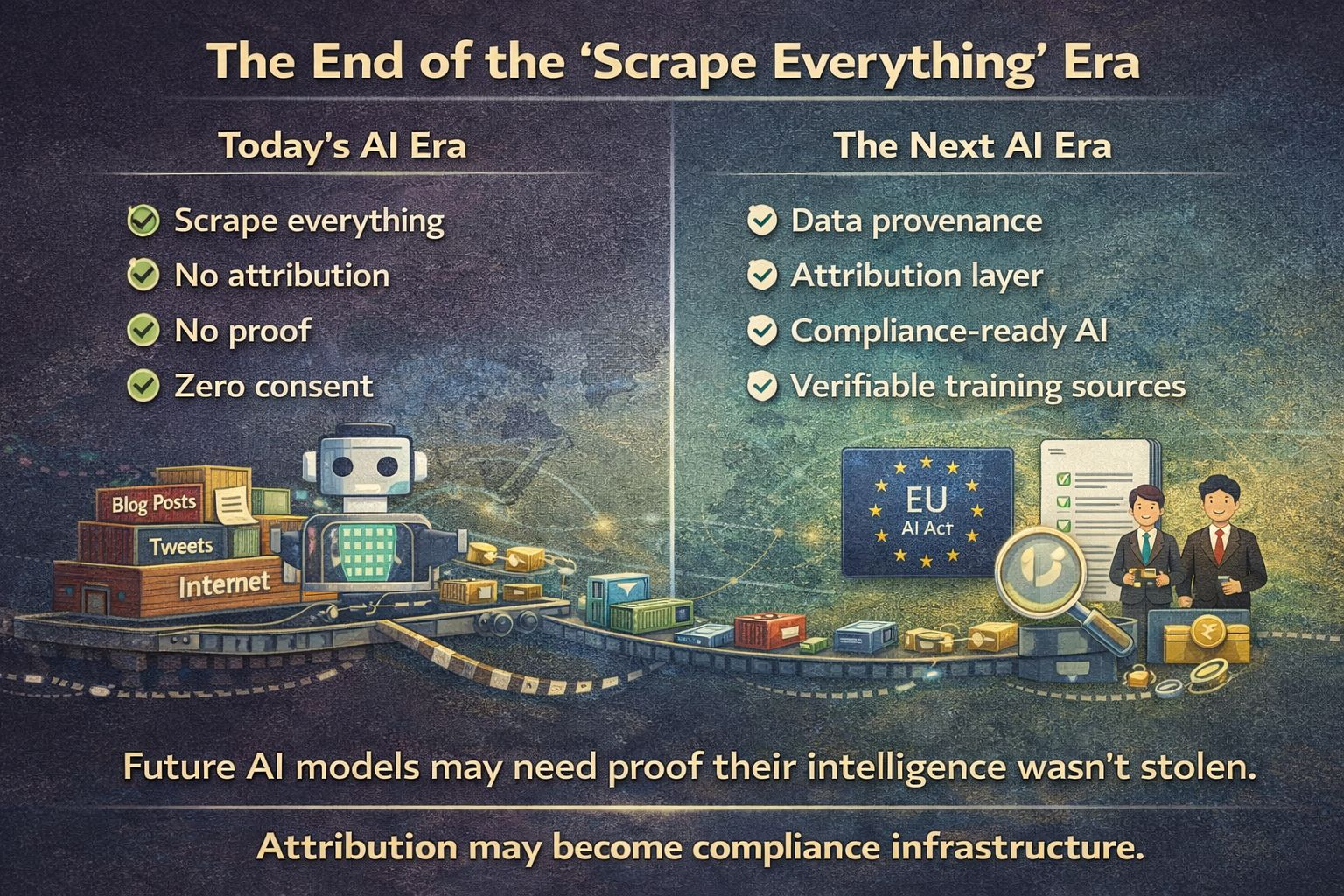
I still have doubts. Attribution on a blockchain doesn’t magically stop bad actors from scraping, and micropayments might never add up to a living wage for most people. But I’m watching this project not as a cheerleader, but as someone who believes the “move fast and scrape things” era is on its last legs. OpenLedger planted a thought in my mind that won’t leave: maybe the next phase of the internet won’t be about hiding our data or hopelessly guarding it, but about equipping it with a history that can’t be erased. That feels less like a cryptocurrency pitch and more like a quiet, long-overdue course correction.