
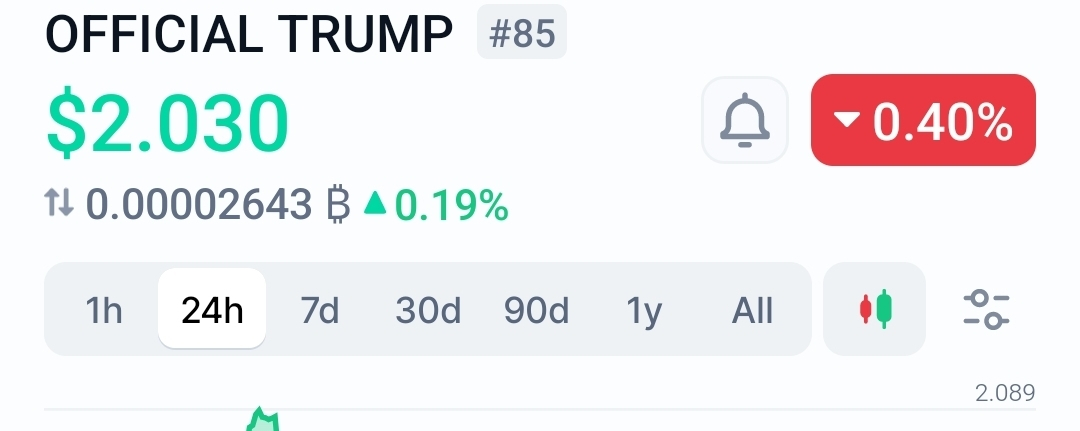
$TRUMP Senate Democrats are using President Trump’s crypto holdings and ventures to push for tougher ethics rules in negotiations over the CLARITY Act crypto bill.
Democrats cite Trump’s personal crypto trades and family-linked projects as potential conflicts while ethics language for the CLARITY Act is drafted.
The ethics fight is now one of the main obstacles that could slow or even derail this major US crypto market structure bill.
Crypto users should watch how ethics amendments are resolved, because they may decide whether the CLARITY Act delivers real regulatory clarity or stalls for years.
Deep Dive
1. How Trump Is Being Pulled In
Recent ethics disclosures show President Trump and his family trust trading crypto‑related stocks like Coinbase, Robinhood and Bitcoin miners while his administration advances pro‑crypto regulation, with Trump reporting at least 51 million dollars in digital assets and officials holding over 193 million dollars in crypto exposure.¹
Separately, Democrats point to Trump‑linked ventures such as World Liberty Financial (WLFI) and its stablecoin as examples of how a sitting president could benefit from crypto businesses while shaping policy.²
Critics, including Senator Elizabeth Warren, argue that the current CLARITY Act draft "does not lift even the tiniest finger" to address what they call Trump administration crypto conflicts.³
2. Why This Threatens The CLARITY Act
The CLARITY Act, a sweeping US crypto market structure bill, passed the Senate Banking Committee with a 15–9 bipartisan vote but still needs 60 votes on the Senate floor.⁴
Several Democrats now insist on strong ethics provisions that would limit presidents, lawmakers and senior officials (and in some proposals, their families) from profiting from digital assets while rules are being written.⁵
Republican allies warn that ethics language seen as targeting Trump‑linked projects could provoke White House opposition or even a veto threat, which in turn makes some Democrats reluctant to support a bill that might be vetoed anyway.⁴
What this means: Political fights over Trump and ethics, not just technical crypto rules, may decide whether the bill that could clean up US crypto regulation actually passes.
3. What Crypto Users Should Watch Next
Analysts see a narrow window from June through early August for the Senate and House to pass and reconcile the bill before the August recess and the midterm election cycle.⁶
Key signals to monitor are:
Draft ethics amendments that spell out holdings and trading limits for top officials.
Public comments from swing Democrats who backed the bill in committee but conditioned their floor votes on stronger ethics rules.⁶
Any hint of a veto threat or compromise from the White House on ethics language.
If ethics talks collapse, the CLARITY Act could stall, keeping the current patchwork of SEC, CFTC and state rules and prolonging regulatory uncertainty for exchanges, tokens and institutional investors.
Conclusion
Trump’s crypto wealth and business ties have become a central talking point in the Senate ethics fight around the CLARITY Act, turning a technical market‑structure bill into a broader conflict‑of‑interest battle. How lawmakers resolve these ethics demands will heavily influence whether US crypto finally gets a unified regulatory framework or remains stuck in ambiguity, with direct consequences for long‑term institutional participation and project planning.
