
One thing I’ve noticed recently is that the conversation around AI in crypto is slowly moving away from hype and becoming more practical. A lot of projects talk about “AI agents,” but very few actually show how these tools can improve real user experience or simplify how people interact with blockchain systems.
That’s why @OpenLedger and its OctoClaw launch caught my attention.
What makes OctoClaw interesting to me is that it’s not just another chatbot or passive assistant. It’s designed more like an active on-chain agent that can actually carry out tasks, monitor conditions, automate workflows, and interact with protocols directly instead of just giving information.
From the demos released so far, users can do things like set price alerts, request market analysis, execute swaps, or automate multi-step workflows using simple text or voice commands. Instead of constantly switching between wallets, dashboards, Telegram groups, and trading platforms, the idea is that the agent handles most of the coordination automatically.
That kind of experience honestly feels closer to where Web3 should be heading.
One example that stood out to me was the ability to tell the agent something simple like:
“Buy BTC using 10% of my ETH holdings.”
The system then analyzes liquidity, routes the trade, executes the order, and sends back transaction details automatically. That may sound simple, but reducing friction like that matters a lot, especially for users who are overwhelmed by the complexity of DeFi today.
Another thing I like is the cloud-based setup. Most advanced trading systems or automation tools usually require technical knowledge, server hosting, or constant monitoring. OpenLedger seems to be trying to remove that barrier completely by allowing users to configure agents through a cleaner interface while the infrastructure runs in the background.
That approach could make these tools much more accessible to everyday users instead of only developers or advanced traders.
The upcoming Trading Agents feature also looks very promising.
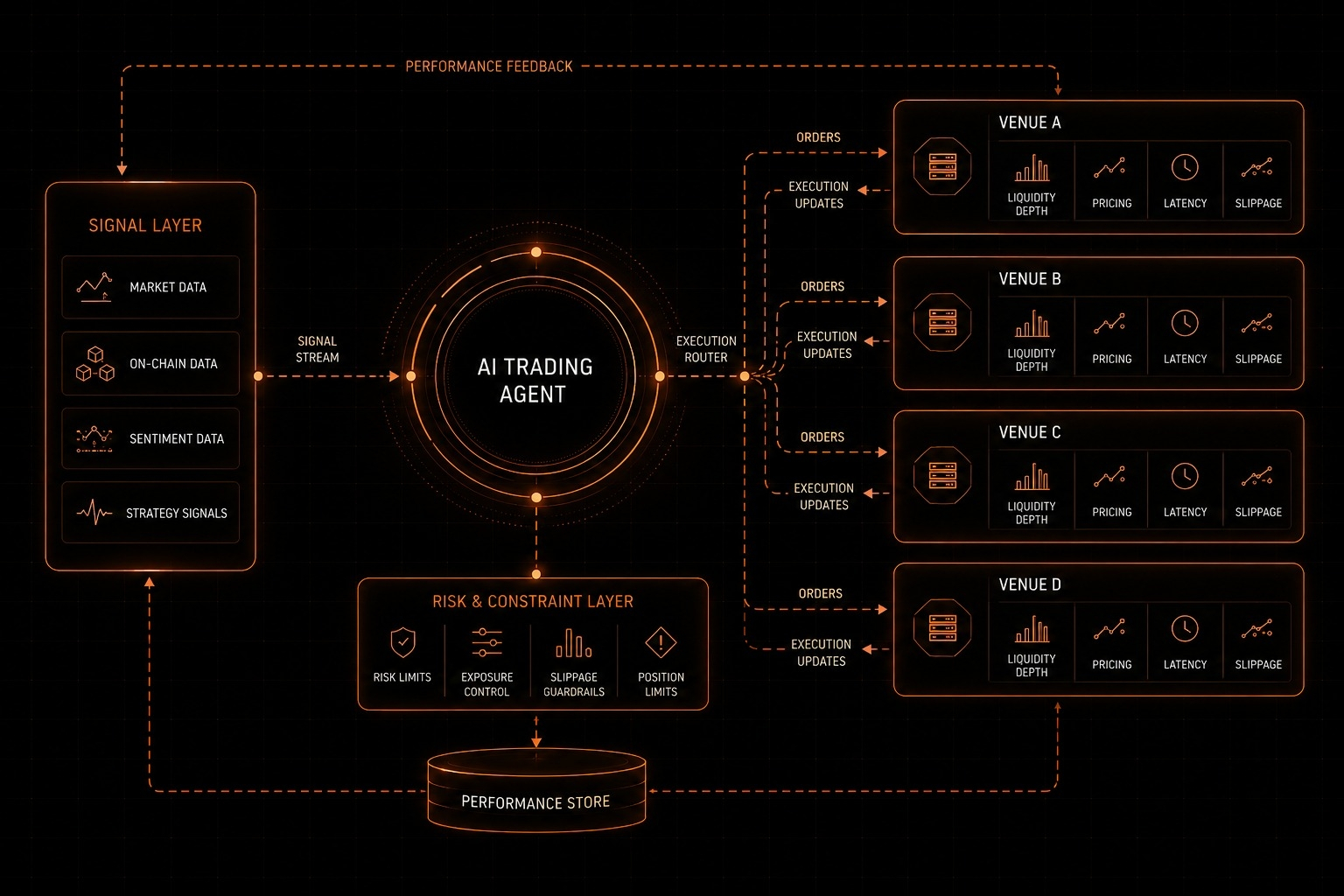
What makes it interesting is that it goes beyond traditional trading bots that simply follow fixed rules. OpenLedger is pushing more toward adaptive agents that combine multiple forms of intelligence like market sentiment, whale wallet tracking, news monitoring, volatility analysis, and automated execution into one system.
Users can apparently choose different trading styles like conservative setups, aggressive momentum strategies, trend-following systems, or fully custom approaches while also controlling things like leverage, stop losses, and capital allocation.
Personally, I think this is where AI-driven trading becomes much more useful. Markets move extremely fast now, especially in crypto, and manually reacting to every headline, sentiment shift, or liquidity move is becoming harder for most traders.
Having intelligent systems that can monitor multiple conditions simultaneously while staying within user-defined risk parameters could become a major advantage over time.
What also stands out is OpenLedger’s broader vision around AI infrastructure itself.
The project positions itself as an AI-focused blockchain where datasets, models, and agents can operate transparently on-chain. Instead of AI existing separately from blockchain systems, they’re trying to create an ecosystem where AI tools, liquidity, automation, and execution all work together natively.
That’s a much bigger vision than simply launching another trading bot.
Of course, there are still important questions around security, reliability, and real-world performance. Any autonomous system interacting with funds or executing trades will naturally require strong safeguards and trust from users.
But overall, I think OpenLedger is building in a direction that feels genuinely relevant for the future of Web3.
If they continue executing properly, tools like OctoClaw and Trading Agents could seriously change how people interact with DeFi, trading, and blockchain automation over the next few years.