
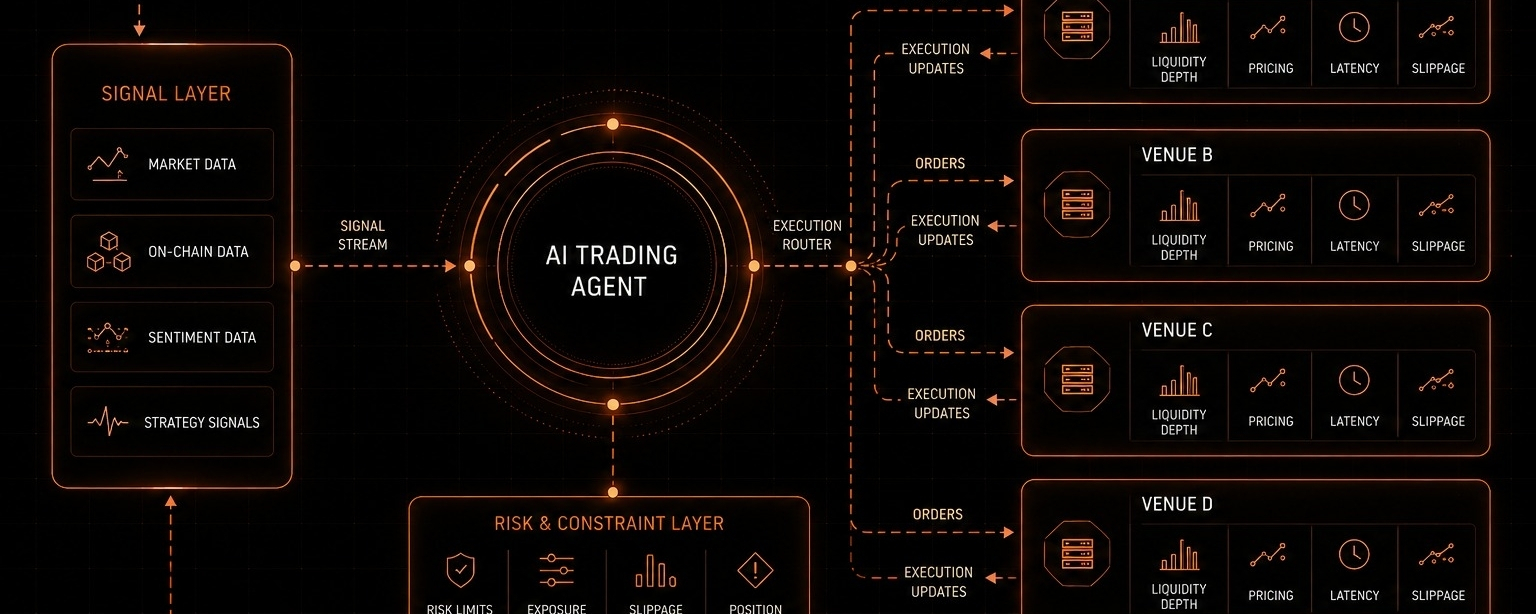
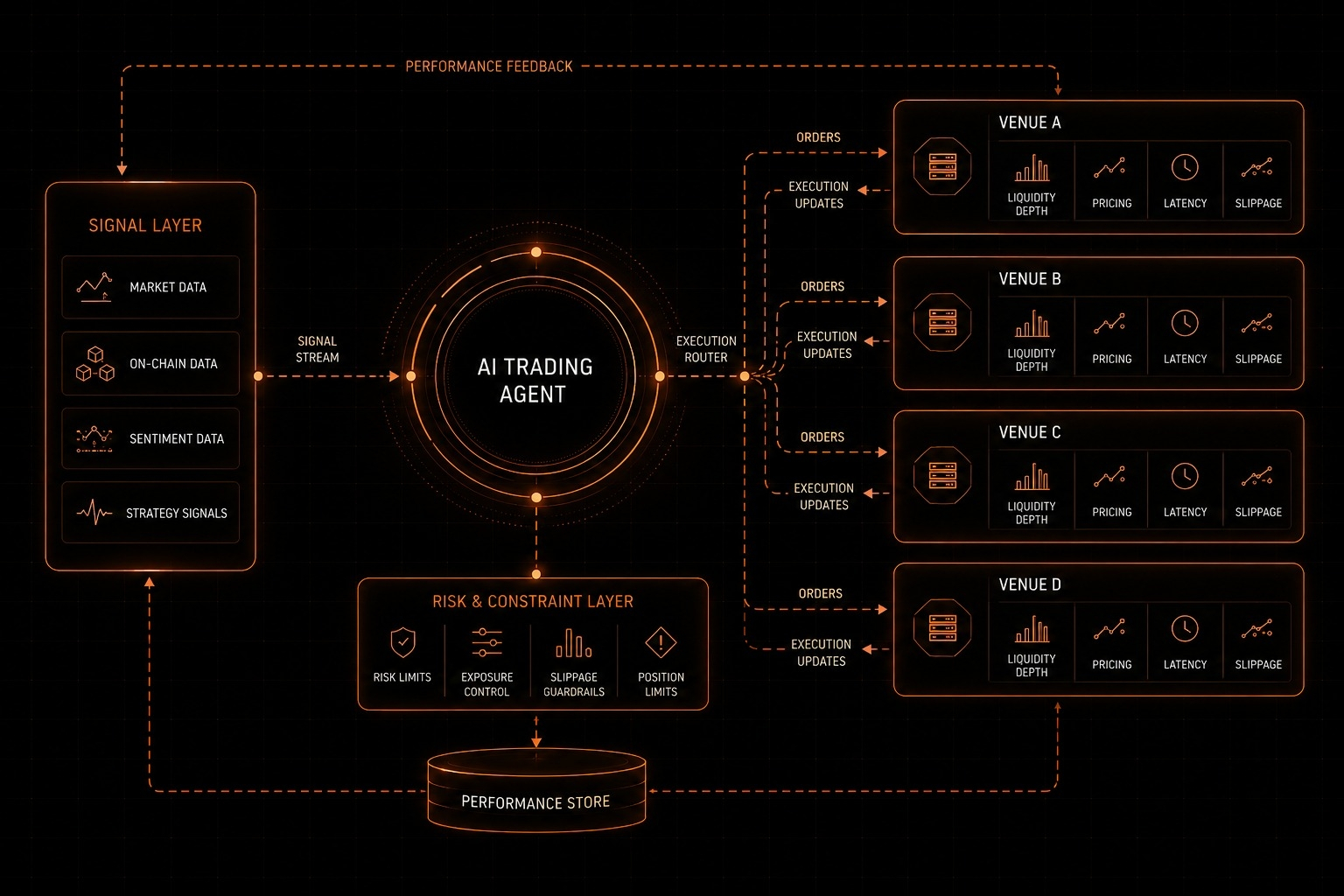
 AI trading agents are the new narrative… but 90% of people still don’t understand what they actually are doing.
Everyone is talking about “autonomous AI traders” like they are magic money printers. The reality is more nuanced and OpenLedger is one of the projects trying to define what this category even becomes.
OpenLedger is an AI-focused blockchain infrastructure designed to decentralize how data, models, and AI agents are created and rewarded. Instead of AI being controlled by centralized companies, OpenLedger records everything on-chain: data inputs, model training, and outputs a concept often referred to as Proof of Attribution.
Now where it gets interesting for traders is the shift toward AI agents as economic actors.
In traditional trading bots, logic is fixed: “If RSI < 30, buy. If price drops 5%, sell.”
But AI agents in ecosystems like @OpenLedger aim to go further: they don’t just follow rules they interpret context, learn from data contributions, and potentially adapt strategies over time.
OpenLedger’s structure is built around three core layers:
• Datanets (community datasets)
• Model Factory (training environment)
• OpenLoRA (efficient model deployment layer)
The idea is simple: better data → better models → smarter agents.
Now here’s the trading angle most people miss.
If AI agents are trained on community-owned financial and market datasets, then their behavior is no longer just “algorithmic execution.” It becomes data-influenced intelligence loops.
That means:
One dataset might bias an agent toward momentum strategies
Another might improve risk-off behavior in volatility spikes
Another might optimize execution timing across exchanges
In theory, this creates a network of competing agents with different “personalities” depending on what data they were trained on.
But let’s stay grounded.
Right now, most “AI trading agents” in crypto are still:
wrappers around LLM APIs
rule-based systems with AI marketing
or experimental tools without consistent profitability
Even Reddit dev discussions confirm this split: useful automation exists (rebalancing, execution, alerts), but fully autonomous profitable trading agents remain highly unreliable in live markets due to latency, adversarial conditions, and overfitting risks.
So where does OpenLedger fit?
It is not a trading bot.
It is infrastructure for building and rewarding AI agents, including financial ones. The token economy (OPEN) powers incentives, governance, and usage fees inside the ecosystem, aligning contributors with model performance and data utility.
Translation for traders: If AI agents ever become serious market participants, they will likely depend on systems like this to:
●source data
●verify training integrity
●and distribute rewards fairly across contributors
My take as a market watcher:
We are still early. Very early.
The narrative is moving from: “AI will trade for you” to “AI will be a fragmented ecosystem of competing strategies powered by different data economies.”
OpenLedger is trying to become part of that data economy layer.
But until agents prove consistent profitability in real market conditions, this remains a long-term infrastructure bet, not a short-term trading signal.
In crypto, the pattern is always the same:
●Narrative first
●Infrastructure second
●#Real adoption last
Right now, AI agents are still in phase one.
And that’s exactly where the opportunity and the noise, both live. #OpenLedger $OPEN