


OpenLedger Might Not Be Building AI Infrastructure…
It Might Be Building the Layer That Decides Who Gets Blamed When AI Fails.
For years, people believed AI’s biggest problem was compute power. Faster chips. Bigger clusters. More training capacity. The entire market became obsessed with scaling intelligence.
But the deeper AI moves into finance, compliance, banking, identity systems, legal workflows, and automation…
the less the real problem looks like intelligence itself.
The real problem starts looking like accountability.
Because when an AI model makes a bad meme, nobody cares.
When an AI system influences money, risk scores, legal outcomes, compliance checks, or business decisions…
suddenly one question becomes terrifyingly important:
Who is responsible when the output is wrong?
That question still feels massively underpriced across the AI market.
Most projects talk about performance.
Few talk about consequence management.
That’s why OpenLedger feels different.
People describe it as “AI infrastructure,” but I think that framing misses the bigger picture entirely.
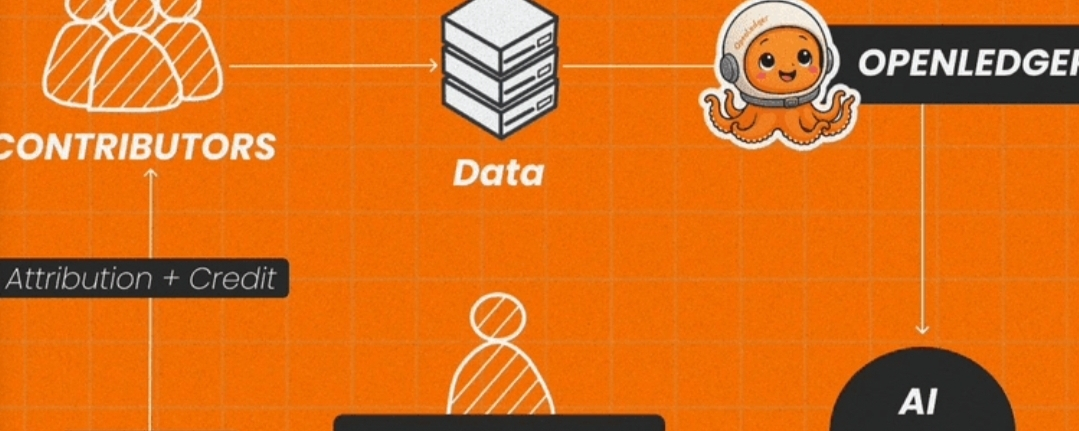
Attribution is not just a rewards system.
At scale, attribution becomes a liability map.
And that changes the investment thesis around $OPEN completely.
Modern AI systems are fragmented by design.
One company provides datasets.
Another fine-tunes models.
Another hosts inference.
Another builds orchestration layers.
Another injects external context through retrieval systems.
By the time the final AI output reaches a user, responsibility becomes blurred across multiple actors.
That creates a dangerous problem for institutions.
Because markets can tolerate uncertainty.
Banks cannot.
Compliance departments cannot.
Regulators absolutely cannot.
Nobody in serious governance meetings says:
“The AI vibes looked trustworthy.”
They ask for audit trails.
Decision lineage.
Source transparency.
Explainability.
Escalation paths.
Operational accountability.
And this is where OpenLedger starts becoming far more important than most people realize.
If the protocol successfully creates verifiable attribution around AI outputs, then it may not simply help AI scale faster…
It may help AI become governable.
That sounds boring compared to GPU hype narratives.
But boring infrastructure usually survives longer.
Financial markets evolved the same way.
Execution speed mattered first.
Then transparency mattered.
Then compliance architecture became critical.
Eventually the invisible trust layers became just as valuable as the visible execution layers.
AI may follow the same path.
Because intelligence without accountability works fine for entertainment.
Not for regulated systems.
Not for capital allocation.
Not for institutions handling real-world risk.
And that’s why I think $OPEN might eventually be competing in a much larger category than people currently understand.
Not compute.
Not model access.
Not hype-driven AI narratives.
But the market for reducing uncertainty around machine decisions.
And in the long run…
that may become one of the most valuable layers in the entire AI economy.
#OpenLedger #Aİ @OpenLedger $OPEN
