
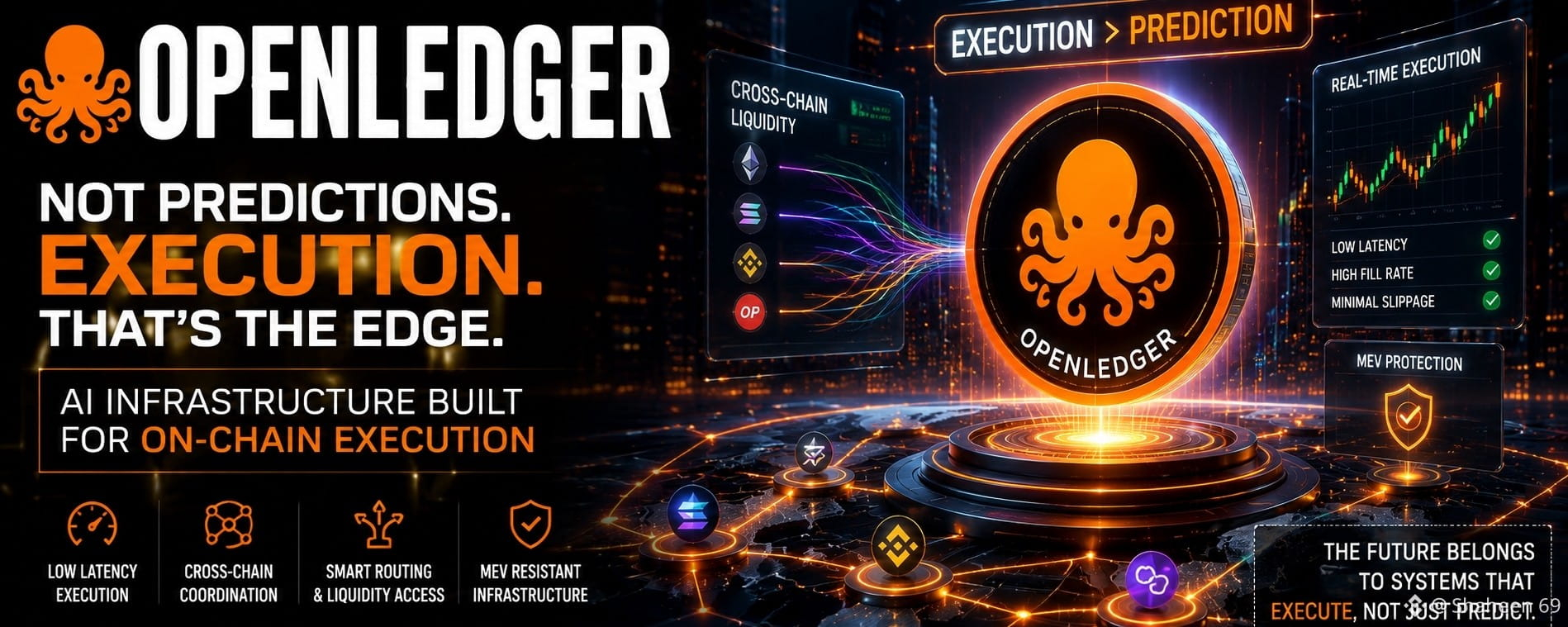

A few days ago I opened a small OPENLEDGER position almost by accident. Nothing big — around 3% portfolio exposure. Honestly, I wasn’t even looking for another AI narrative play. I’ve seen too many of them already. Same cycle every time: futuristic promises, aggressive threads, huge engagement… then silence once the liquidity disappears.
What caught my attention wasn’t the marketing though. It was the way price reacted around a key Fibonacci retracement last week.
I was actually expecting continuation lower. Market structure looked weak and sentiment across AI coins felt exhausted. But the reaction there was weirdly controlled. Sellers pushed hard into the level, price flushed quickly, then got absorbed almost immediately. No emotional bounce. No euphoric reclaim. Just quiet buying pressure sitting underneath.
That kind of reaction usually tells me somebody cares about execution more than narrative.
And that’s where OpenLedger started looking different to me.
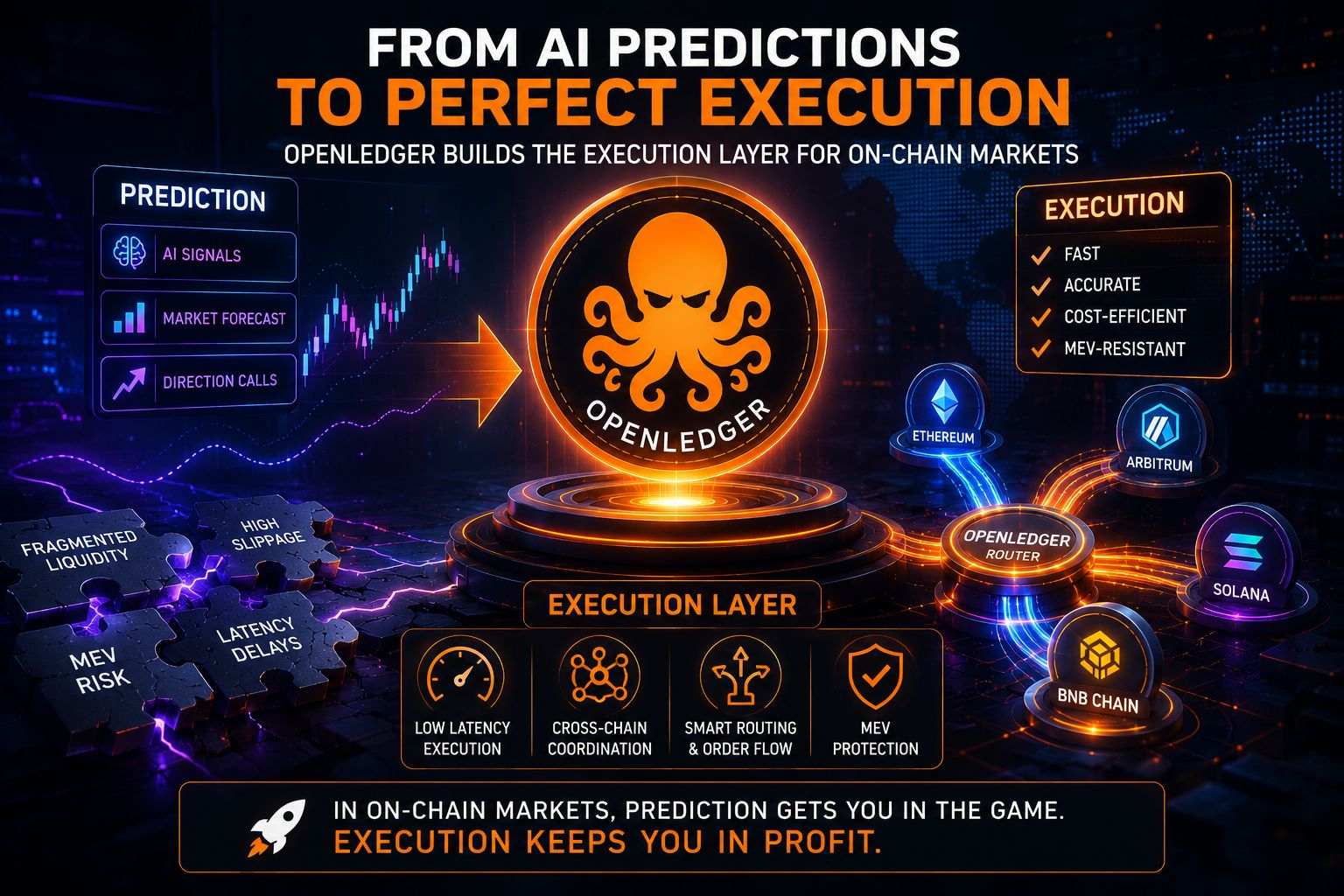
Most AI-related projects in crypto still focus heavily on prediction. Better signals. Smarter models. Faster AI decisions. But after watching on-chain conditions recently, I’m starting to think prediction isn’t the real edge anymore.
Execution is.
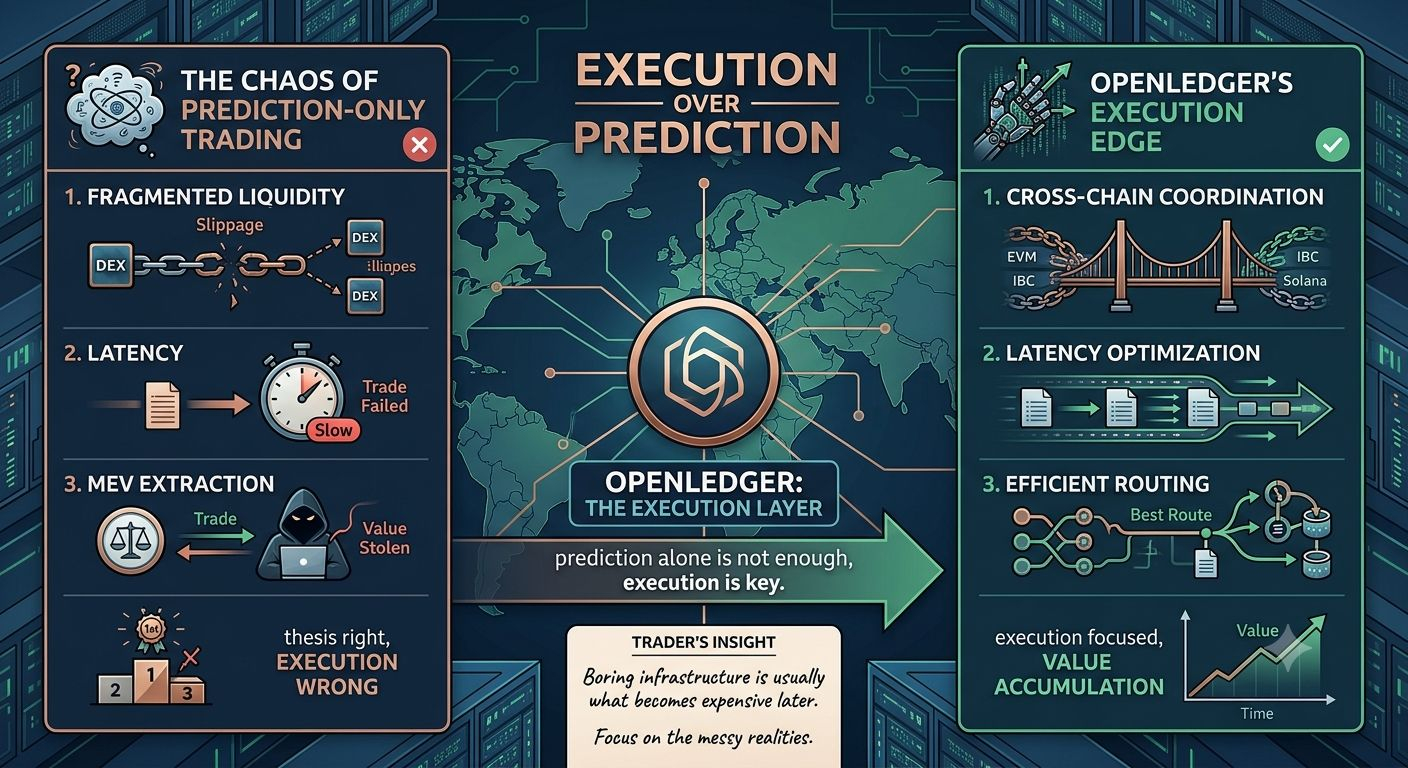
Liquidity is fragmented across chains now. Even when your directional call is correct, slippage, routing inefficiencies, latency, or MEV extraction can completely destroy the trade. I learned that the hard way last month trying to rotate size during a volatile move — the thesis was right, but execution was terrible and I gave back almost 11% just from poor fills and delays.
That experience changed how I look at infrastructure projects.

OpenLedger keeps emphasizing cross-chain coordination, latency optimization, and execution efficiency instead of constantly selling “AI alpha.” At first I thought that sounded boring. Then I realized boring infrastructure is usually what becomes expensive later.
It actually reminds me of early DeFi infrastructure in 2020. Back then, nobody cared about plumbing layers either. People only chased APY numbers and governance hype while the real long-term value quietly accumulated underneath in the systems that made everything work.
I’m not saying OpenLedger automatically becomes some massive winner because of this. I still have skepticism. AI narratives are dangerous because people project fantasies onto incomplete products. Half the market buys things they barely understand simply because “AI” sounds inevitable.
But there’s something interesting about a project focusing on the messy realities of execution instead of pretending prediction alone solves trading.
Especially because market behavior itself seems to be changing.
A year ago traders mainly paid for information advantage. Now it feels like everyone already has similar information at the same time. The real difference is who can execute efficiently inside fragmented liquidity conditions without getting front-run, delayed, or drained by bad routing.
That’s a very different problem.
And honestly, price action around OpenLedger doesn’t feel euphoric to me right now. It feels uncomfortable. Slow. Uncertain. Like the market still hasn’t fully decided whether this is overhyped AI infrastructure… or whether people are underestimating what execution-focused systems might become once on-chain activity scales further.
Those are usually the phases I pay attention to most.
Not when everybody agrees.
But when structure quietly improves while conviction is still divided.
I’m still managing this as a test position for now. No oversized conviction. No blind optimism. But I can’t ignore the possibility that OpenLedger may be targeting the part of the AI stack the market only understands later — the layer that actually makes autonomous systems function efficiently in chaotic on-chain environments.
And if that thesis turns out correct, prediction alone probably won’t matter nearly as much as people think.