
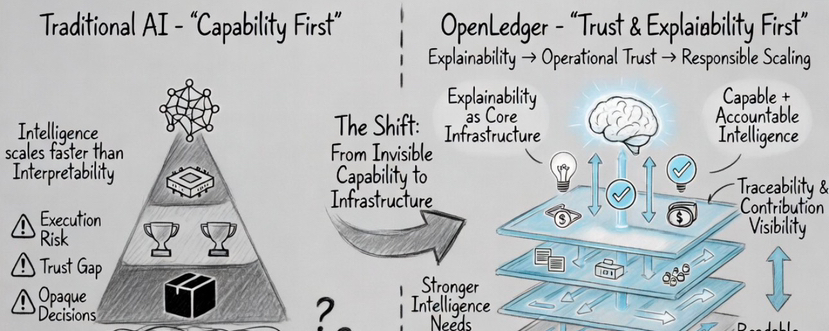
I kept coming back to one thought while looking deeper into OpenLedger.
The AI industry still behaves like bigger models automatically solve deeper problems.
More parameters.
More compute.
More optimization.
The assumption underneath most AI development feels obvious. If intelligence capability keeps improving, systems become more useful, more reliable, and eventually more trustworthy.
The more I looked at where AI infrastructure is actually moving, the less convincing that assumption started feeling.
Because capability growth and trust growth are not the same thing.
And I think OpenLedger is building around that distinction earlier than most people realize.
For years AI development focused heavily on outputs. Better reasoning. Better generation quality. Better benchmarks. Better multimodal performance. The visible layer improved fast.
The invisible layer did not improve at the same speed.
Understanding why systems make decisions still remains surprisingly difficult.
Modern AI systems increasingly operate inside environments where intelligence does not simply generate information anymore.
It executes.
It coordinates.
It routes decisions.
It touches financial systems.
It moves through agent infrastructure.
It interacts across environments where mistakes stop behaving like inconvenience and start behaving like operational risk.
That changes what matters.
A weak chatbot answer creates frustration.
An autonomous system operating without explainability creates uncertainty underneath infrastructure itself.
That difference matters more than people realise.
@OpenLedger keeps pulling attention directly toward that problem.
Because intelligence capability scales faster than interpretability.
And eventually systems become powerful enough where understanding decision pathways becomes infrastructure itself.
The more I looked deeper into OpenLedger architecture, the more explainability started feeling less like an optional AI feature and more like a requirement for intelligence operating at meaningful scale.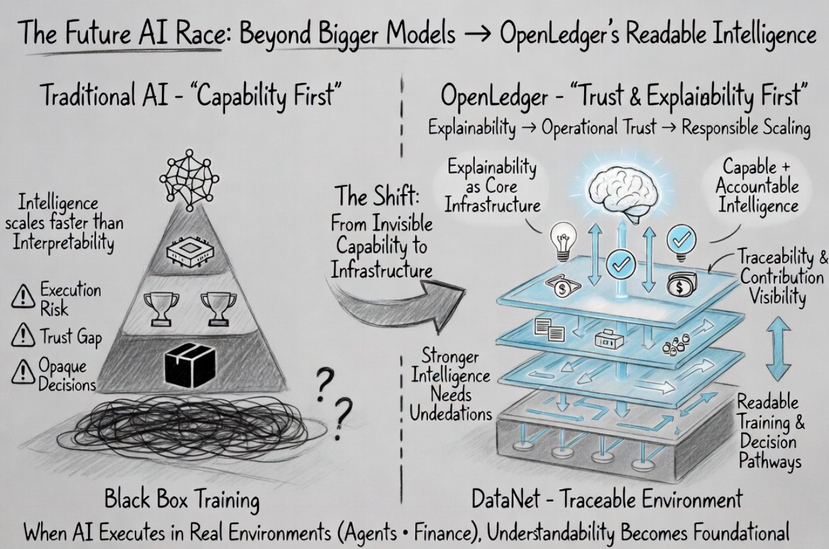
Most people think explainable AI means simple visibility.
Why did the model produce this output?
What information influenced the answer?
What data shaped reasoning?
Those questions matter.
OpenLedger seems increasingly focused on something larger.
Infrastructure around traceability itself.
Because intelligence does not only need outputs.
Intelligence increasingly needs readable foundations.
That distinction changes system design.
Modern AI systems often behave like exceptional reasoning engines operating inside partially invisible environments.
Information enters systems.
Training happens.
Optimization happens.
Inference happens.
Outputs appear.
The deeper learning pathway underneath often remains difficult to inspect.
That structure works reasonably well while AI operates primarily inside information environments.
The problem changes once AI systems begin carrying execution responsibility.
Agent systems.
Autonomous coordination.
Financial routing.
Context-aware automation.
Decision infrastructure.
The stronger intelligence becomes, the more infrastructure surrounding intelligence starts mattering.
OpenLedger keeps feeling increasingly aligned around that shift.
Because explainability changes incentives.
It changes trust assumptions.
It changes infrastructure design.
And honestly I think infrastructure design becomes increasingly important over the next phase of AI development.
People still frame AI competition heavily around capability growth.
OpenLedger keeps pulling attention toward operational trust.
That feels increasingly important.
Because eventually capability growth compresses.
Optimization spreads.
Infrastructure improves.
Open-source ecosystems evolve quickly.
Capability advantages become harder to defend.
Trust architecture does not compress equally.
Systems operating inside transparent environments behave differently from systems operating inside opaque environments.
That distinction compounds.
The more AI systems move toward execution environments, the more explainability starts behaving less like analytics and more like operational infrastructure.
OpenLedger repeatedly moves toward readable intelligence systems rather than purely capable intelligence systems.
That changes how systems scale.
Because understanding intelligence becomes increasingly important once intelligence begins interacting with environments carrying economic consequences.
Explainability solves multiple infrastructure problems simultaneously.
Contribution visibility improves.
Traceability improves.
Decision pathways become inspectable.
Infrastructure accountability becomes stronger.
OpenLedger keeps treating those layers seriously.
That changes how trust develops.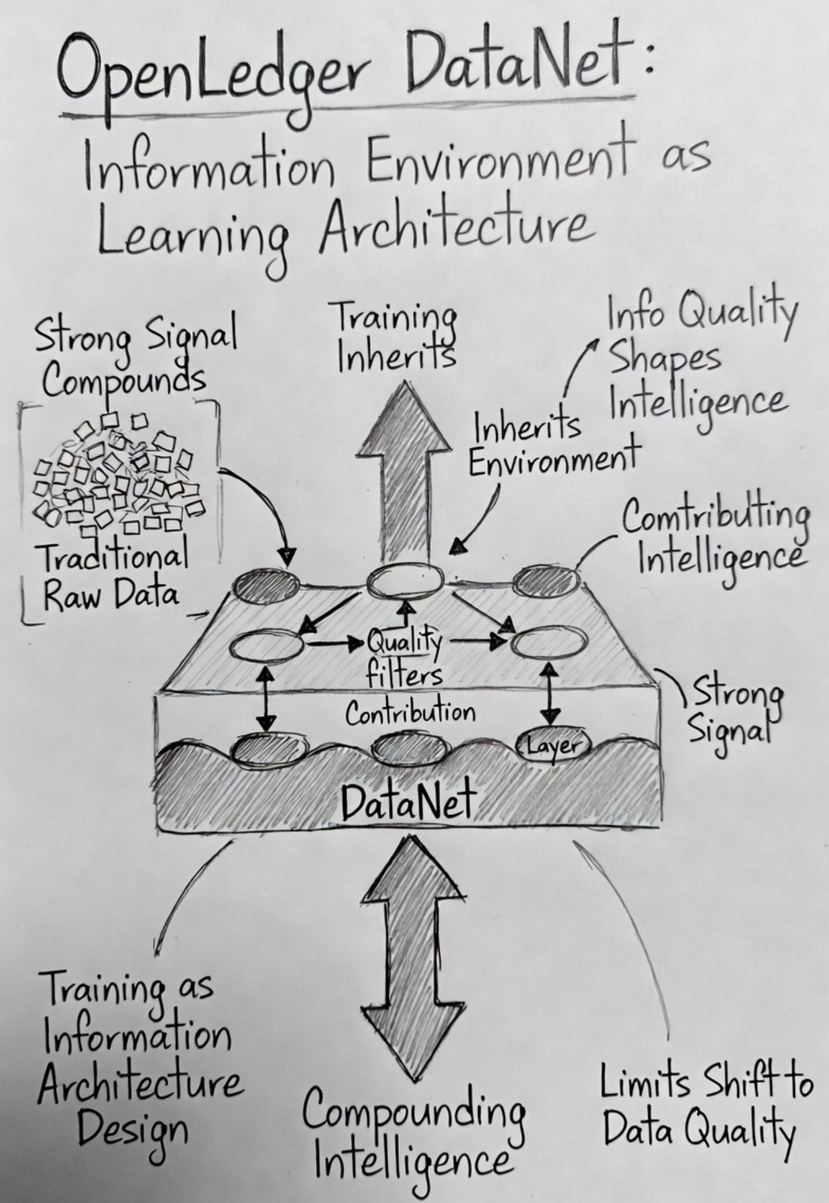
Modern systems usually optimize performance first.
Interpretability arrives later.
OpenLedger increasingly feels aligned around building explainability directly into intelligence infrastructure rather than adding visibility after systems become difficult to inspect.
That distinction feels small.
It changes architecture.
Because explainability affects more than transparency.
It affects governance.
It affects verification.
It affects operational confidence.
It affects adoption.
People underestimate adoption friction.
Organizations increasingly move toward AI systems.
Financial systems increasingly move toward autonomous infrastructure.
Agent coordination expands.
Decision systems become more complex.
The stronger intelligence becomes, the harder invisible infrastructure becomes to defend.
OpenLedger keeps building toward a future where intelligence remains understandable alongside becoming more capable.
That matters.
Because operational trust increasingly becomes infrastructure.
And operational trust depends heavily on understanding system behavior.
The more I looked into OpenLedger, the more explainability stopped feeling like a feature discussion.
It started feeling like an infrastructure discussion.
That changed how I thought about AI competition.
Because eventually bigger models stop being the only differentiator.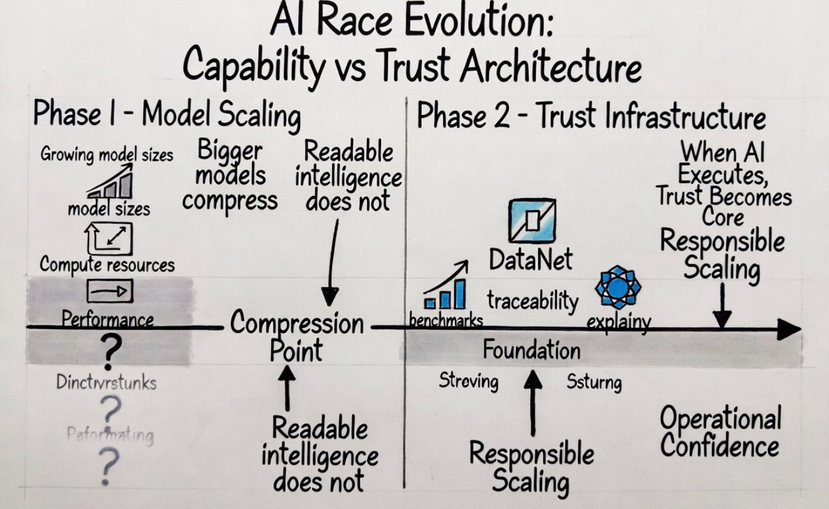
The systems that scale responsibly may increasingly belong to environments where intelligence remains readable.
OpenLedger keeps pulling attention there.
Not capability without visibility.
Capability carrying accountability underneath it.
That distinction feels increasingly important.
Especially because AI systems do not operate inside isolated environments anymore.
They increasingly interact with liquidity systems.
Economic systems.
Agent systems.
Decision systems.
Autonomous infrastructure.
The stronger those environments become, the more explainability starts behaving like foundational infrastructure instead of optional tooling.
OpenLedger feels increasingly aligned around that assumption.
And honestly I think the next phase of AI competition may force that shift faster than people expect.
Because eventually people stop asking whether intelligence became smarter.
They start asking whether intelligence remains understandable.
That is where explainability starts mattering more than bigger models.
And OpenLedger feels increasingly built around that future.
