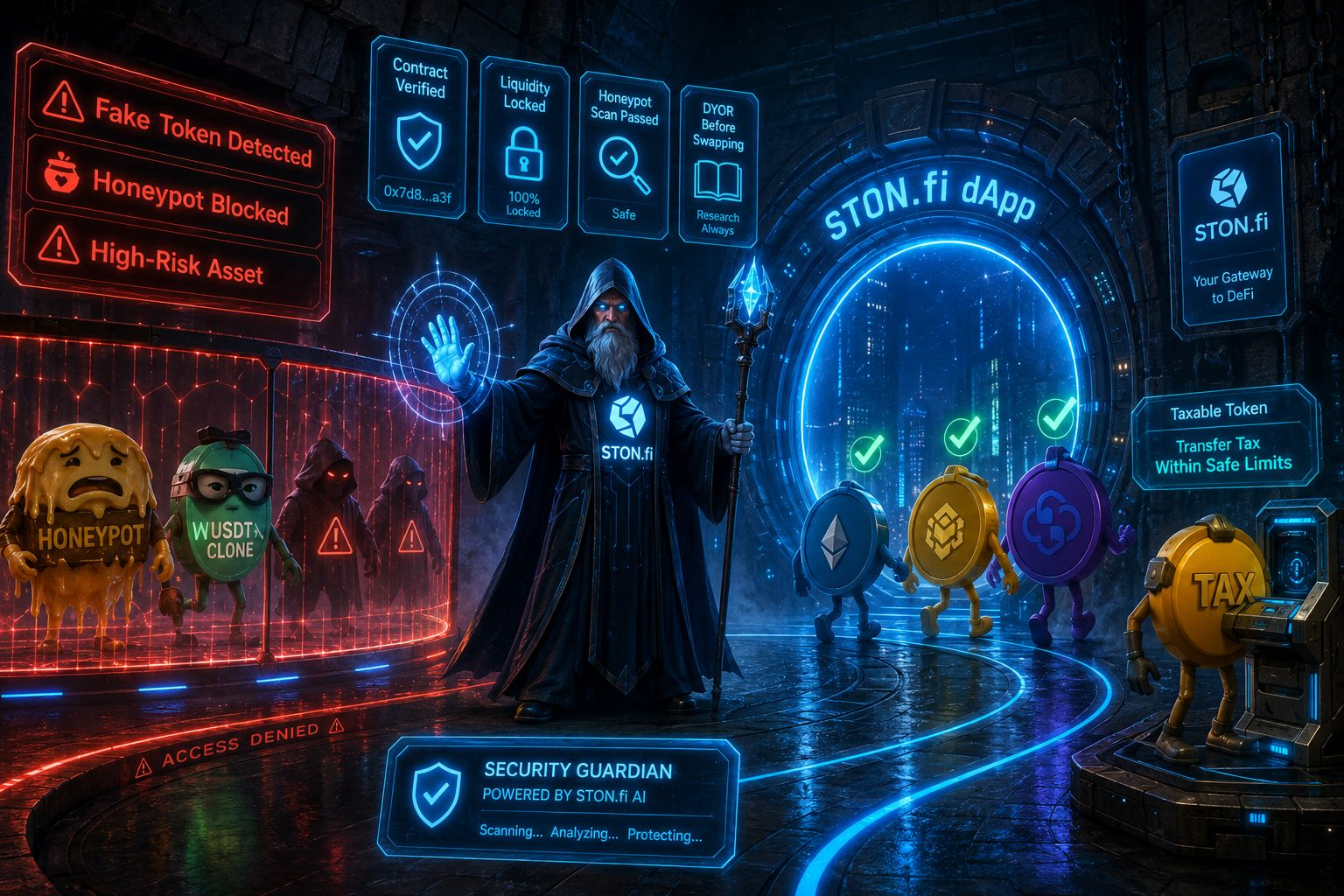
One of the biggest strengths of DeFi is that anyone can launch a token.
The downside is that legitimate projects end up sharing the same ecosystem with fake assets, honeypots, misleading branding, and experimental contracts.
STON.fi approaches this problem through interface-level token labels designed to give users more context before interacting with risky assets.
Importantly, these labels do not remove tokens from the blockchain itself.
Instead, they function as transparency markers based on signals like:
• community reports
• manual reviews
• automated honeypot alerts
• legal DMCA complaints
Some of the core labels include:
🚫 Fake — tokens imitating real assets or brands
🪤 Honeypot — assets that can be bought but not sold normally
⚠️ Suspicious — tokens using misleading branding or identities
⚖️ DMCA Notice — assets tied to copyright complaints
💸 Taxable — tokens with additional transfer or swap fees
STON.fi also adds deliberate friction around flagged assets.
Many labeled tokens disappear from normal search results and require manual contract-address entry before interaction.
Some categories face even stricter restrictions:
• Fake and Honeypot tokens cannot be swapped in the dApp
• Taxable tokens lose support if transfer taxes exceed 10%
What makes this approach interesting is that it tries to balance openness with user awareness rather than removing assets entirely from the ecosystem.
Ultimately, the interface provides context, but responsibility still belongs to the user.
If a token requires manual contract entry, that should always be treated as a signal to slow down, verify sources carefully, and DYOR before interacting.