
Tokenomics is the part most people skip. They see a price chart, check if it’s listed on Binance, maybe glance at the market cap, and call it research….. I used to do the same thing. But after getting burned enough times on projects with terrible supply design, I started actually reading this stuff before forming an opinion.
So I spent some time going through OpenLedger’s token setup. Here’s what I found and what I actually think about it….
The supply situation…..
Total supply is 1 billion $OPEN . Right now roughly 290 million are in circulation, so we’re sitting at about 29% of total supply in the market. That’s not tiny but it’s not crazy either….. There’s still a significant portion yet to enter circulation, which matters for thinking about long term price dynamics.
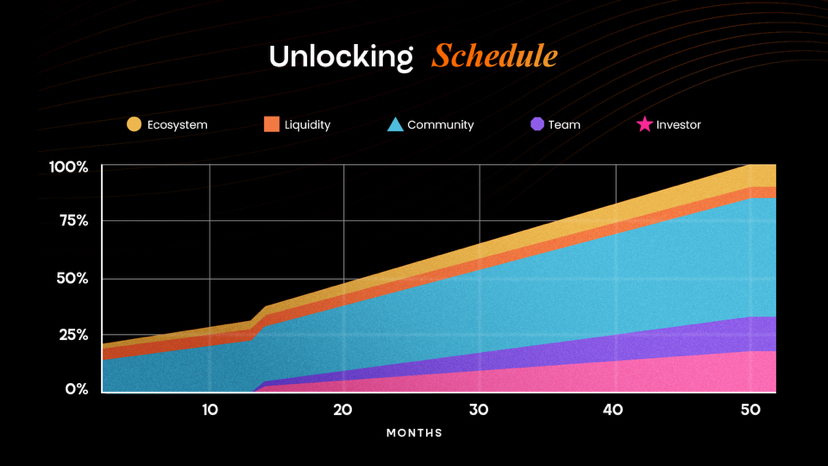
The honest thing to say here is that any project with 70% of supply still locked carries dilution risk. That’s just math. But what matters more is where that supply is going and over what timeline. Which brings me to the part I actually found interesting……
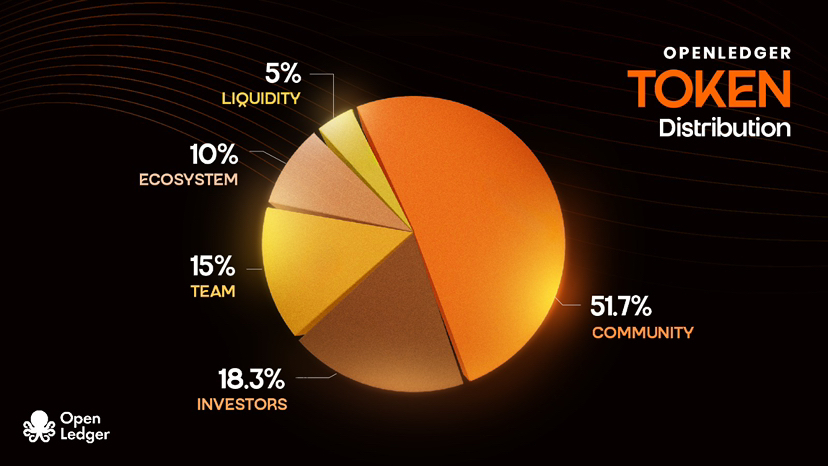
The community allocation is the biggest piece…..
This is the part that caught my attention. The largest allocation of OPEN tokens goes to the community. Not the team. Not VCs. The community.
That’s not something you see often and I don’t want to just take it at face value, but structurally it does signal something about how they’re thinking about this. Projects that front load team and investor allocations tend to create sell pressure the moment vesting cliffs hit. When the community holds the biggest share, the incentive structure at least points in a better direction.
Whether the vesting schedules actually protect against dumping is something worth watching. But the design intent here seems different from the typical “we get ours first” playbook.
What the token actually does…..
This is where $OPEN has more going for it than most AI tokens I’ve looked at. A lot of AI projects have tokens that basically exist for speculation. There’s no real reason to hold or use them within the ecosystem.
OPEN has actual utility woven into the platform. You use it to pay for AI inference, meaning when someone runs a model or uses an agent through the platform, that goes through OPEN. Contributors get rewarded in OPEN for the data and models they bring to the network. Governance proposals, model approvals, staking, platform fees, all of it runs through the same token.
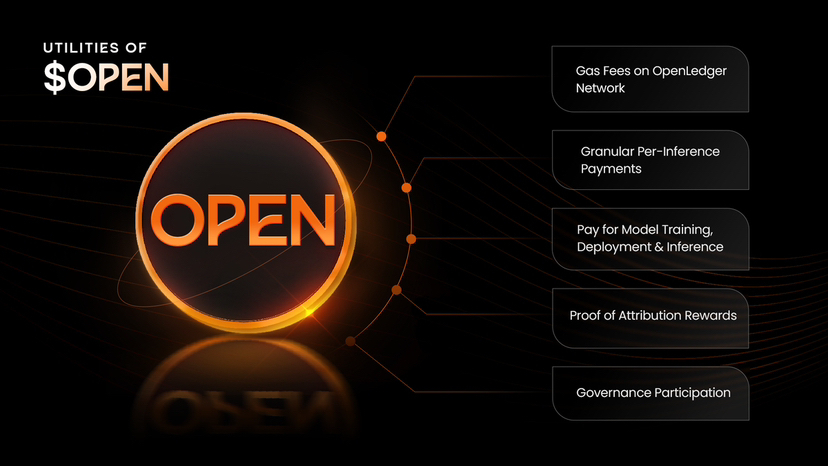
That’s a real demand loop. If the platform gets used, the token gets used. That’s the basic logic you want to see in tokenomics and it’s here.
The staking piece matters too. When tokens get staked for governance or ecosystem participation, they come out of circulating supply. It doesn’t fix dilution concerns completely but it does create natural locking pressure if the community is actually engaged.
No burn mechanism that I found….👍
Honestly I didn’t find a clearly documented burn mechanism for OPEN and I think that’s worth mentioning. Some projects use token burns to manage supply and create deflationary pressure over time. OpenLedger doesn’t seem to lean on that as a core mechanic, at least not visibly.
Whether that’s a problem depends on how you think about it. If platform usage is strong and staking participation is high, you can get similar supply tightening effects without burns. But if adoption is slow and supply keeps unlocking, that’s where things get uncomfortable. So this one is a watch item for me, not a dealbreaker.
The part I think is underrated…..❤️
The inference payment model. When AI models get called through OpenLedger’s infrastructure, OPEN is the payment layer. That’s not just governance fluff. That’s actual transactional demand tied directly to how much the platform gets used.
The more AI agents get deployed, the more OctoClaw gets used, the more ModelFactory builds and runs models, the more consistent demand gets created for the token. That feedback loop is cleaner than most AI tokens I’ve seen where the token is essentially just a governance vote with no real utility underneath.
My read on it….
Circulating supply is still a minority of total, which means future unlocks will be something to track. And I’d like to see more clarity on how inflation or release schedules are managed going forward.
But the community-first allocation, the real utility across inference and contributor rewards, and the governance structure all point toward a design that at least tries to align long term incentives properly. That’s more than I can say for a lot of projects at this market cap.
I’m not saying go all in. I’m saying the token design here is worth taking seriously rather than dismissing as narrative noise.
What’s your read on $OPEN tokenomics? Anyone tracking the vesting schedule closely?