

A trained AI model is a strange kind of asset.
Not physical like land. Not abstract like a stock. Not simple like a digital coin. A model sits somewhere in between. It is code. It is mathematics. It is knowledge compressed into patterns. It can take months to build. Seconds to copy. And under current systems, almost impossible to sell fairly.
OpenLedger changes this. Not by force. By design.
Let me walk through how model tokenization actually works on this blockchain.
The starting point is a trained model. Someone builds it. A researcher. A startup. A developer working late nights. The model performs a task. Recognizes objects in images. Generates text from prompts. Predicts customer behavior. Whatever the function, the model has value. But value alone means nothing without a way to capture it.
On OpenLedger, that model becomes a token.
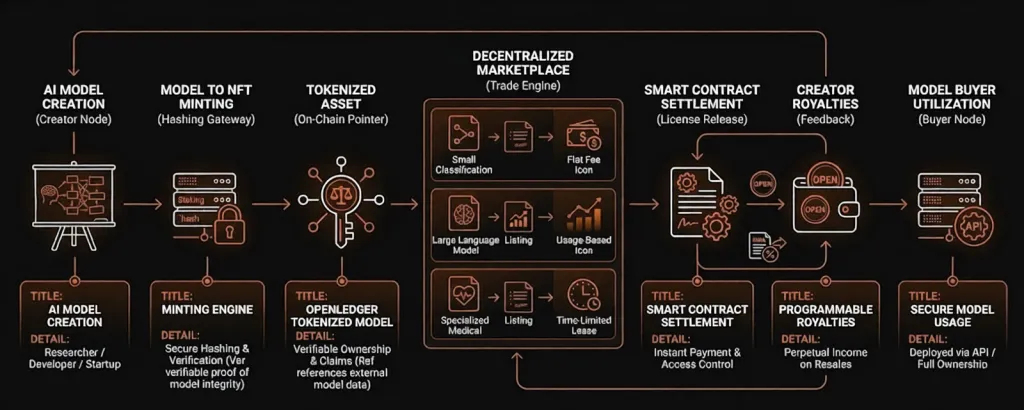
Not a metaphorical token. A real one. Minted on the blockchain. Representing ownership, licensing rights, or usage access depending on how the creator structures it. The token does not store the model itself. Blockchain cannot hold large files efficiently. Instead, the token points to the model. References it. Claims it. Verifies it.
Here is what tokenization enables.
Before OpenLedger, selling a model meant trusting a buyer not to copy and redistribute it. Trust is expensive. Trust fails. Many creators simply never sold because the risk outweighed the reward. Their models sat unused. Value trapped.
Tokenization changes the trust equation. When a model becomes a token, every transfer records permanently. Every license tracks transparently. Every usage leaves a signature. A buyer cannot claim they never received the model. A seller cannot double-sell the same license. The blockchain acts as an impartial witness.
Now let me explain how trading works.
OpenLedger operates a marketplace specifically for model tokens. Creators list their tokens with terms attached. One-time purchase for full ownership. Time-limited license for temporary access. Usage-based licensing where payments flow per inference or per API call.
Smart contracts execute these terms automatically. No lawyers. No negotiations. No payment delays. A buyer wants a model license. They send OPEN tokens to the contract. The contract releases access credentials. The creator receives payment instantly. Both sides satisfied without ever meeting.
This is not theoretical. The infrastructure exists today.
Different model types suit different token structures.
A small classification model might sell for a flat fee. Low price. High volume. Developers buy it once and use it forever. A large language model might license by usage. Expensive to train, expensive to run. Fairer to charge per query. A specialized medical imaging model might lease to hospitals on annual terms. Recurring revenue for creators. Predictable costs for users.
OpenLedger supports all these models, literally and figuratively.
The pricing mechanism deserves attention. No central authority sets prices. The market does. Multiple creators list similar models. Buyers compare quality, price, and terms. Competition drives fairness. A model that performs better commands higher prices. A model with poor documentation sells at discount. The market learns.
This creates incentives for quality. A creator who builds accurate, well-documented, easy-to-use models earns more. A creator who cuts corners earns less or nothing. The token market becomes a reputation system. Trust is not declared. Trust is demonstrated through sales.
Now consider what happens to model value over time.
Traditional software depreciates. Old versions lose relevance. AI models behave differently. A model trained yesterday might outperform one trained last year, but last year's model still works for specific tasks. There is no absolute obsolescence. Different users need different capabilities.
OpenLedger's secondary market captures this. A model token bought for one purpose can resell to someone with a different purpose. The original creator earns royalties on each resale if coded into the smart contract. Passive income. Ongoing value. A model that continues serving users continues generating revenue.
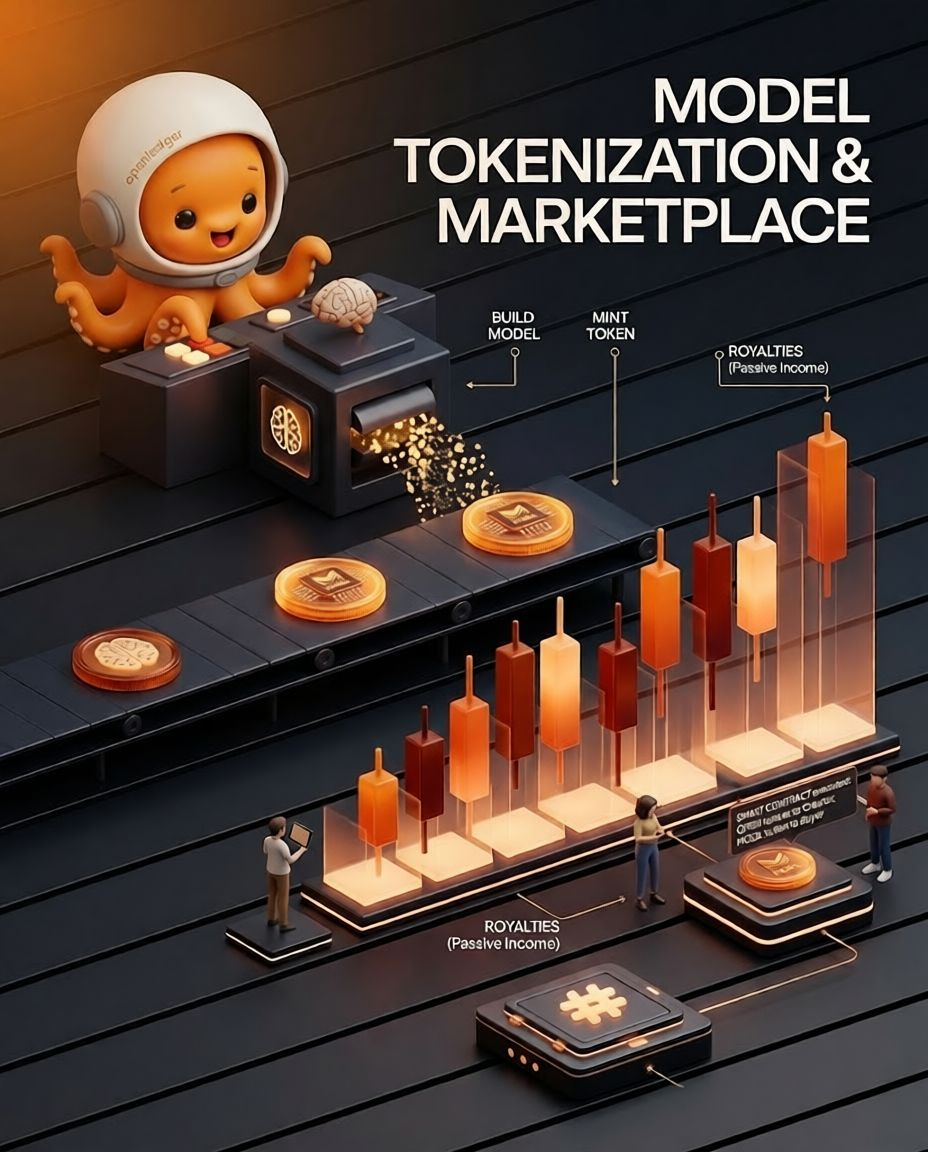
This royalty feature changes the economics of AI development. Today, a creator sells a model once and walks away. No matter how many times that model changes hands, the creator sees nothing more. OpenLedger flips this. Programmable royalties mean creators participate in the full lifecycle of their work. Build once. Earn repeatedly.
Model buyers also benefit from tokenization. A purchased model token sits in their wallet. Verifiable. Transferable. Usable as collateral? Possibly in future DeFi integrations. But even without that, simple ownership clarity has value. No disputes. No missing files. No questions about whether a license is valid.
Security matters here. A model token without security is worthless. OpenLedger verifies model integrity through cryptographic hashing. The model file's hash gets recorded on chain at token creation. Anyone can verify that the model they receive matches what was listed. No substitution. No tampering. No bait and switch.
The privacy question comes up often. Some model creators do not want their work public. Trade secrets. Proprietary methods. Competitive advantage. OpenLedger accommodates private listings. The token exists on chain. The model itself stays encrypted or hosted off chain. Buyers receive decryption keys only after payment. The blockchain proves the transaction. The model remains protected.
What about model updates? A model that improves over time needs versioning. OpenLedger supports upgradeable tokens. Creators can issue new versions while maintaining the original token lineage. Buyers receive updates automatically or optionally, depending on the license terms. Flexibility without breaking trust.
Scale matters for any marketplace. A few dozen models does not make an economy. Thousands do. OpenLedger's architecture handles large numbers of tokens, frequent trades, and complex license terms without slowing down. Speed matters when a developer needs a model immediately to meet a deadline.
The network effect here is powerful. More models attract more buyers. More buyers attract more creators. More creators produce more models. The flywheel spins. OpenLedger provides the rails. The community provides the value.
Early signs show creators experimenting with model tokenization. Simple image classifiers. Sentiment analysis tools. Data cleaning scripts. Nothing earth shattering yet. But every large economy started with small transactions. The infrastructure is ready. The incentives are aligned. The rest is adoption.
For anyone who has built an AI model and wondered how to monetize it, OpenLedger offers an answer. Tokenize it. List it. Let the market decide its worth. For anyone who needs models without building everything from scratch, OpenLedger offers a library. Browse. Compare. Buy. Deploy.
Models are too valuable to stay locked in silos. OpenLedger opens the doors. One token at a time.
