
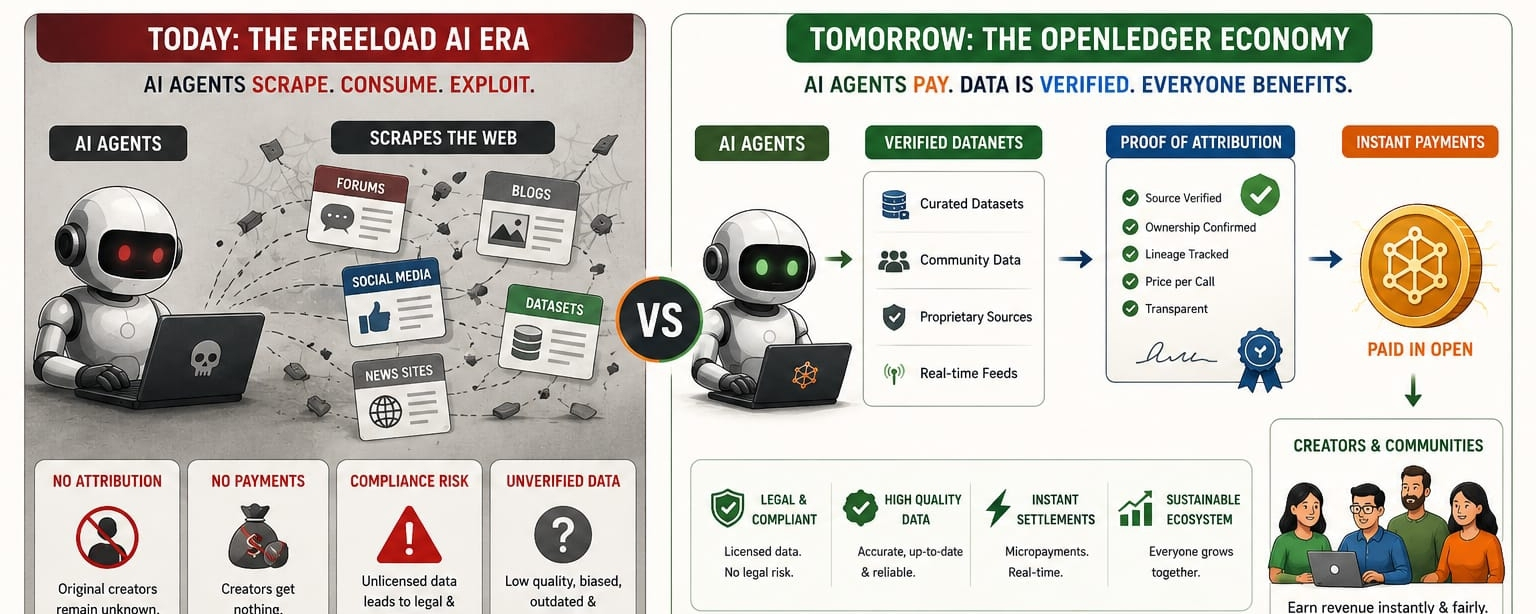
I caught myself arguing with a customer service chatbot the other day. Not because it was rude it was actually too polished. Every response felt like it had been harvested from some long-lost forum thread where a real human had patiently explained the exact issue I was having. That helpful stranger will never know their words got packaged into an enterprise software suite. And the bot certainly didn’t send them a thank-you note.
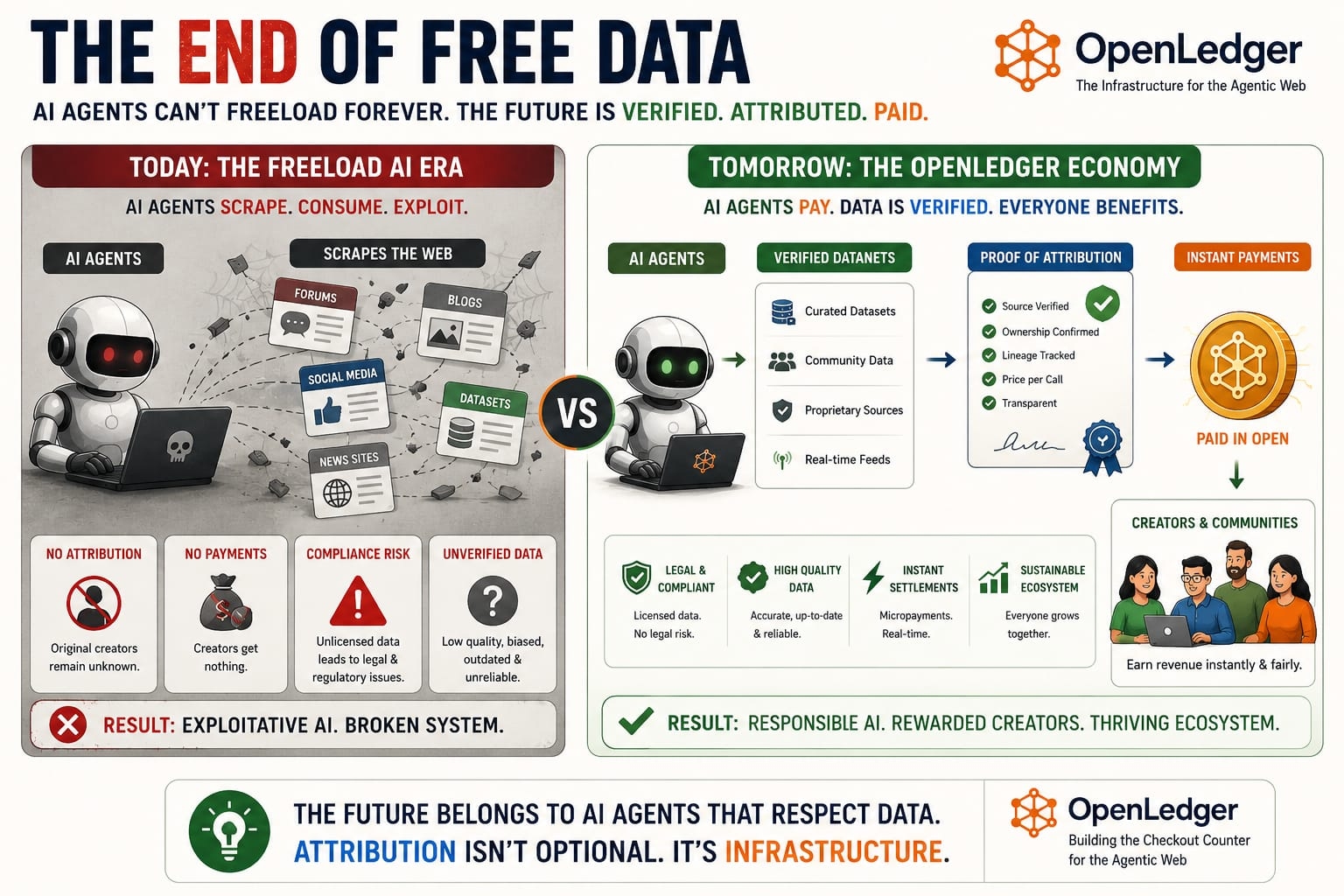
For a while, I framed this as a human-versus-machine injustice. But the more I sat with OpenLedger’s vision, the more I realized I was aiming my frustration at the wrong target. The real story isn’t about AI stealing from people. It’s about the fact that AI agents themselves are currently freeloaders, and that’s going to become a massive problem not just for us, but for the agents too.
Think about where AI is heading. We’re not going to have one monolithic chatbot. We’re going to have swarms of specialized AI agents negotiating, researching, and transacting on our behalf. One agent books flights, another analyzes legal contracts, another sources niche industrial parts. These agents will need data that is fresh, verified, and legally clean. They can’t just scrape the web and hope for the best. In regulated industries, using unlicensed or unattributed data will be a compliance nightmare. So these agents will need to pay for data not with vague promises, but with instantaneous, auditable micropayments. That’s a machine-to-machine economy, and it needs a payment rail that doesn’t sleep.
This is where OpenLedger clicked for me in a way that had nothing to do with tokens or charts. It’s building the checkout counter for the agentic web. Its Proof of Attribution isn’t just a royalty system for humans; it’s a verification layer that tells an agent, “This dataset is legitimate, here’s its lineage, and here’s exactly how much it costs per call.” When an AI model needs specialized knowledge say, real-time satellite imagery or a proprietary medical dataset it can query a Datanet, pay in OPEN, and get an attribution receipt. No human in the loop. No awkward invoice emails. Just code paying code for verified truth.
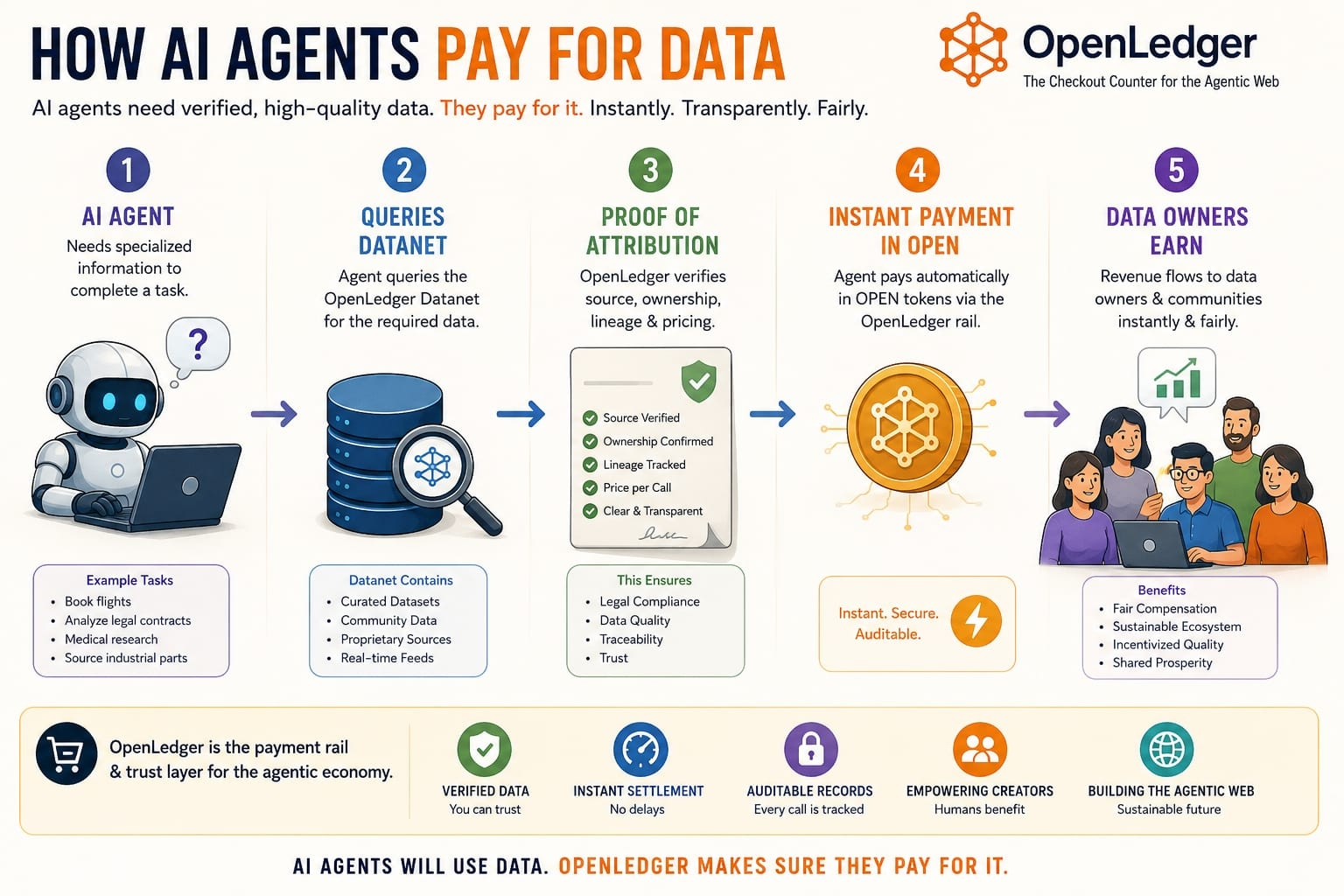
I used to worry about whether my own content would ever earn me a few paise. That’s still a valid concern. But I now suspect the louder disruption will come from a different direction. We’re about to witness a world where AI agents become the most voracious data consumers on the planet. And once they’re legally obligated to show their work, they’ll need a system like OpenLedger simply to function. The project might not just be an answer to “who pays the creator?” but rather “who pays the data source when the buyer isn’t even human?” That shift is quieter than the hype cycle, but it’s probably a whole lot bigger.
