
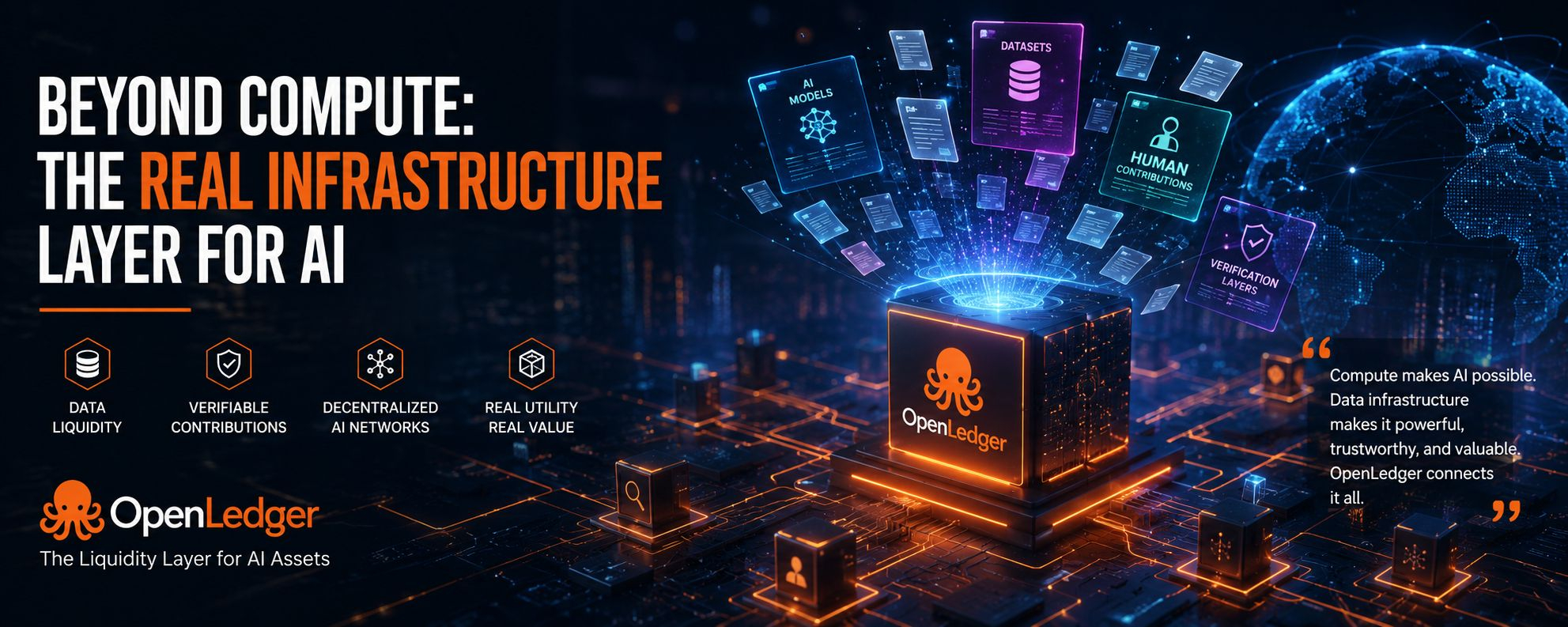
The deeper I go into AI and crypto infrastructure, the more I realize that the loudest narratives rarely end up creating the most durable value.
Every cycle follows the same pattern.
The market jumps from one trend to another chasing momentum, speculation, and whatever sector is attracting the most attention in the moment. Right now, that attention has shifted heavily toward AI infrastructure, but almost every conversation still revolves around the same question:
How do we scale compute?
Billions are being poured into GPUs, inference systems, processing clusters, and massive compute networks. And while all of that obviously matters, I couldn’t stop feeling like the market was overlooking a much deeper bottleneck quietly forming underneath the surface.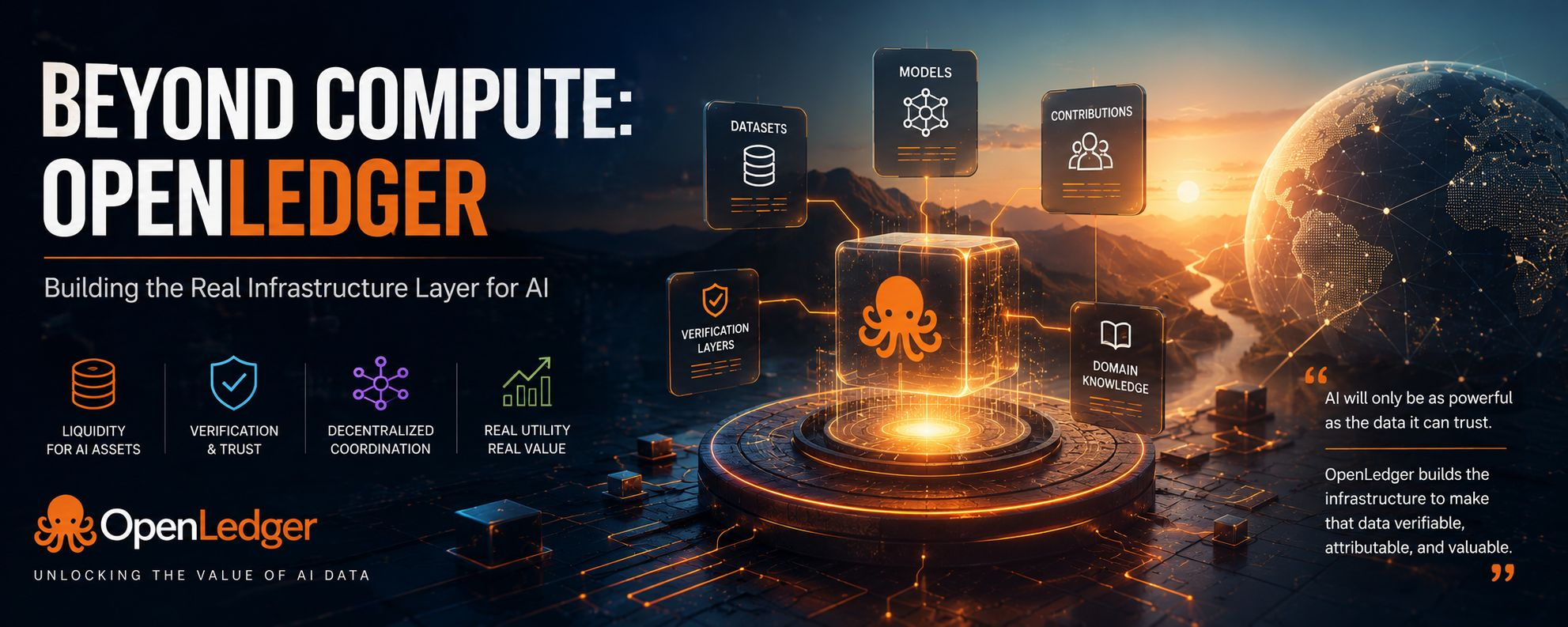
The data layer itself.
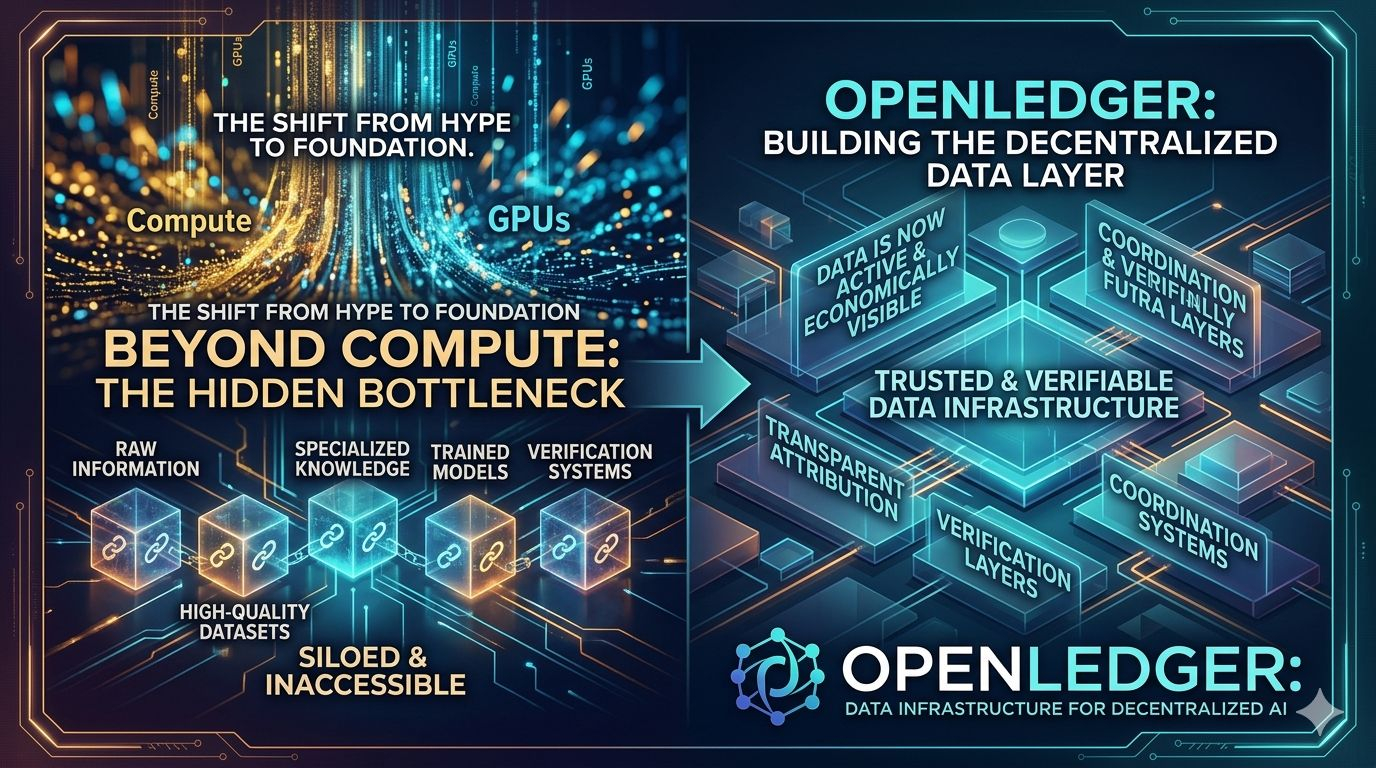
Not just raw information, but the enormous amount of valuable AI assets sitting trapped inside closed ecosystems:
high-quality datasets,
specialized domain knowledge,
human contribution,
trained models,
and verification systems that remain siloed, inaccessible, and economically invisible.
That realization is what initially led me toward @OpenLedger.
At first, I approached it the same way I approach every infrastructure protocol:
carefully.
Crypto is full of projects wrapped in impressive narratives that struggle to deliver meaningful long-term utility once the hype fades. So instead of immediately focusing on price action or short-term excitement, I spent time researching the architecture, understanding the coordination model, and trying to figure out whether OpenLedger was building something structurally important or simply participating in another temporary AI cycle.
The more I studied it, the clearer the bigger picture became.
OpenLedger isn’t trying to become another speculative AI token competing for attention through hype alone.
It’s attempting to solve a coordination problem surrounding AI data itself.
And I think that distinction is far more important than most people currently realize.
Most AI systems today still treat data like a passive asset locked behind centralized ownership layers.
But OpenLedger approaches the problem differently.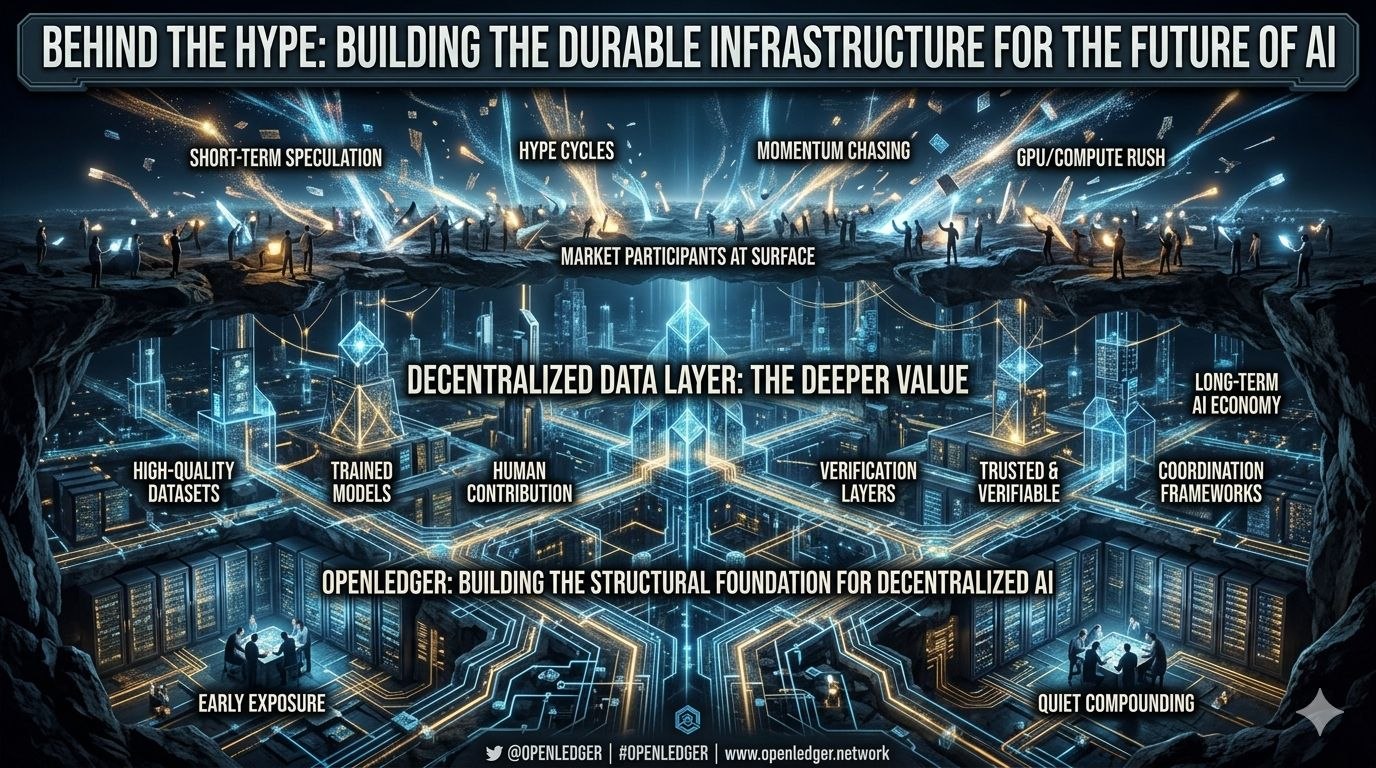
Instead of allowing datasets, models, and contribution layers to remain isolated inside closed systems, the network creates a framework where those assets can become active, verifiable, and economically productive participants inside decentralized AI environments.
That shift completely changed my perspective.
Because once data becomes attributable and economically visible, decentralized AI starts functioning very differently.
The value proposition becomes larger than simple automation.
It becomes infrastructure.
What made the thesis even more convincing to me was watching how naturally the ecosystem activity itself started reinforcing the broader vision. Contributing, exploring the network, and observing early participation dynamics made something very obvious very quickly:
The advantage of positioning early inside infrastructure networks compounds quietly.
There’s less noise.
Less competition.
And far more opportunity to build meaningful exposure before the surrounding market fully understands what’s being created underneath the surface.
Most people eventually arrive after the narrative becomes obvious.
Very few pay attention while the foundations are still being built.
But infrastructure is usually where the deepest long-term value gets created in crypto.
Not because it moves the fastest.
But because everything else eventually depends on it.
That’s probably the biggest reason OpenLedger continues standing out to me.
While most of the market remains focused on short-term volatility, speculative rotations, and temporary hype cycles, OpenLedger seems to be positioning itself around something much more structural:
trusted and verifiable data infrastructure for decentralized AI systems.
Because eventually, compute alone will never be enough.
AI networks will require transparent attribution,
verification layers,
coordination systems,
and liquidity frameworks capable of connecting models, datasets, and contributors across decentralized environments without relying entirely on centralized control.
And if decentralized AI continues evolving over the next several years, the protocols building those foundations today may quietly become some of the most important infrastructure layers in the entire ecosystem tomorrow.
Because speculation captures attention quickly.
But infrastructure captures value slowly, quietly, and often permanently.
