
May 22 isn't just another date on the crypto calendar. It's the day a Florida programmer accidentally wrote the first chapter of a multi-trillion-dollar industry — with two large pepperoni pizzas.
It started with the most unlikely forum post in financial history.
May 18, 2010. A programmer named Laszlo Hanyecz typed the following on Bitcointalk.org:
"I'll pay 10,000 bitcoins for a couple of pizzas.. like maybe 2 large ones so I have some left over for the next day."
He wasn't trying to make history. He just wanted dinner.
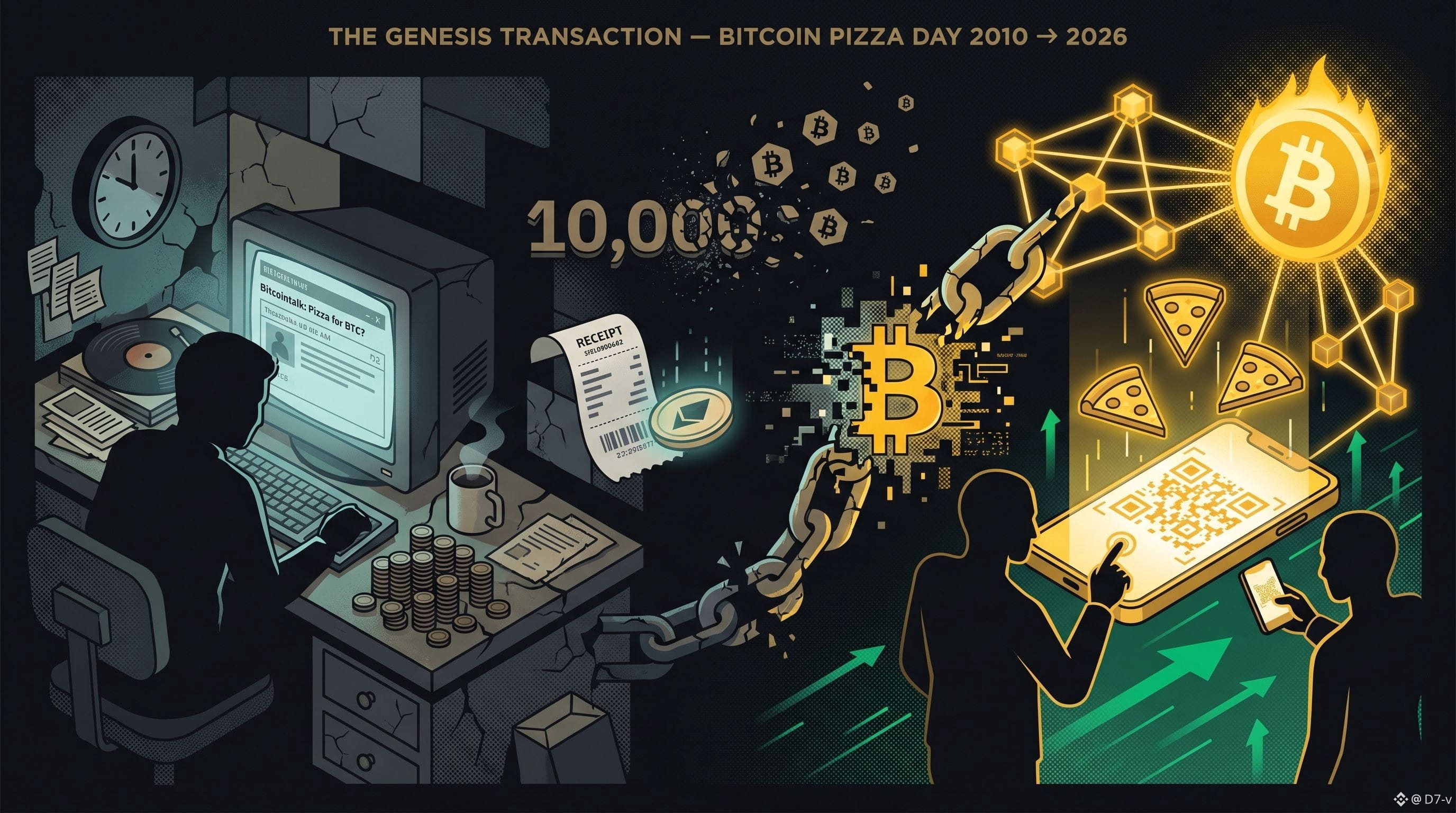
Four days later, a 19-year-old named Jeremy Sturdivant — username "jercos" — took him up on the offer. He ordered two large Papa John's pizzas, had them delivered to Laszlo's house, and received 10,000 BTC in return. Total cost at the time: about $41.
At today's Bitcoin price, those two pizzas are worth somewhere north of $800 million.
We're here to celebrate that, laugh about it, and then explain why — despite the jaw-dropping punchline — Laszlo was anything but a fool.
The Man, the Pizza, the Myth
Here's what most people miss about the Pizza Day story: Laszlo wasn't careless. He was a builder.
At the time, Bitcoin had no real-world price anchor. It existed only in forums and wallets, traded between early cryptography enthusiasts who believed in the idea but couldn't prove it worked as money. Laszlo wanted to change that.
He later said in interviews that he was "incredibly proud" of the purchase — not because he got cheap pizza, but because he demonstrated that Bitcoin could actually function. You could exchange it for something real. That was the point.
Laszlo also posted a photo a few days later, his kids wearing "I ♥ Bitcoin" T-shirts and digging into the slices. The image was equal parts domestic and historical.
And here's a detail that rarely makes the headlines: the pizza wasn't a one-time experiment. Estimates suggest Laszlo spent around 100,000 BTC on pizza throughout 2010 alone, repeatedly testing the concept of Bitcoin as a medium of exchange. At today's prices, we're talking about roughly $8 billion in pizza.
Why the "World's Most Expensive Pizza" Actually Made Sense
Before you laugh too hard, consider this: Laszlo had mined those coins himself when Bitcoin was easy to mine. He wasn't spending savings. He was spending coins that had no established market value — and he was doing so deliberately to prove a point about money.
Classic monetary theory tells us that money needs three things to be real: a store of value, a unit of account, and a medium of exchange. Bitcoin had the first two in theory. The pizza transaction gave it the third one in practice.
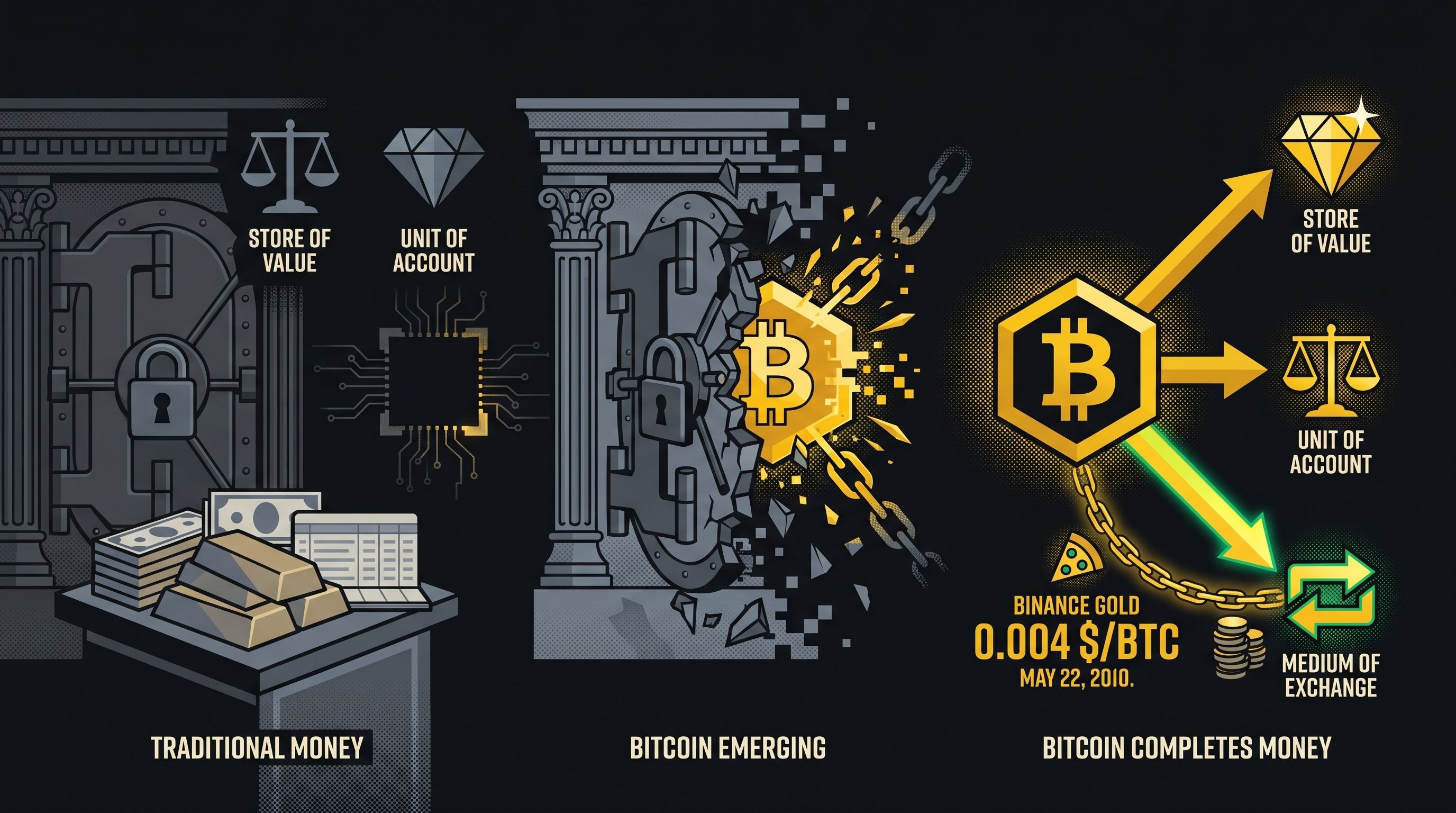
That $41 pizza transaction created Bitcoin's first-ever real-world price reference point: approximately 0.004 dollars per BTC. From that single data point, everything else — exchanges, derivatives, ETFs, institutional treasuries — eventually followed.
Without the pizza, there's no price. Without a price, there's no market. Without a market, there's no $800M pizza story to tell 16 years later.
From $41 to a Multi-Trillion Asset Class: The Growth Story
Let's put some numbers on the journey.
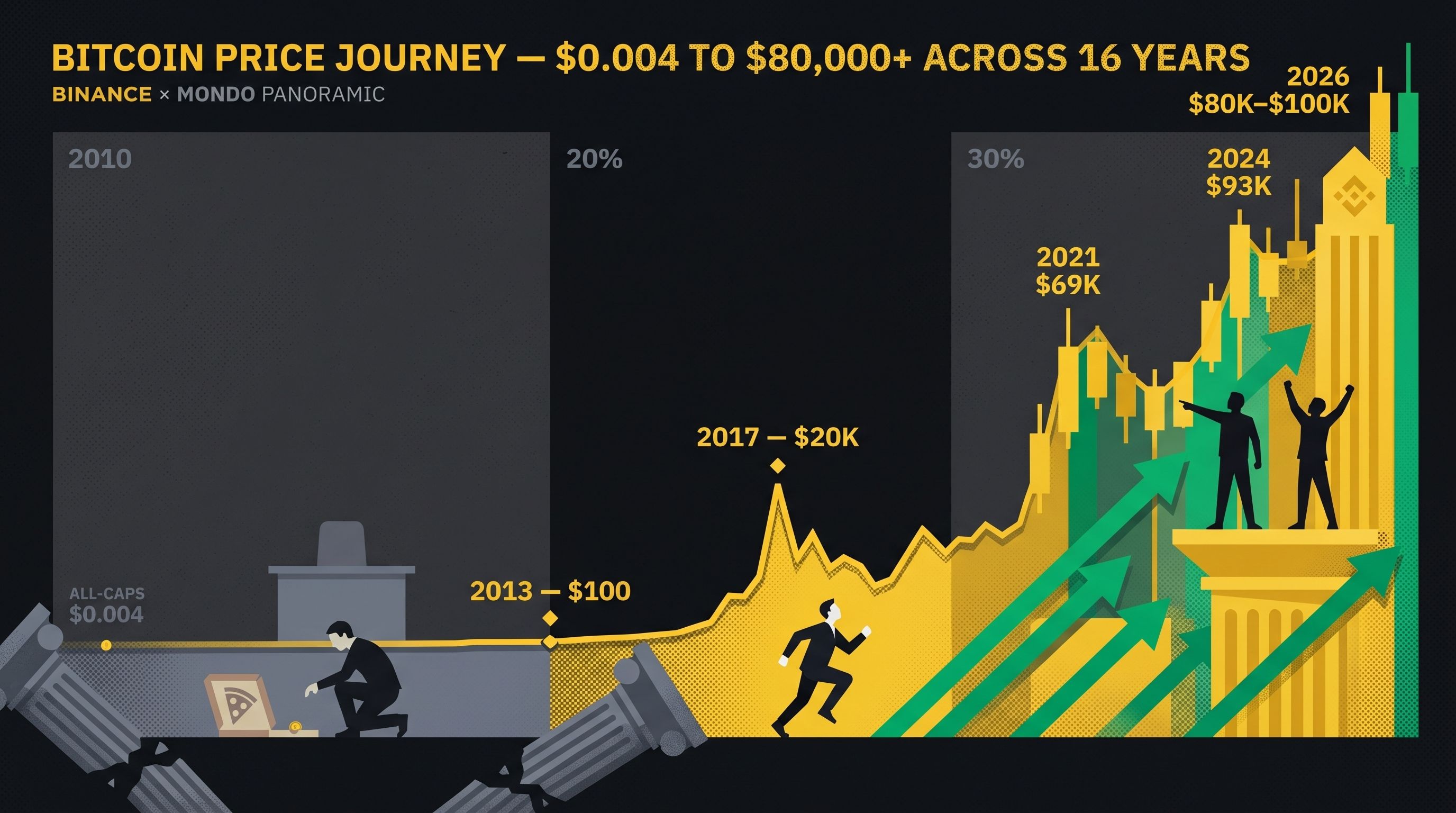
Year BTC Price (approx.) 10,000 BTC Value 2010 $0.004 $41 2013 ~$100 $1M 2017 (peak) ~$20,000 $200M 2021 (peak) ~$69,000 ~$690M 2024 ~$93,000 ~$930M 2026 ~$80,000–100,000+ $800M–$1B+
The crypto market as a whole tells a similarly staggering story. By November 2021, the combined market capitalization of all cryptocurrencies crossed $3 trillion for the first time — driven by Bitcoin and Ethereum reaching record highs. By 2025, the market briefly crossed $4 trillion before a significant correction brought it back toward the $2–3 trillion range.
All of that — every exchange, every DeFi protocol, every meme coin — traces its conceptual lineage back to two Papa John's pizzas in Florida.
The Payments Problem: Why Buying Pizza With Bitcoin Got Complicated
Here's the irony: after Pizza Day proved Bitcoin could function as money, actually using it that way became increasingly hard.
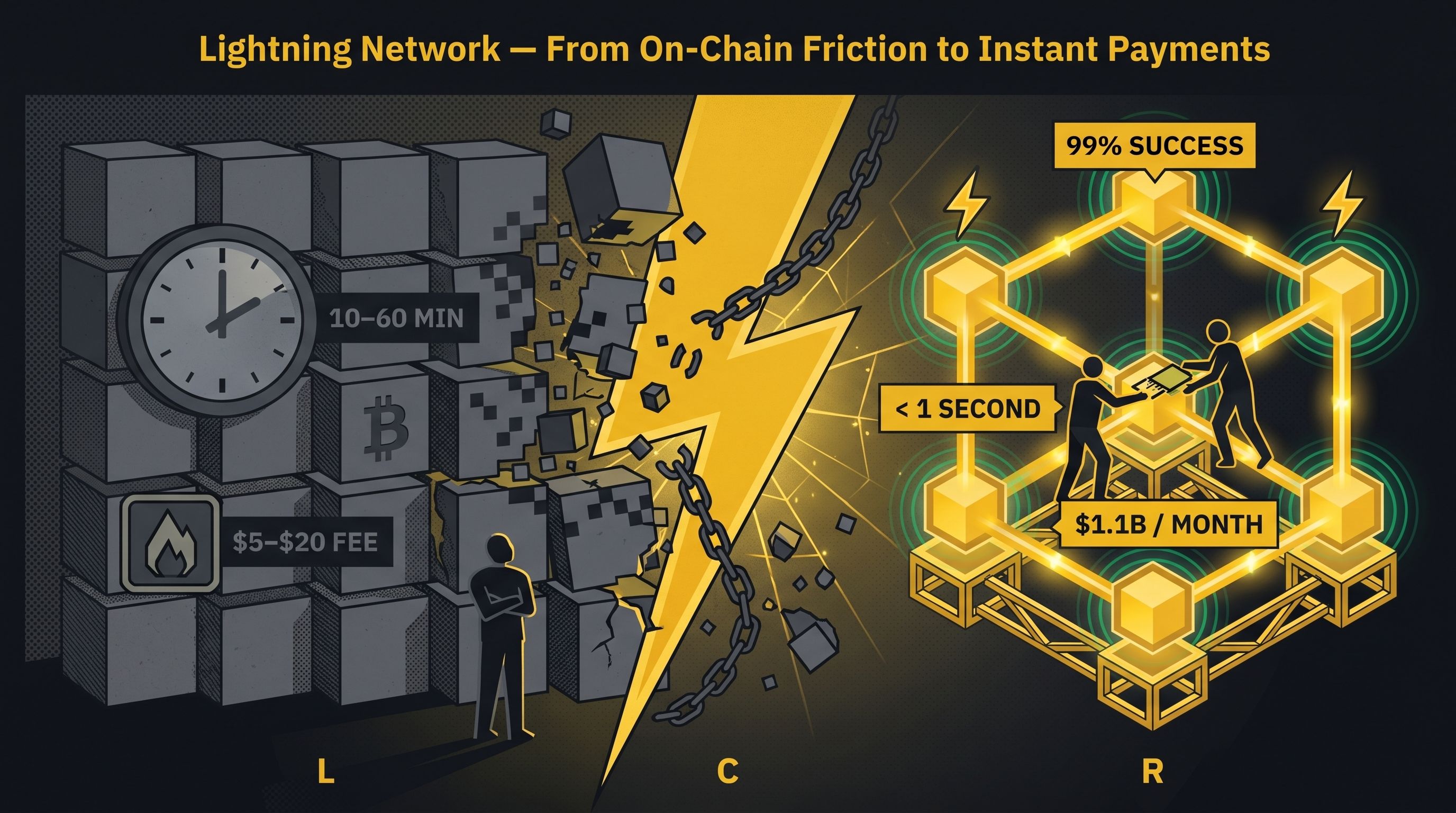
As adoption grew, so did congestion. On-chain Bitcoin transactions, while secure and final, became slow and expensive during peak periods. A $15 pizza might cost you $5–$20 in gas fees and take 10–60 minutes to confirm.
That friction created a real problem. Bitcoin was increasingly treated as something you held, not spent — digital gold, not digital cash. The original pizza dream started feeling more like an artifact than a road map.
But the ecosystem didn't give up. It evolved.
The Lightning Network: Bitcoin Finally Gets Fast
Enter the Lightning Network — Bitcoin's second-layer solution built precisely to solve the speed and cost problem.
Rather than recording every transaction on the Bitcoin blockchain, Lightning opens off-chain payment channels between parties. Transactions settle in seconds, fees are fractions of a cent, and the Bitcoin blockchain only gets involved when a channel opens or closes.
The numbers are catching up with the promise:
In November 2025, the Lightning Network processed an estimated $1.1 billion in monthly transaction volume across 5.2 million transactions.
By December 2025, the network had 5,606 BTC locked as payment liquidity.
Transaction success rates in live deployments exceed 99%.
In practical terms, Lightning-powered Bitcoin payments are now being used for groceries, fuel, and pharmacies in real-world deployments. The dream of buying pizza with Bitcoin — instantly, cheaply, without thinking about gas fees — is operational. It just took 16 years and a second layer to get there.
Crypto Cards and the "Anywhere, Anytime" Layer
For most people in 2026, the most seamless way to spend crypto isn't on-chain at all. It's with a crypto debit card.
The model is elegant: hold BTC, ETH, USDT, or any supported asset in your wallet. When you tap to pay at any merchant, the card provider converts your crypto to local fiat in real-time and processes the payment on the existing Visa or Mastercard rails. To the coffee shop, it looks like any normal card swipe. To you, it's your crypto portfolio buying a flat white.
This closes the gap between "I have crypto" and "I can spend crypto" for billions of potential users who may never interact directly with a blockchain at all. Pizza Day's original vision — using Bitcoin for everyday life — turns out to scale better through UX abstraction than through on-chain ubiquity.
Binance Pay: Where Pizza Day Meets the 21st Century
If one product captures the spirit of Bitcoin Pizza Day and brings it into the modern era, it's Binance Pay.
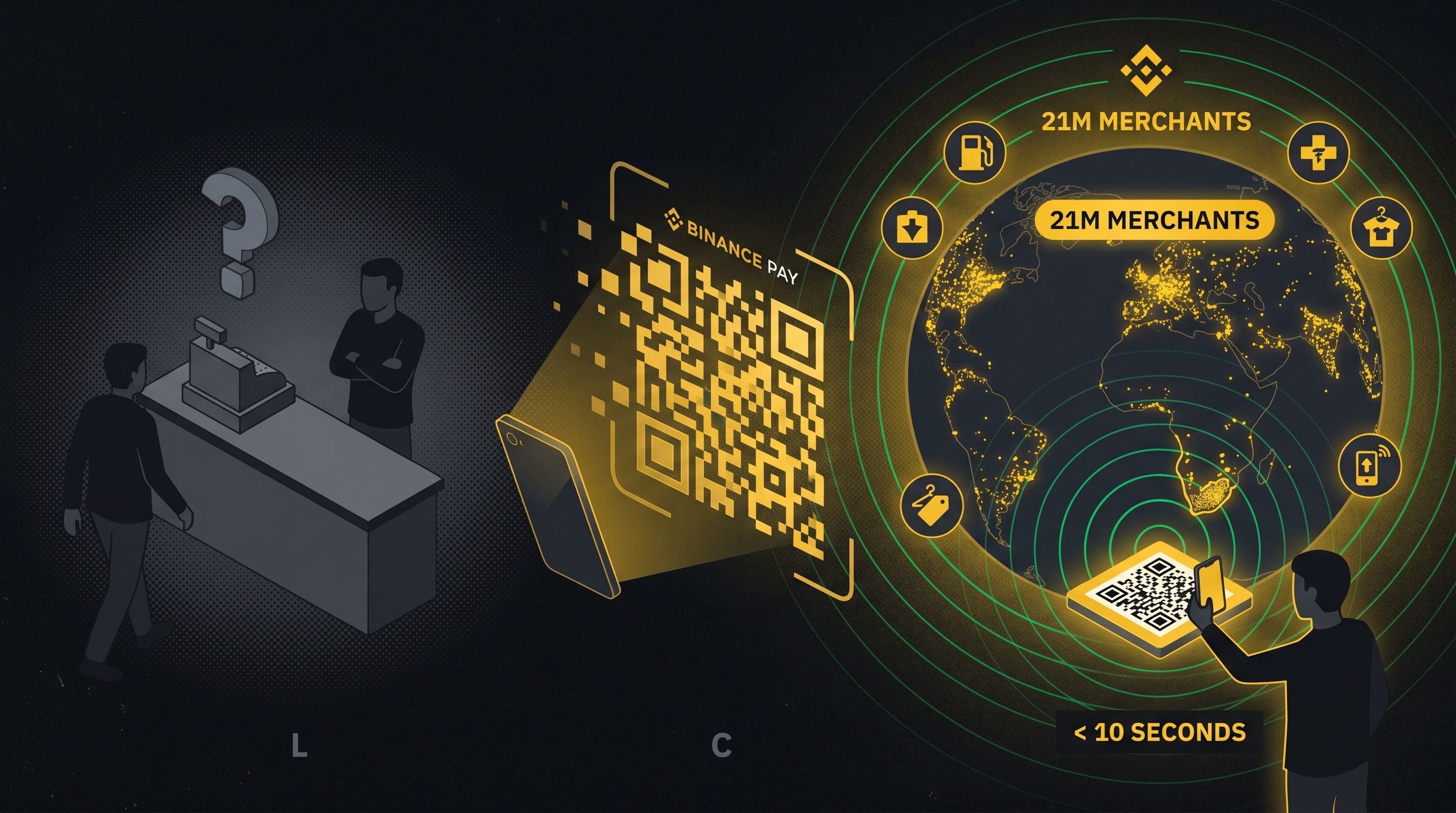
The idea is deceptively simple: pay any supported merchant using crypto — BTC, ETH, USDT, BNB, and 100+ other assets — via QR code. No card, no bank, no gas fees, no waiting.
But the scale is what makes it genuinely remarkable. As of March 2026, Binance CEO Richard Teng confirmed that over 21 million merchants now accept Binance Pay globally — up from 20 million just months earlier. That's not a pilot. That's a payments network.
Consider what happened in South Africa earlier this year: Binance Pay partnered with Scan To Pay to bring crypto payments to over 650,000 merchants in one announcement. Suddenly, South Africans could pay for:
Fuel at Engen petrol stations
Prescriptions at Clicks pharmacies
Fashion at Cotton On, Birkenstock, Crocs, and even Chanel
Utility bills through EasyPay
Phone top-ups on Vodacom
All of it, using crypto. All of it settled instantly, with no gas fees, through a QR-code scan that looks exactly like any other contactless payment.
Laszlo spent 10,000 BTC and had to coordinate through a forum, wait four days for someone to accept, and hope a stranger would follow through. In 2026, you open the Binance app, tap Scan QR Code to Pay, choose your crypto, and confirm. The whole thing takes under 10 seconds.
The Philosophical Question: Should You Have Spent Your Bitcoin?
Here's the part of the Pizza Day story that nobody talks about enough.
Laszlo has said he doesn't regret it. Jeremy, who received the 10,000 BTC, sold them almost immediately to fund a road trip — and has said the same. Both made their choices with the information they had at the time, in the spirit of experimenting with a new kind of money.
But the modern crypto user faces a real dilemma. If Bitcoin keeps appreciating, spending it today means giving up future value. This is the "hodler's paradox" — and it's actually why the ecosystem shifted toward stablecoins for everyday payments.
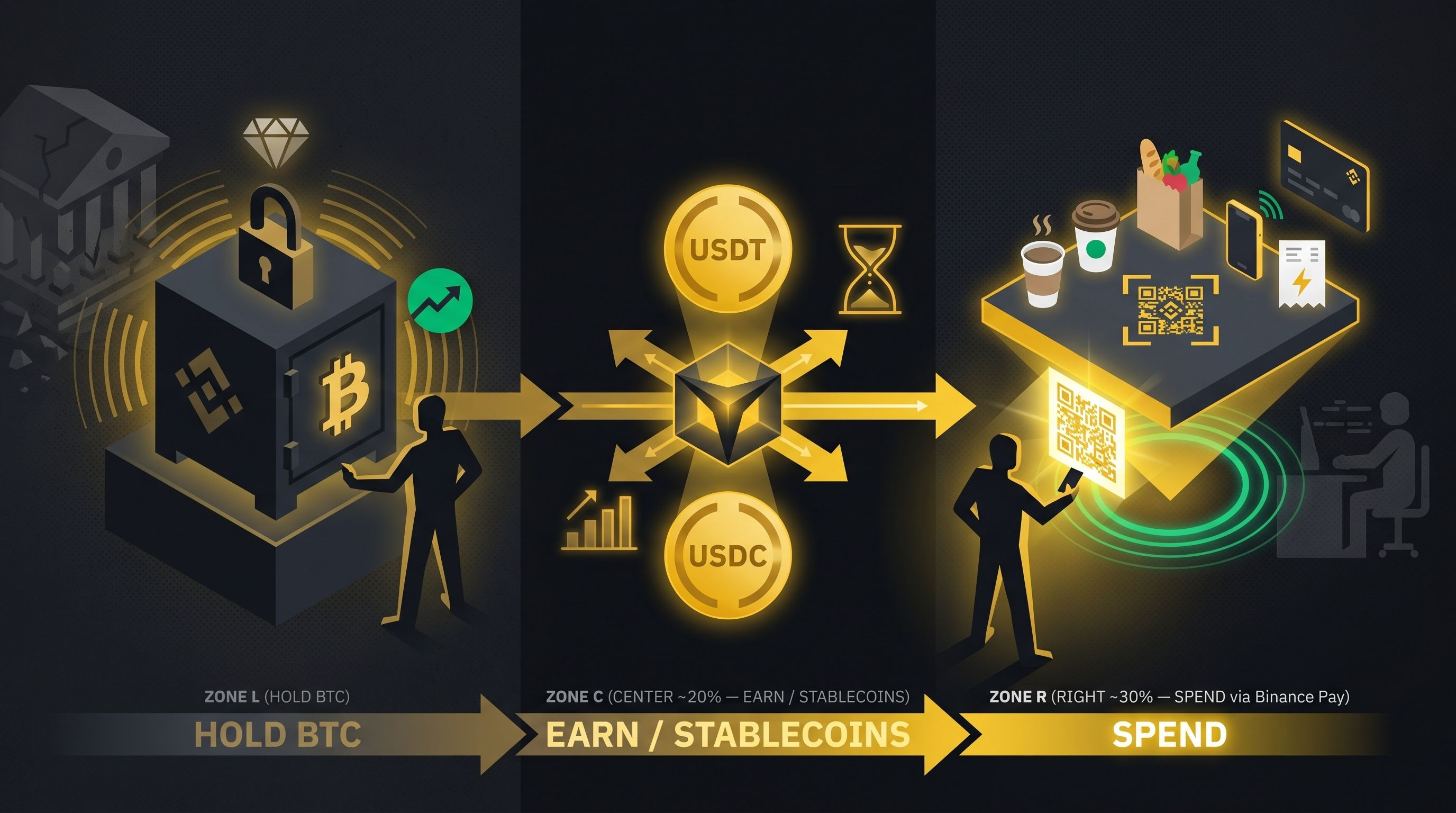
The playbook most informed users follow now:
Hold BTC as a long-term store of value
Earn yield or hold stablecoins (like USDT or USDC) for spending
Use Binance Pay or a crypto card to spend stablecoins at merchants — keeping exposure to Bitcoin without depleting it
It's not that Bitcoin can't be spent. It's that most people prefer not to. The infrastructure Laszlo helped inspire is now flexible enough to support both the spenders and the holders — and smart enough to let you choose.
What Pizza Day Means in 2026
Sixteen years on, Bitcoin Pizza Day is no longer just nostalgia. It's a benchmark.
It marks the moment Bitcoin acquired its first real-world value. It kicked off a chain of events that gave rise to exchanges, wallets, DeFi protocols, regulated stablecoins, institutional ETFs, and payment networks covering tens of millions of merchants.
It's also a reminder that the most transformative experiments often look ridiculous at first. Two pizzas for magic internet money. An obscure post on a forum barely anyone read. A photo of two kids in matching T-shirts eating delivery food.
Today, those two pizzas sit at the beginning of a $3-trillion asset class. And every time you tap your Binance app to pay for coffee, top up your phone, or settle a utility bill in crypto, you're living out the thing Laszlo was trying to prove with a forum post and a hunger for pizza.
He just wanted food delivered in exchange for bitcoins.
Turns out, that was enough to change everything.
🍕 Happy Bitcoin Pizza Day. May 22, 2026.
Risk reminder: Cryptocurrency values are volatile. This post is for educational and informational purposes only and does not constitute financial advice. Always do your own research before making any financial decisions.