
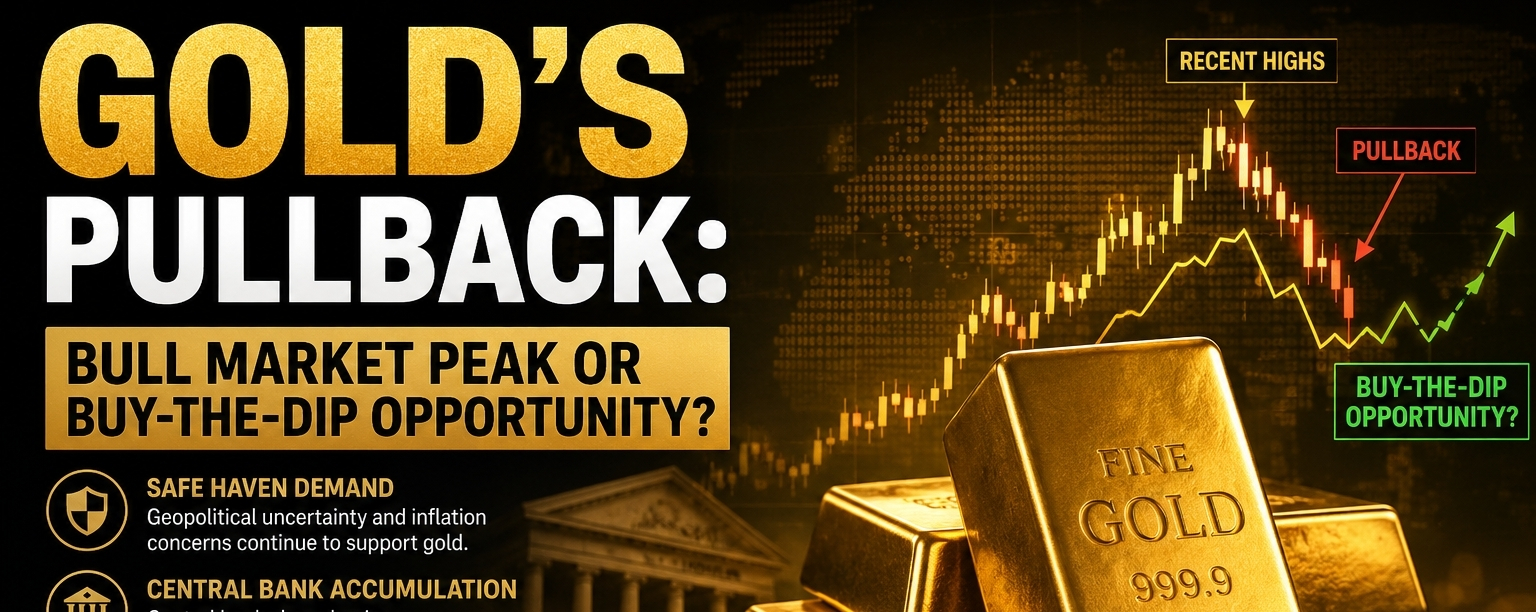
Gold has always held a unique position in global finance. Unlike fast-moving tech stocks or volatile cryptocurrencies, gold represents stability, protection, and long-term confidence. Yet even this historic safe-haven asset is facing intense debate after its recent pullback. Some investors believe the rally has finally peaked, while others see this correction as one of the best buying opportunities in the current cycle.
The truth is, gold’s story is far from over.
Markets often move in waves of emotion. When prices surge too quickly, fear of missing out drives aggressive buying. When corrections arrive, doubt replaces optimism almost instantly. Gold is experiencing exactly that phase right now. After reaching strong highs, a temporary retreat has caused many traders to question whether the bullish momentum is fading.
But the broader macro picture still strongly supports gold.
Central banks around the world continue increasing gold reserves as protection against economic uncertainty and currency risk. Geopolitical tensions remain elevated across multiple regions, while concerns about inflation and future interest rate policies continue to pressure traditional financial systems. In times like these, investors historically return to gold as a store of value.
What makes this cycle different is that gold is no longer competing only with fiat currencies — it is also competing with high-risk speculative assets. In periods where stock markets become overheated and technology valuations appear stretched, many institutional investors rotate capital toward defensive assets like precious metals.
A pullback in a bull market is not unusual. In fact, healthy corrections often strengthen long-term trends by removing excessive speculation and allowing markets to reset before another move upward. Gold has experienced similar phases in previous cycles before continuing higher.
That does not mean prices will rise in a straight line. Volatility will remain part of the journey. Strong economic data, temporary dollar strength, or shifts in monetary policy can still create short-term pressure. However, the long-term case for gold remains difficult to ignore in an environment shaped by debt expansion, geopolitical instability, and uncertain global growth.
The biggest mistake investors make is assuming every correction signals the end of a trend. Sometimes, it simply creates the next opportunity.
Gold may be pulling back today, but history shows that when uncertainty grows, confidence in precious metals often returns stronger than before. #PostonTradFi