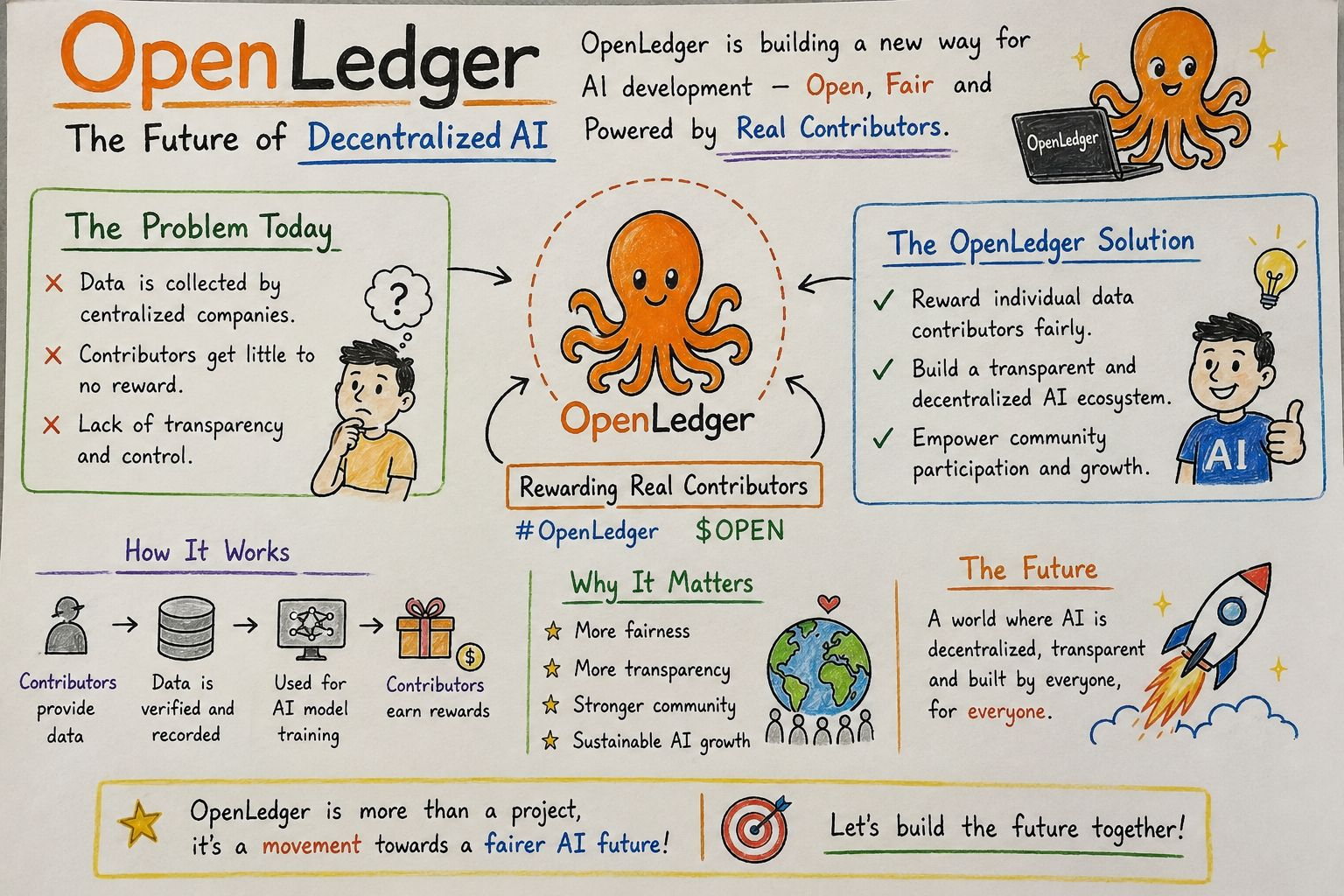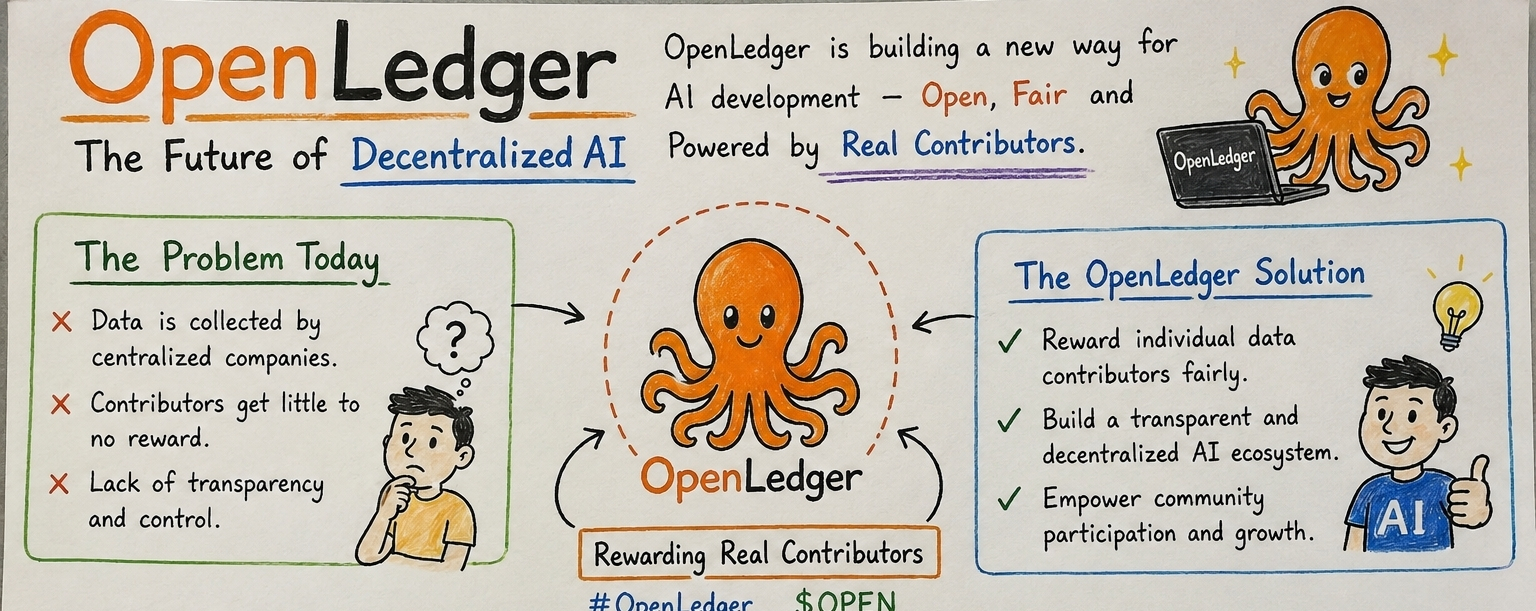
Most AI projects today focus only on models and hype, but OpenLedger is approaching the industry from a different angle. Instead of rewarding only centralized platforms, OpenLedger is building a system where individual contributors can also benefit from the value they help create. That idea alone makes the project stand out in the growing decentralized AI sector.
AI has become one of the biggest technological trends in the world, but the majority of AI ecosystems still depend on centralized ownership of data and infrastructure. Large companies collect massive amounts of data, train models using community-generated information, and keep most of the economic value within closed systems. OpenLedger challenges this structure by introducing a more community-driven framework where participation and contribution are directly connected to incentives.
What I personally find interesting is the project’s focus on data contributors. Data is the foundation of every AI model. Without quality data, even the most advanced AI systems cannot improve effectively. However, contributors are rarely rewarded fairly in traditional systems. OpenLedger’s vision creates a more balanced relationship between AI development and community participation.
Another important aspect is transparency. In centralized AI ecosystems, users often have very little visibility into how their data is used or how rewards are distributed. OpenLedger’s decentralized approach could create a stronger level of trust because contributors become part of the ecosystem itself instead of just external users. In my opinion, this is one of the key reasons why decentralized AI could become an important narrative in the future.
The project also connects well with the broader philosophy of Web3. Modern internet users want more than just access to platforms — they want ownership, participation, and incentives. OpenLedger combines these ideas with AI infrastructure, which could help create a more collaborative ecosystem over time.
Of course, every emerging project faces challenges. Long-term success will depend on adoption, ecosystem growth, active developers, and strong community engagement. Building a sustainable decentralized AI network is not easy. Still, OpenLedger appears to be targeting a real issue instead of relying only on marketing narratives.From my perspective, the project feels early but promising. If OpenLedger can continue building strong utility and attract more contributors, it may become one of the more interesting projects in the decentralized AI space. I’ll definitely continue following its progress and watching how the ecosystem evolves in the coming months.