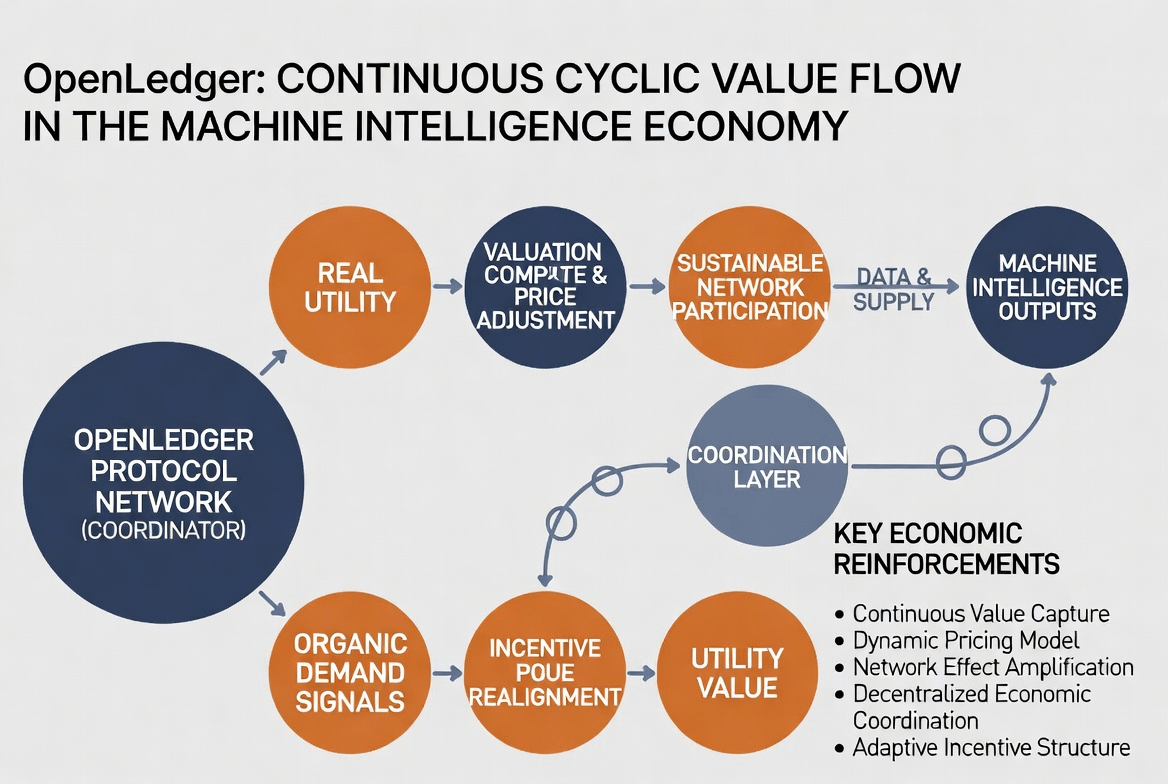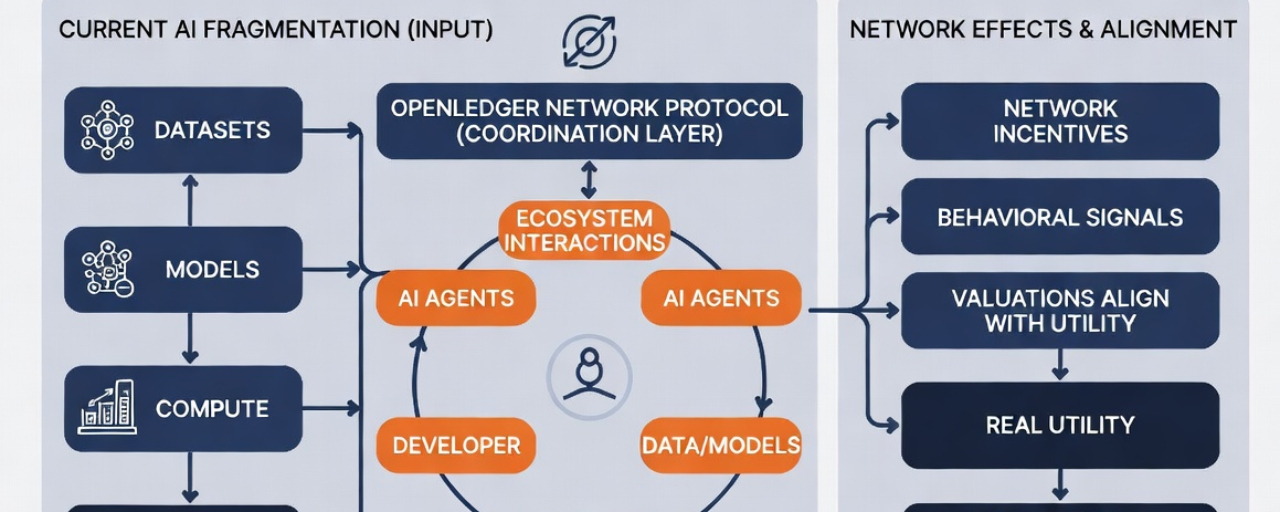
a few weeks ago i was watching liquidity quietly rotate back into AI infrastructure after the meme coin hangover. not the loud retail rotation everyone tweets about, the slower, smarter money moving before the narrative catches up. that’s when the contradiction hit me hard.
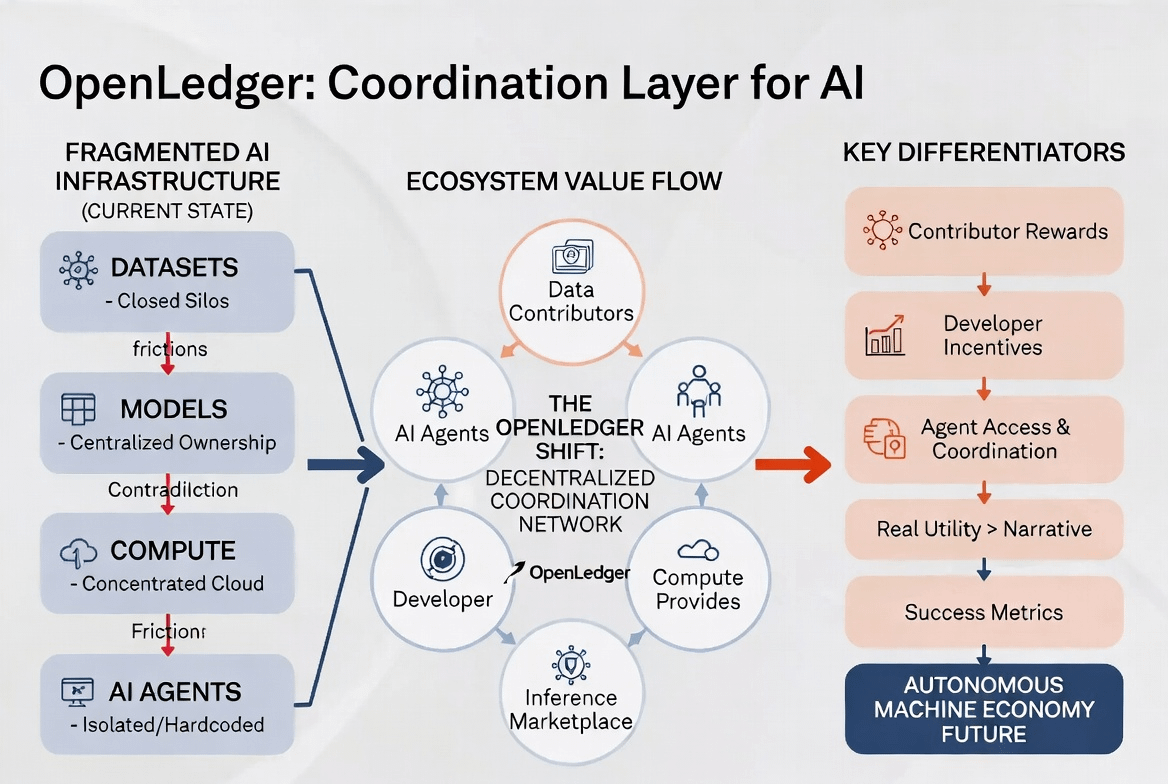
everyone talks about autonomous agents, decentralized intelligence, and machine economies. but when you look under the hood, most “decentralized AI” projects are still built on highly centralized foundations: data locked in closed platforms, compute concentrated in a few providers, models controlled by big tech or a handful of teams. they add a token on top and call it revolution. it’s the same old story, lots of intelligence, very little real coordination.
that’s the deeper problem most people miss (call it c). intelligence alone doesn’t create a functioning economy. what’s missing is the layer that lets fragmented pieces, data, compute, models, agents, actually interact efficiently, verifiably, and economically.
this is exactly where OpenLedger feels different. instead of another isolated AI tool, it’s building a coordination infrastructure on its AI native l2. the key mechanism that makes this possible (d) is proof of attribution (poa) combined with datanets (community owned, domain specific data networks) and the no code model factory.
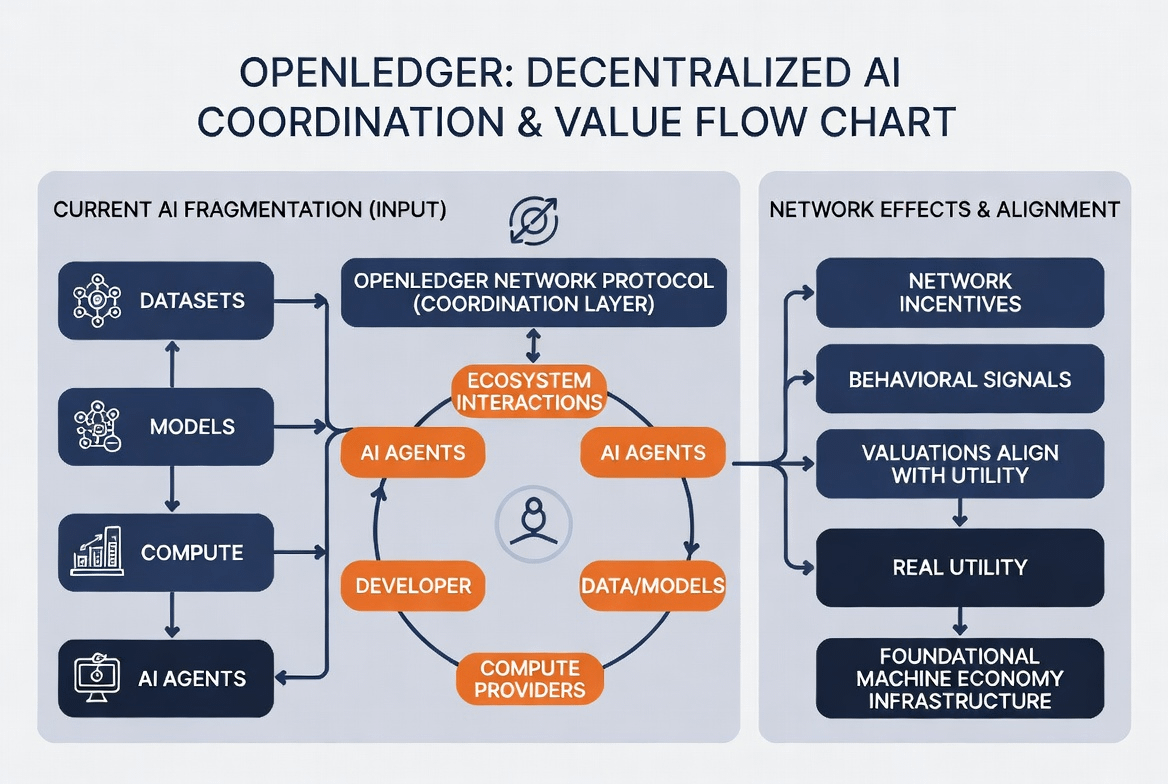
poa doesn’t just track contributions, it cryptographically records every dataset, fine tune, feedback loop, and inference on chain, then measures real impact and automatically distributes fair $open rewards. datanets let anyone contribute high quality, verifiable data that becomes part of specialized models. the whole stack turns isolated AI components into participants in a shared, living network economy.
the experience is what changes your perspective. when you know your data or refinement will be traced and rewarded every time it influences an output, you contribute differently, higher quality, more thoughtful, more long term. it’s not abstract “decentralization.” it’s practical incentive alignment that compounds over time.
for the broader crypto community, this points to a structural shift (b). while most projects chase the next hype cycle, @OpenLedger is positioning itself as the infrastructure where coordination happens before speculation outruns utility. in a world where AI agents will soon need reliable access to data, compute, and liquidity they don’t own themselves, having a verifiable, incentive aligned coordination layer becomes the real edge.
crypto has always been great at creating assets. it’s been much worse at coordinating real utility at scale. OpenLedger is betting that solving that coordination problem, not just building smarter models, is what will separate the infrastructure that survives from the narratives that fade.
i’m still watching closely. but for the first time in a while, the quiet flow feels like it’s pointing somewhere that actually matters.