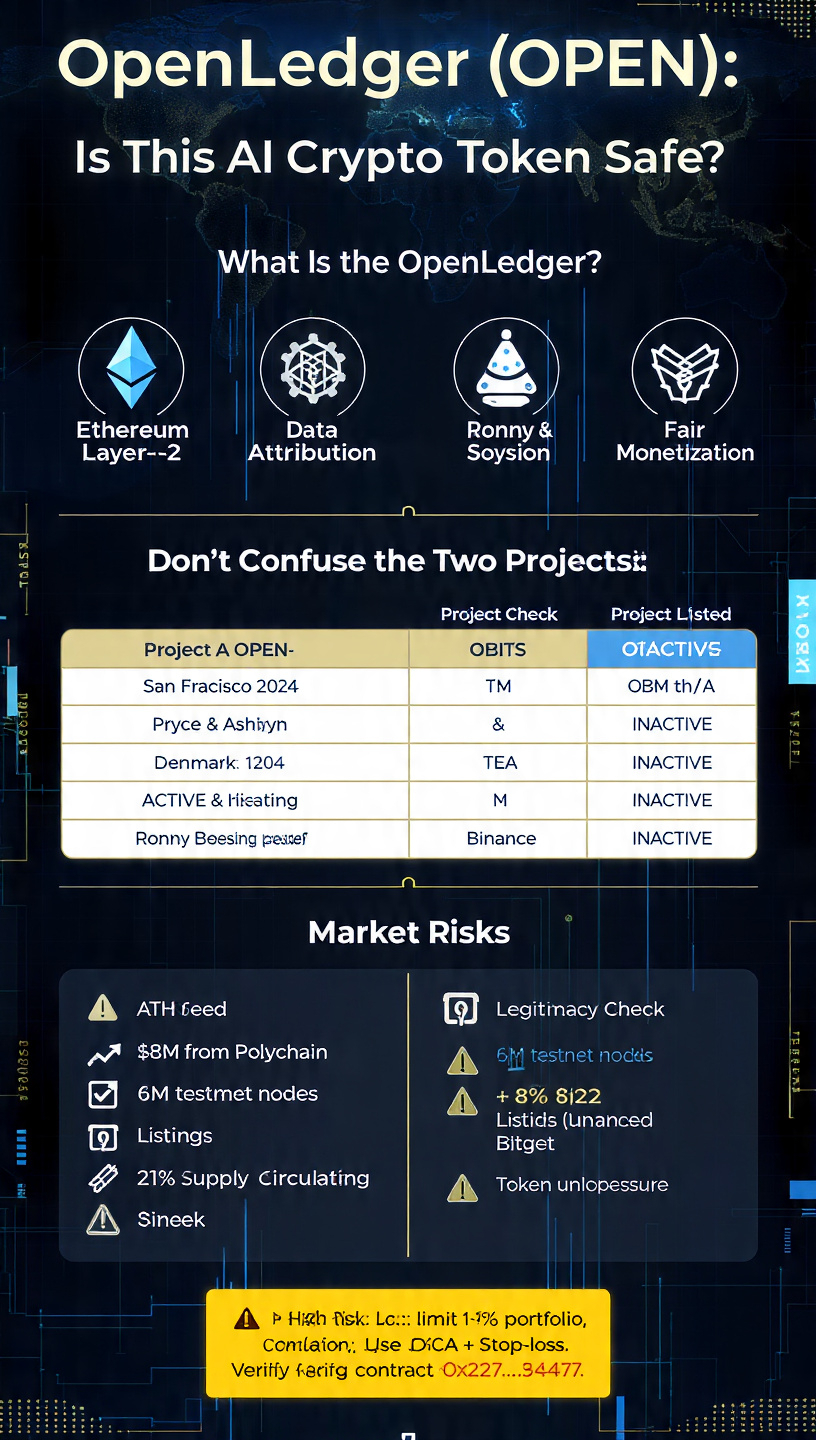
#OpenLedger ection of Artificial Intelligence (AI) and blockchain technology has become one of the most dominant narratives in the cryptocurrency market. Emerging at the forefront of this trend is OpenLedger (OPEN), a purpose-built Ethereum Layer-2 blockchain. If you are considering investing in this token, understanding its fundamental mechanics, ownership, and inherent risks is crucial.
## 1. What is OpenLedger (OPEN)?
OpenLedger is a specialized Layer-2 network built on the Optimism Stack (OP Stack) to ensure low gas fees and rapid transaction speeds. While traditional AI conglomerates (like OpenAI or Google) operate as "black boxes"—hiding their training methodologies and data sources—OpenLedger introduces radical transparency to the AI lifecycle.
The network establishes an on-chain, verifiable ledger that tracks:
*Data Attribution:** Identifying exactly who provided the data used to train an AI model.
*Output Influence:** Determining which specific data points influenced a particular AI-generated output.
*Fair Monetization:** Automatically distributing revenue shares to data providers whenever the model is utilized.
## 2. Clearing the Confusion: A Tale of Two Projects
A critical step in evaluating OpenLedger is avoiding the common pitfall of identity confusion. There are two entirely separate entities operating under this name:
| Feature | Project A (The New AI Chain) | Project B (The Legacy DEX) |
|---|---|---|
| Token Ticker | OPEN | OBITS |
| Founders | Pryce Adade-Yebesi & Ashtyn Bell | Ronny Boesing |
| Headquarters | San Francisco, USA (Launched 2024) | Denmark (Launched 2014) |
| Current Status | Fully Active & Expanding | Mostly Inactive / Defunct |
The token turning heads in the current AI bull run is Project A (OPEN).
## 3. Legitimacy Check: Is It Trustworthy?
OpenLedger separates itself from speculative memecoins through robust institutional backing and public accountability:
*Tier-1 Venture Capital:** The project raised a $8M seed round led by Polychain Capital and Borderless Capital, with prominent angel backing from Balaji Srinivasan and Polygon's Sandeep Nailwal.
*Proven Scalability:** Prior to its mainnet launch, its testnet successfully hosted over 6 million nodes and processed more than 25 million transactions.
*Premium Exchange Listings:** The token is actively traded on major global platforms including Binance, Bitget, and Ourbit.
## 4. Market Risks and Volatility
Despite its stellar technical foundations, OPEN carries the high-risk profile characteristic of early-stage infrastructure tokens:
*Severe Drawdowns:** After hitting an All-Time High (ATH) of $1.82 during its September 2025 launch phase, the token has corrected by roughly 88%, tracking closer to the $0.22 range.
*The Token Unlock Dilemma:** Only ~21% to 22% of the total 1 billion supply is currently circulating. The remaining tokens are locked in vesting schedules for the team and early investors, which will introduce periodic selling pressure as they unlock.
> Institutional Investment Strategy: Financial analysts recommend a conservative approach to highly volatile infrastructure plays like OPEN. Limit your exposure to 1% to 3% of your total crypto portfolio, utilize Dollar-Cost Averaging (DCA) to mitigate volatility, and strictly deploy stop-loss orders.
>
## The Bottom Line
OpenLedger (OPEN) is a legitimate, heavily backed project tackling one of AI's biggest hurdles: data monopolization. However, due to its low circulating supply and steep post-launch price correction, it should be treated as a high-reward, high-risk venture bet on decentralized AI infrastructure rather than a stable, blue-chip asset. Always verify the smart contract (0xA227...9447) and liquidity locks before deploying capital
#OpenAIToConfidentiallyFileForIPO #OpenLedger