


Picture a room full of brilliant people.
Engineers, data scientists, researchers. Each one sitting on something genuinely valuable. A model trained over months. A dataset curated by hand. An agent that can execute tasks faster than any human team.
Now picture all of them asking the same frustrated question.
How do I actually get paid for this?
Not through a platform that takes a cut. Not through a contract negotiation that takes six months. Not by becoming a startup founder when all they wanted to do was build something great.
That question has been sitting unanswered in the AI space for years. And @OpenLedger is the first serious attempt at answering it through infrastructure rather than promises.
The Problem Nobody Talks About Loudly Enough
The AI boom has created an explosion of valuable work. Models that detect disease. Agents that optimize logistics. Datasets that took years to compile properly.
But here is what most coverage misses entirely.
The people who built those things are largely not benefiting from them. They either handed their work to a platform that monetized it on their behalf, sold it in a one-time transaction that didn't reflect its long-term value, or kept it private because there was no clean way to share it and get paid fairly.
This is not a small inefficiency. This is a structural failure of how the AI economy is currently organized. Value creation and value capture are completely disconnected for the individual creator.
@OpenLedger looked at that gap and decided to build the bridge.
What OpenLedger Actually Is
Not another general purpose chain. Not a DeFi protocol with an AI layer painted over it.
An AI-native blockchain. Built from the ground up with one specific question in mind: how do you create a transparent, automatic, and fair system for monetizing intelligence?
The answer they came up with is Proof of Attribution.
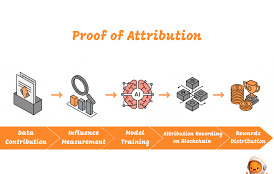
What that means in plain language. When an AI model makes a decision, Proof of Attribution traces exactly which data, which training contributions, and which model components influenced that outcome. It creates a permanent on-chain record of who contributed what. And when that model earns value, the contributors get paid automatically based on that record.
No accounting department. No platform deciding your cut. No negotiation.
The ledger does the math. The payment settles. You earn.
That is not a feature. That is a fundamentally different economic architecture for how AI value gets distributed.
Why the Timing Is Actually Right
I have seen enough infrastructure projects announce themselves five years too early to be skeptical about timing arguments. So let me be specific about why this moment is different.
We are not in the chatbot era anymore. 2025 and 2026 are the years of agentic AI. Autonomous agents that do not just answer questions but take real actions. Trading positions. Managing workflows. Executing on-chain transactions. Running pieces of businesses without human intervention between decisions.
These agents need three things that barely exist right now.
Specialized, high-quality data to train on. Verifiable models with clear ownership and provenance. A monetization layer that rewards the people who built their intelligence.
Most existing blockchains were not designed for any of this. They were designed for financial transactions between humans. The needs of an autonomous AI agent economy are genuinely different and the infrastructure reflects that.
OpenLedger is building specifically for what is emerging right now. Not for what was needed three years ago. That timing distinction is real and it matters.
The Bull Case, Stated Honestly
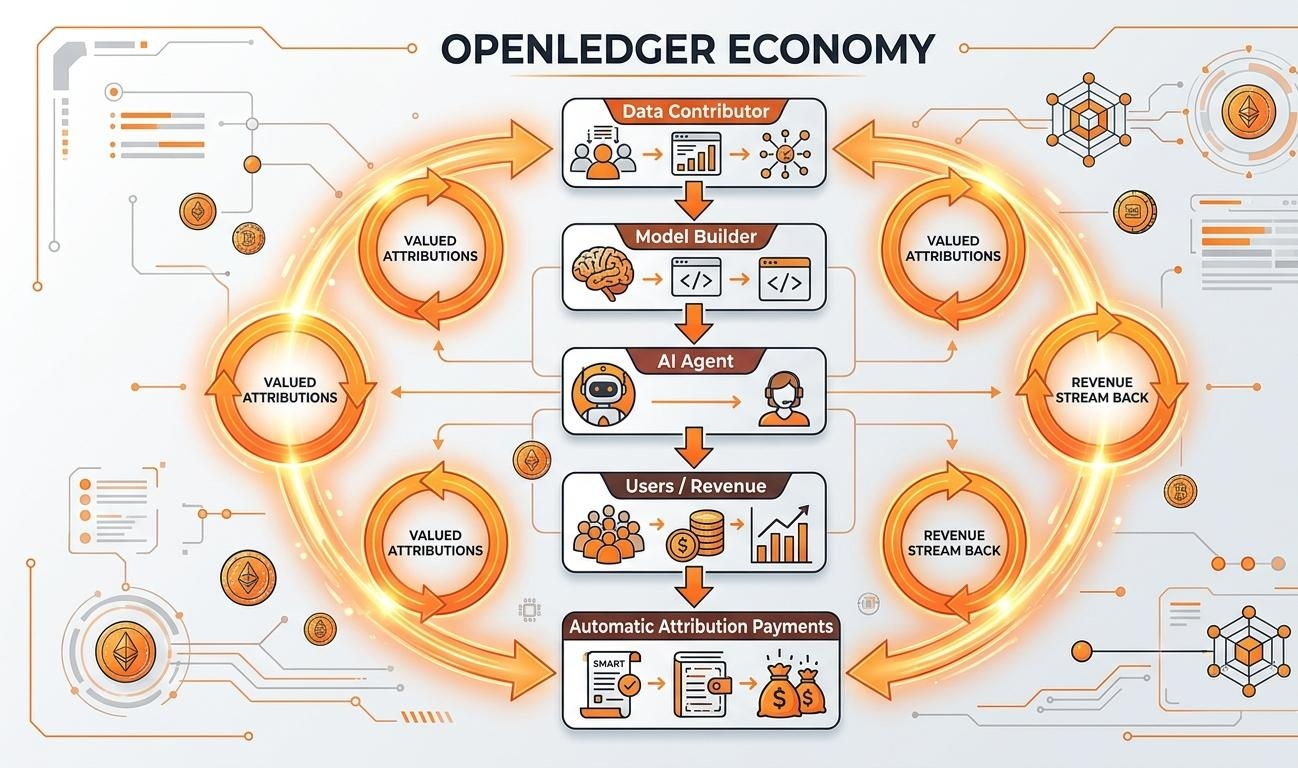
If agentic AI becomes as significant as the trajectory suggests, the chain where these agents live, pay gas, distribute rewards, and record attribution could capture enormous value over time.
#OpenLedger is EVM compatible which means existing developers do not need to learn new tooling to build on it. OctoClaw, their AI agent builder, is already live and shipping. They have real backing from credible names including Polychain. And the ModelFactory gives non-technical contributors a path to participate without writing code.
The moat they are building is not just technical. It is economic. Once creators build audiences of paying users on OpenLedger, once attribution records accumulate on-chain, once agents are deployed and running on the network, the switching cost becomes significant. You do not leave a system that is automatically paying you correctly every time.
That kind of sticky value is what separates infrastructure from speculation.
The Honest Risks
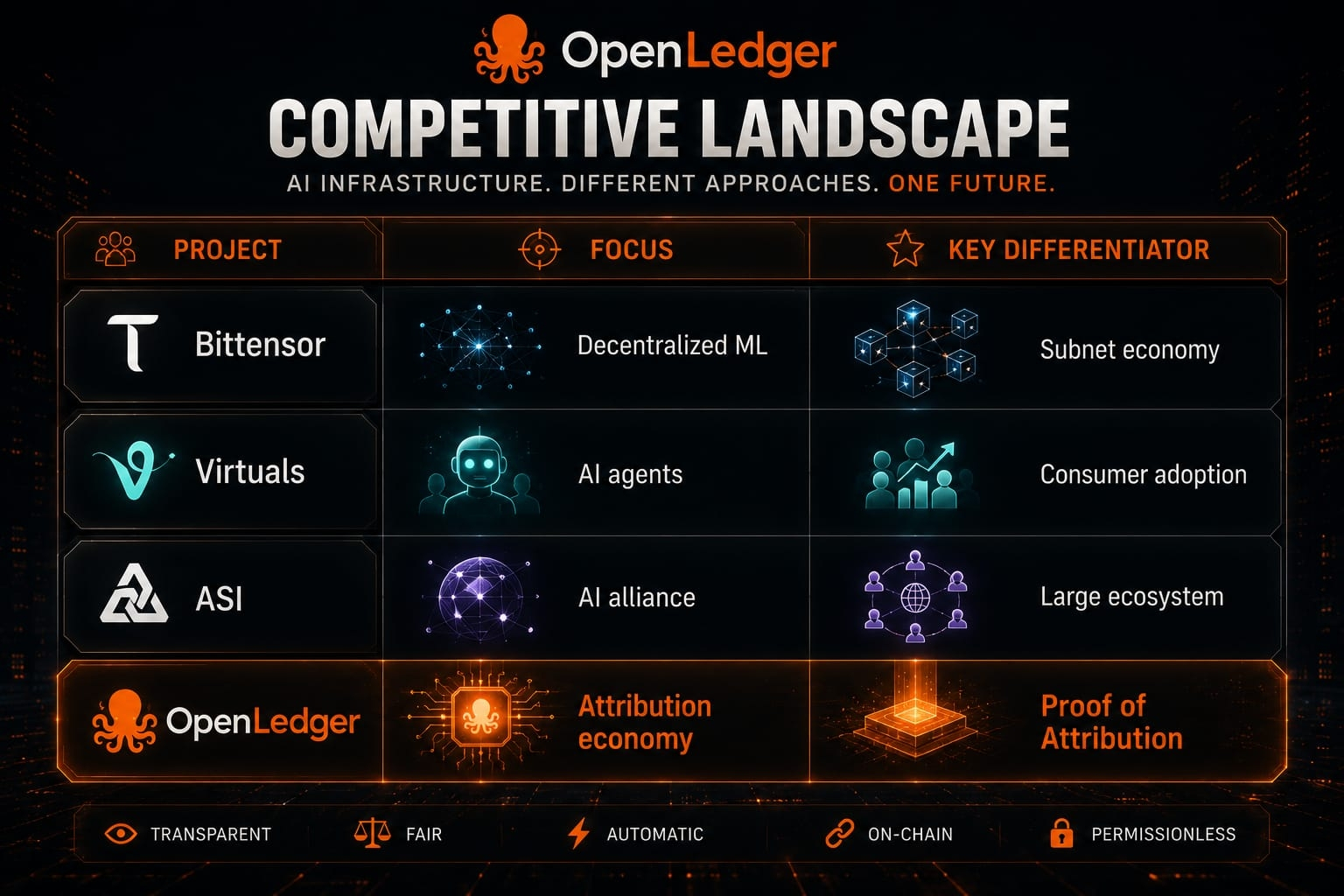
The AI crypto space is genuinely crowded. Bittensor built an early community. Virtuals has momentum. ASI alliances have resources. Every one of them is making a version of the same case for why they are the right home for the AI economy.
OpenLedger differentiation through Proof of Attribution is real and technically meaningful. But differentiation only matters if enough people discover it, build on it, and stay.
Bootstrapping a two-sided network is always the hardest part. Creators need users before they publish. Users need creators before they join. Breaking that chicken and egg problem requires either strong early incentives or a compelling anchor use case that pulls both sides simultaneously.
Execution in 2026 is everything. The AI Marketplace roadmap, the depth of developer tooling, the quality of the attribution mechanism under real load. These are the variables that will determine whether OpenLedger becomes infrastructure or just a strong idea that arrived at the right time.
What I keep coming back to?
The people building the most valuable AI work in the world right now are largely not the ones capturing its economic value. The infrastructure for fairly compensating creators of data, models, and agents simply does not exist at scale.
OpenLedger is a direct attempt to fix that. Not by disrupting the AI labs. Not by competing with the cloud providers. But by building the missing economic layer underneath all of it.
If they get this right, the $OPEN token is not a speculative bet on a narrative. It is demand-driven by a network that thousands of AI creators and users genuinely depend on for their livelihoods.
That is the version of this story worth paying attention to.
So Can It Capture the Mega Trend?
The vision is right. The timing is right. The technical approach is differentiated. The market need is real and growing.
What remains is execution.
And in this space, that is always the part that separates the infrastructure plays that define a generation from the ones that become footnotes in a bull market retrospective.
The agents are being built right now. The data is being created right now. The question of which chain they call home is still very much open.
OpenLedger is making a serious case for that answer.
Whether it delivers is the only question left worth asking.
