
What Proof of Attribution Actually Means
Proof of Attribution is a system that tracks where digital content comes from and who contributed to it. Instead of treating data as something anonymous or floating online, it attaches clear credit to creators. In simple terms, it works like a permanent credit layer for the internet. Every time content is reused, remixed, or shared, the original source remains attached like a digital fingerprint. This system also helps solve the long-standing problem of missing attribution in digital media where content is copied without context. It creates a shared history of contributions that can be verified by anyone using the network.
Why Digital Content Needs Credit Systems
On the internet, content spreads fast, but credit often disappears just as quickly. Writers, artists, developers, and researchers frequently see their work reused without proper recognition. Proof of Attribution solves this by creating a transparent and tamper-resistant record of contribution. It helps ensure that people who build value online actually receive acknowledgment even when their content is modified or repurposed across platforms. It also encourages healthier collaboration across communities because contributors can see how their input is reused and valued over time. This reduces duplication of effort and strengthens creative ecosystems in the digital space. Over time this can build stronger trust between users and platforms since crediting becomes automatic and transparent rather inconsistent or manual.
How OpenLedger Reimagines Ownership on-chain
OpenLedger applies blockchain-style transparency to attribution, making data lineage fully traceable across networks. Each contribution can be recorded in a way that is transparent, verifiable, and resistant to tampering. This builds trust between users, creators, and systems that rely on shared data. It is not only about ownership but also about ensuring visibility of effort across digital ecosystems. Additionally it supports AI training transparency by making it easier to trace which datasets influenced outputs. This can improve accountability in automated systems and support more ethical data usage practices. In the long run this could redefine how digital ecosystems measure value and contribution across interconnected platforms.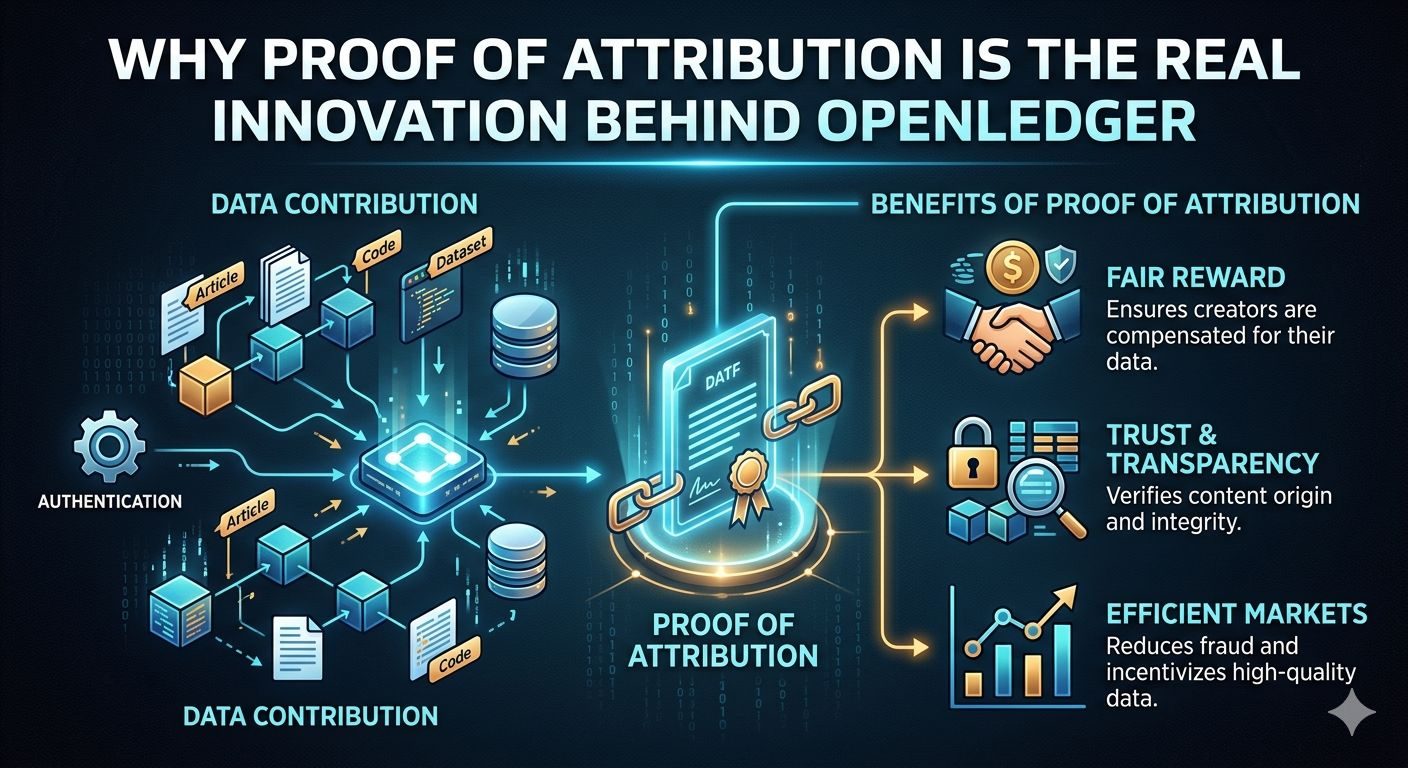
Real-world Analogy: Giving Credit Like a Music Playlist
Think of a music playlist where every song lists its original artist, producer, and remix creator. Even if someone rearranges or edits the playlist, the credits remain intact and visible. Proof of Attribution works in a similar way in the digital world. It ensures that every layer of contribution is preserved even when content evolves over time or is reused in new contexts. This means remixing or building upon content becomes more respectful because attribution remains intact across transformations. It also helps users understand the evolution of ideas in a clearer way. This can ultimately improve digital literacy as users become more aware of how content flows and evolves across platforms encouraging more responsible creation practices. It also encourages more ethical reuse of information in both AI and human collaboration environments.
Why This Matters for the Future of AI and Crypto
As AI systems generate more content, the question of origin becomes even more important. Proof of Attribution helps AI outputs remain connected to their training data sources and contributor networks. In crypto ecosystems, it aligns with transparency, accountability, and trust principles. This creates a fairer and more collaborative environment where value is tracked transparently rather than hidden or lost. This is especially important in decentralized ecosystems where trust must be established without central authorities. Proof of Attribution acts as a bridge between creators and systems ensuring fairness and visibility at scale across global networks. By making attribution programmable and verifiable it becomes easier to reward contributors fairly across global networks even when systems operate independently of each other. This also supports the growth of creator economies where recognition plays a key role in sustaining innovation and long term participation.