You know that sinking feeling when you see AI getting ridiculously good—spitting out answers, art, and ideas that feel almost magical—but you can’t help thinking about all the posts, research, and life experiences that went into training it? Stuff from regular people like us that never really got acknowledged, let alone paid for.
That quiet frustration is what got me interested in OpenLedger. As of mid-2026, with the mainnet running since late 2025, it doesn’t feel like just another crypto project jumping on the AI hype. It actually feels like someone finally tried to build a system that says: your contribution matters, and we’re putting it on-chain so everyone can see it.
I came across the story of Ram Kumar and the team, and it clicked. They’d seen it in the enterprise world: huge datasets locked away, creators left out in the cold, and AI getting more powerful but also more extractive. It pissed them off enough to actually do something different.
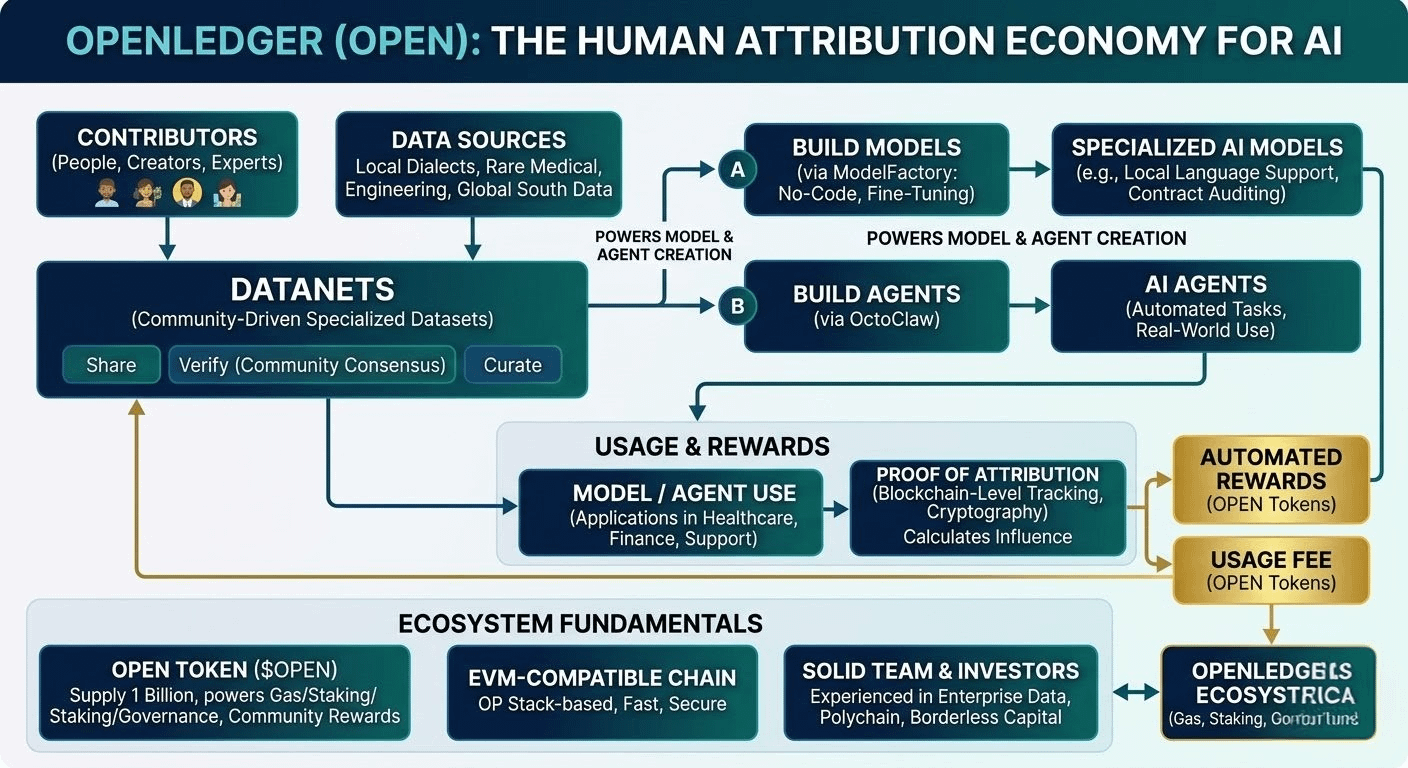
OpenLedger isn’t trying to compete with the giant general models. It’s an EVM-compatible chain (built with OP Stack ideas for speed) focused on the stuff that actually matters for real-world use—like tracking where data comes from and making sure rewards flow back automatically.
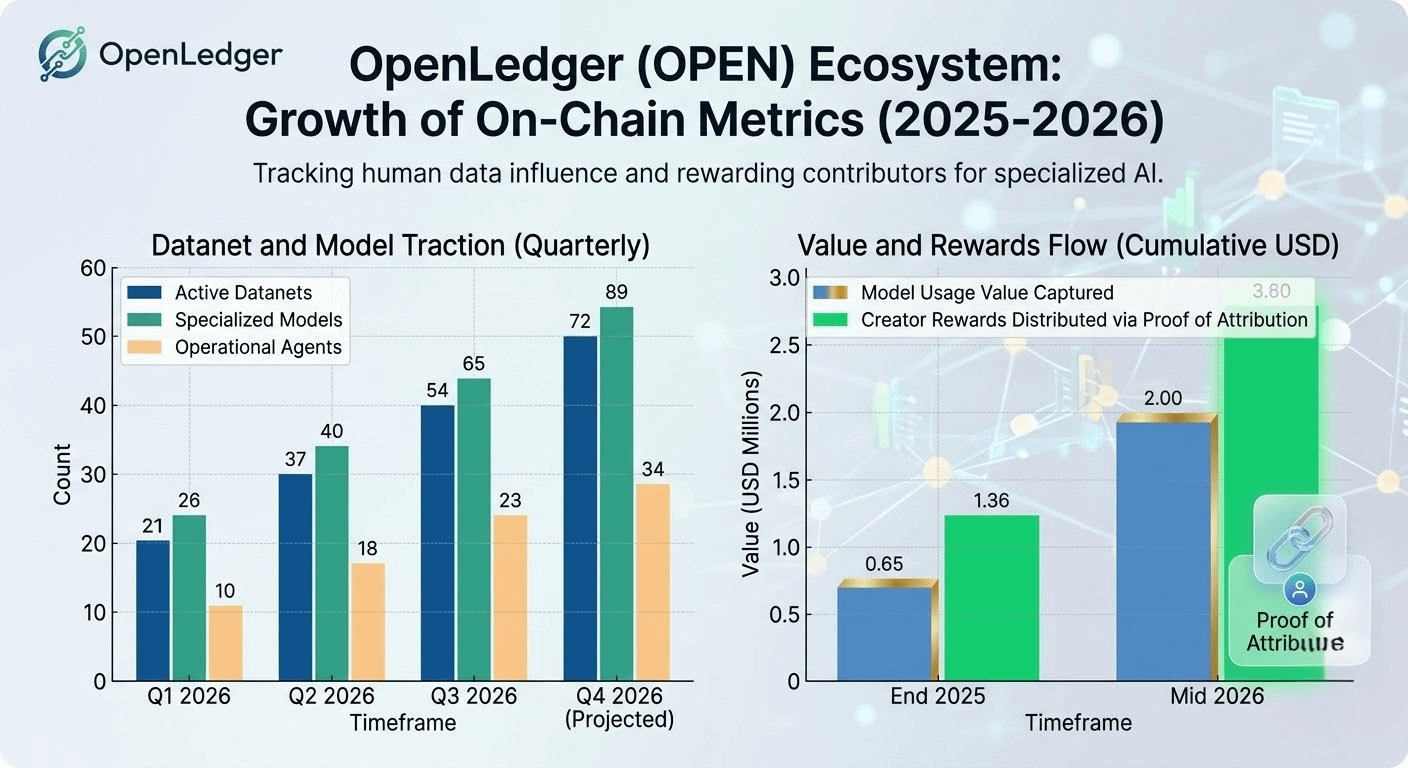
The heart of it is Datanets: community-driven spaces where people can share, verify, and build specialized datasets together. Think rare medical cases from parts of the world big tech usually ignores, local language nuances, practical engineering knowledge from the Global South, or whatever niche expertise you have. You contribute, it gets checked by the community, and it becomes part of something bigger.
What I really like is their Proof of Attribution. It’s not just buzzwords. Using cryptography and smart tracking, it figures out how much your specific data actually influenced a model’s output. Then, when that model gets used, rewards come back to you transparently on the blockchain. For once, it feels like the AI economy might treat people with some basic respect instead of just harvesting our stuff for free. Especially for folks in places like Karachi or other emerging markets—this could actually open doors.
They’re building practical, efficient specialized models and agents that solve real problems—like auditing contracts, handling support in local dialects, or giving useful advice in healthcare and finance. Tools like ModelFactory let you fine-tune models with no-code options, and OctoClaw (their agent builder) is already out there so you can create agents that do real work while still looping credit and value back through the chain. It makes the whole thing feel collaborative and human instead of cold and centralized.
The OPEN token (hovering around $0.20–$0.23 lately) powers gas fees, staking, governance, and those creator rewards. Capped supply at 1 billion, with a decent focus on the community. As more Datanets form, models get built, and agents run, the utility should grow with actual usage. They’ve also put real support behind builders—like the OpenCircle fund—and holders get to vote on direction.
The team feels solid too. Ram Kumar comes across as someone who’s seen the problems up close and wants to fix them. Backing from places like Polychain and Borderless, plus partnerships (like with Story Protocol), adds credibility. They’ve been shipping steadily: mainnet for attribution, tools you can actually try, and a roadmap into 2026 centered on making AI more accountable.
Of course, it’s not perfect. Scaling compute, competing with the closed giants, getting broad adoption, and navigating regulations are all real challenges. Crypto prices move around, and not everything will work out. But the core idea gets me: in a world where AI can feel dehumanizing, here’s a project trying to make it fairer, more traceable, and more rewarding for the actual humans behind it.
If you’ve ever felt like your knowledge or data gets taken for granted, it might be worth checking out. Download OctoClaw, think about starting a small Datanet around something you care about, or just follow how the attribution system evolves. It won’t fix everything overnight, but it carries this stubborn, hopeful belief that we can build the future of intelligence together—with credit and rewards actually going back to the people who make it possible.
In a noisy space full of hype, that feels worth paying attention to.