
Whenever a project calls itself “AI-native blockchain”, I usually already want to hit the back button. Because honestly… most of the time it’s just old ideas with new branding. A normal blockchain, plus a ChatGPT-style layer on top, wrapped in hype.
So when I first saw @OpenLedger ,
I was kinda the same again. Like okay… another AI + crypto project, another big promise.
But then I didnt just read the slogans. I actually tried to understand what they were saying. And that’s where it started feeling a bit different.
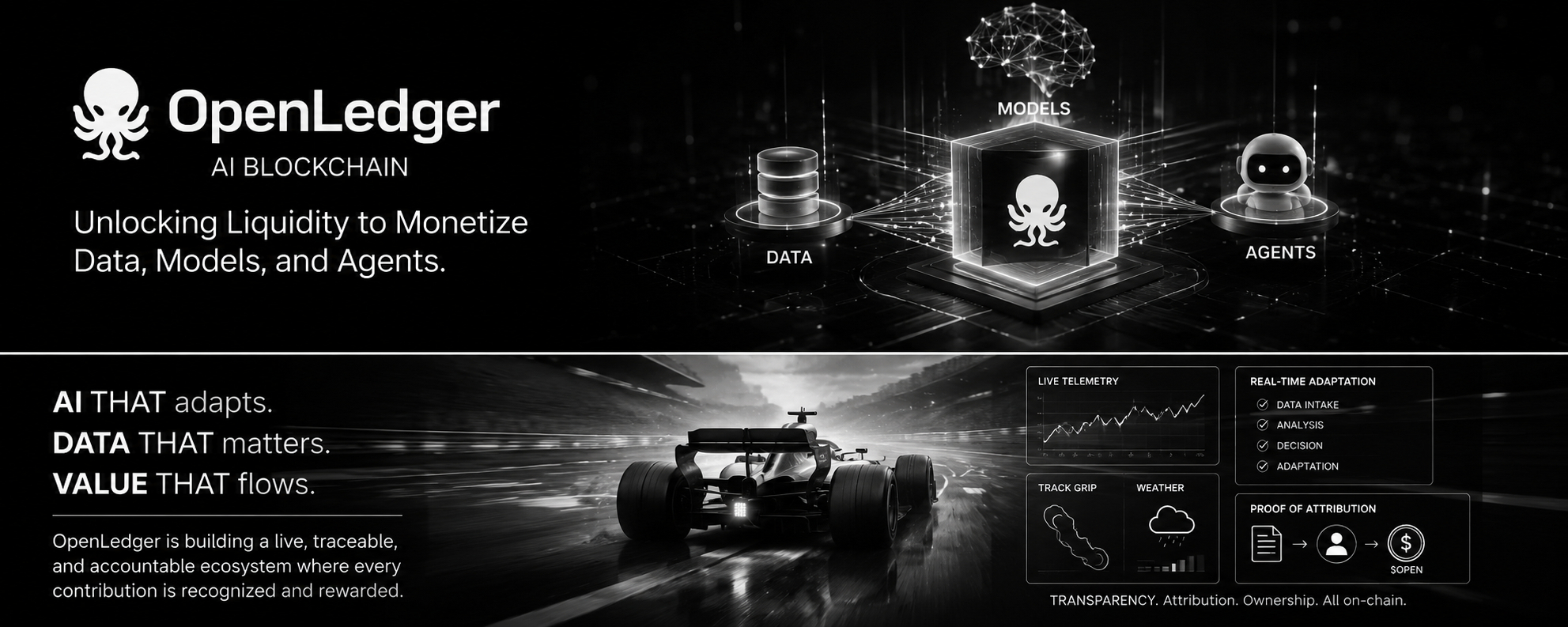
They didn’t start with a heavy whitepaper or super technical stuff. They used a simple example: a Formula 1 racing team.
At first I thought “okay this sounds like marketing again”. But then I actually pictured it properly.
In F1, nothing is fixed.
The track changes, weather changes, tires wear out, other cars speed up or slow down. And the team is always adjusting, like every second, not just once.
That’s what they were trying to explain.
Not a normal AI that just takes input and gives output like a static thing. But more like a system that keeps watching data in real time and keeps adjusting itself. Their idea of Datanets and on-chain data is like a constant live feed.
And I won’t lie, that made me pause a bit.
Because if AI is always “watching” and updating itself with live world data… then how do we even judge if its decisions are stable or not?
But then another thought comes too… more data doesn’t always mean better decisions. Sometimes it just becomes noise. And if something reacts too fast, it can also be wrong in a different way.
So yeah, I’m not fully convinced or anything.
But then @OpenLedger brought something else into the picture that got my attention again.
They called it Proof of Attribution.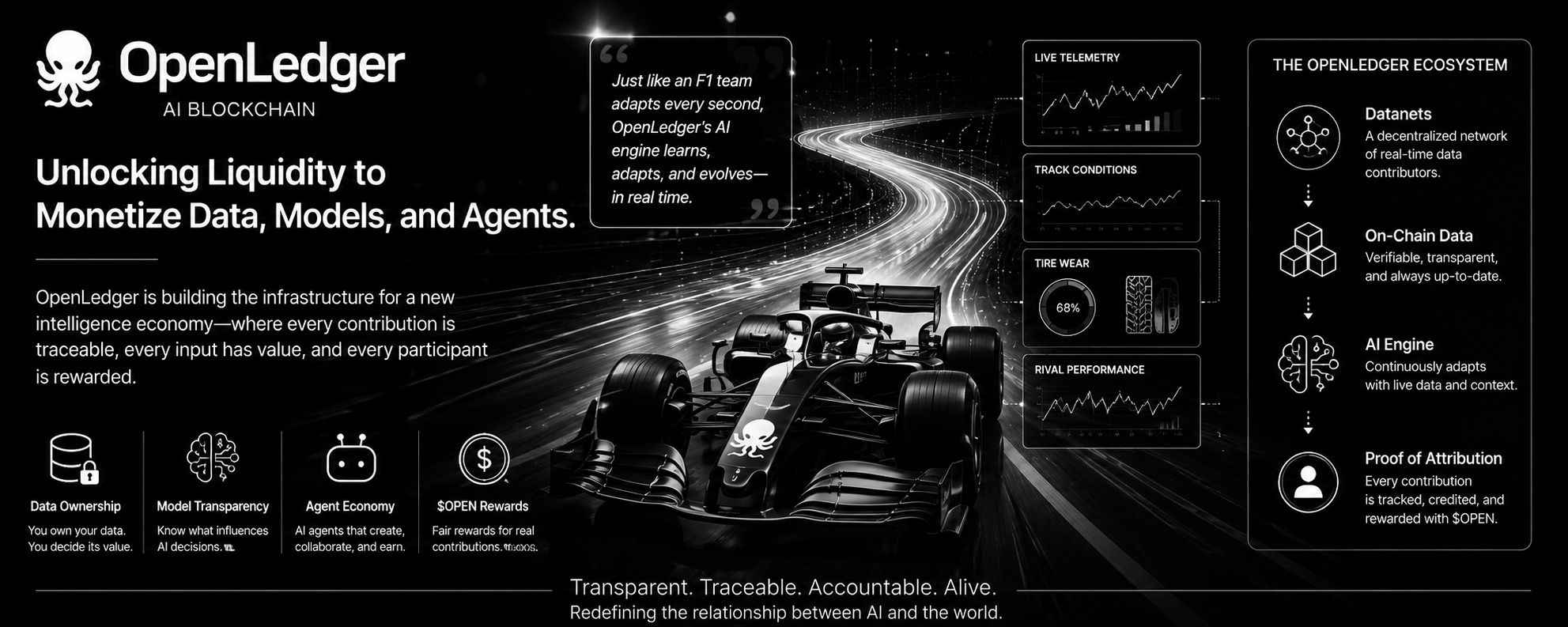
And that basically shifts the focus from just AI output to input too. Like which data actually influenced the result? Who provided that data? And how do they get rewarded for it, maybe with $OPEN tokens?
That part actually made sense to me. Because in Web3 people always talk about “who creates value”, but nobody really solves it properly.
If data is what powers AI, then who owns that data? Right now most of it just gets taken for free and used in training models. No clear credit, no real reward system.
OpenLedger is trying to track that and connect contribution with value.
Still, I have doubts though. Not everything can be measured properly. Some data has indirect impact. Some contributions are too small or too spread out to trace cleanly. And when you try to make everything “transparent”, things often get more complicated, not less.
But one thing keeps sticking in my head.
This isnt just about making AI better. It’s more about changing how we see AI in the first place.
Old AI feels like a black box:
you give input, you get output, and what happens inside nobody really sees. But OpenLedger is basically saying let’s open that box, make it traceable, make it accountable, make it more “alive” in a way.
Not a final solution. Not perfect. Not even close maybe.
But it feels like a direction.
A direction where data actually has value, not just gets used silently. Where AI is not just a tool sitting still, but something that keeps evolving with its environment. And where blockchain is not just a ledger anymore, but kind of like a system that connects everything together.
Is this really the start of future infrastructure?
Or just another step in a long hype cycle?
Honestly, I don’t know yet.
But yeah…
for the first time in a while, I actually feel like I want to keep watching and see where it goes.