


The first thing I do when evaluating any blockchain project that calls itself an ecosystem is look for the builders.
Not the team. Not the investors. The third party developers who showed up without a grant check in hand and decided the platform was worth their time. That population tells you more about a project's actual health than any roadmap document or tokenomics paper because developers are harder to manufacture than announcements. You can write a press release about ecosystem growth in an afternoon. You can't fake a GitHub commit history.
So I went looking for what OpenLedger's developer ecosystem actually looks like right now, with the caveat that right now is an early stage for a project that hasn't fully launched its mainnet infrastructure. Early stage ecosystems are genuinely hard to evaluate because the absence of activity doesn't always mean the absence of interest. Sometimes it just means the tools aren't ready yet and the developers are waiting.
What I found was a project in the process of building the conditions for developer activity rather than one that already has it at scale. The documentation is more complete than I expected for a project at this stage. The technical architecture is explained with enough specificity that a developer familiar with EVM environments and Layer 2 infrastructure could form a real picture of what building on OpenLedger would involve. That matters because bad documentation is one of the most reliable signals that a project isn't actually ready for external developers regardless of what the announcements say.

The SDK and API access points that OpenLedger is building out are aimed at a specific developer profile. Not the general DeFi developer who wants to deploy a lending protocol or a token swap. The target is developers working at the intersection of AI and blockchain, people building data pipelines, model training infrastructure, or applications that need verifiable provenance for their training data. That's a narrower audience than most Layer 2 ecosystems target, which is either a focused strategy or a limiting one depending on how large that developer population actually is.
My honest assessment is that it's smaller than the project's ambitions require and larger than the skeptics give it credit for. The demand for trustless AI data infrastructure is real and growing. The number of developers with the specific combination of AI engineering background and blockchain development experience needed to build on OpenLedger meaningfully is genuinely limited right now. Bridging that gap requires either tooling that abstracts away the blockchain complexity for AI developers, or enough economic incentive to make the learning curve worth it for developers who currently operate in one world but not the other.
The grant program is the conventional answer to the incentive problem and OpenLedger has one. Grant programs work when the underlying platform is compelling enough that funded developers stick around after the grant ends. They don't work when developers take the money, build something, and move on because the ecosystem didn't give them a reason to stay. Which category OpenLedger falls into is something only time will reveal, but the design of the incentive structure matters more than the size of the grant pool.
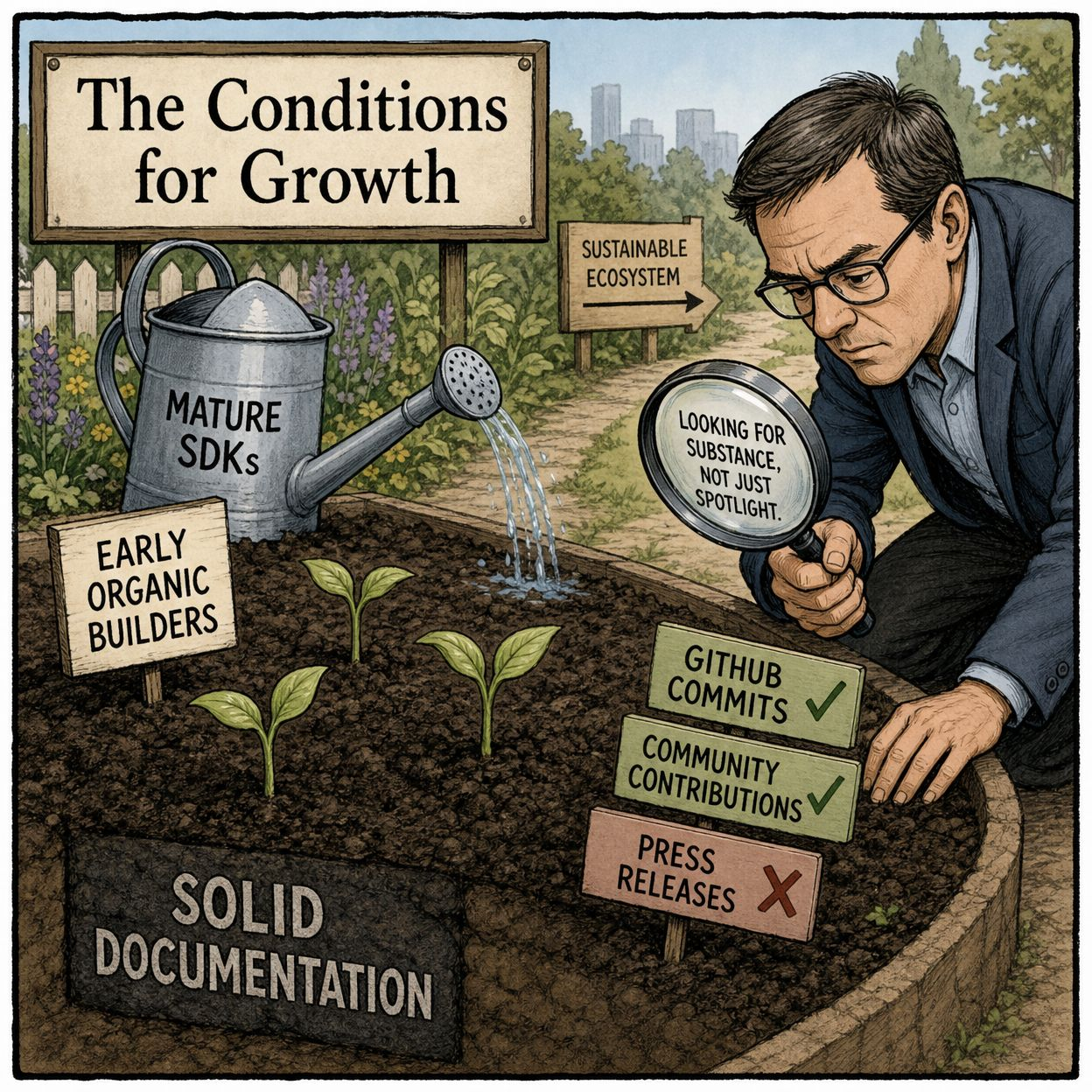
What I'd want to see more of is public developer activity. Open source repositories, community contributions, third party tools being built without direct team involvement. That kind of organic activity is the leading indicator I trust most when evaluating whether an ecosystem is developing genuine momentum or just managed appearances.
OpenLedger's developer ecosystem is at the stage where the foundation looks solid and the building hasn't really started yet.
That's not a criticism. It's a description of where things are.
The interesting question is what it looks like in twelve months.

