
Yesterday during lunch, my phone buzzed while I was standing in line at a coffee shop. Someone in my DeFi group sent a message:
“APY on that pool just dropped hard. I’m out.”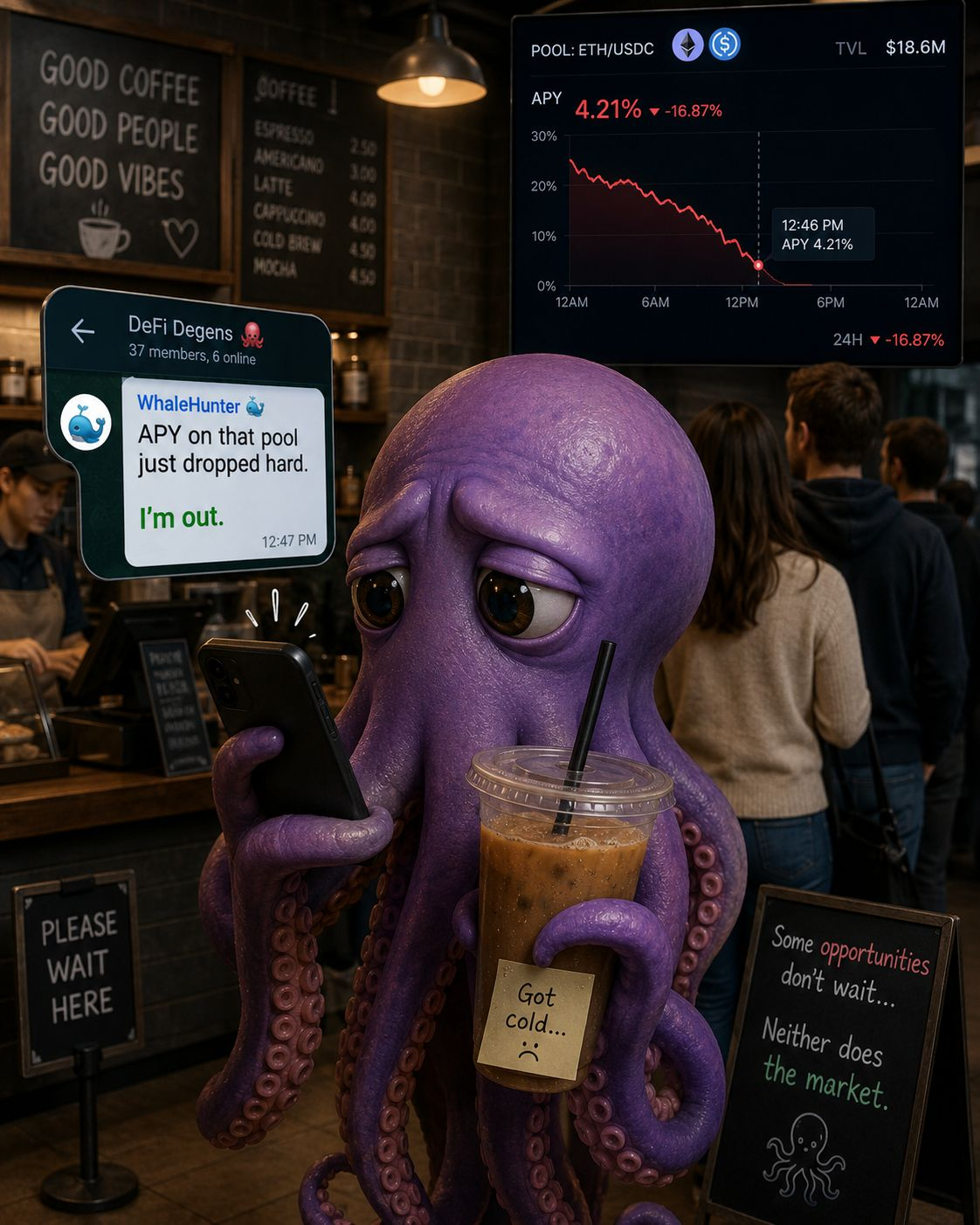
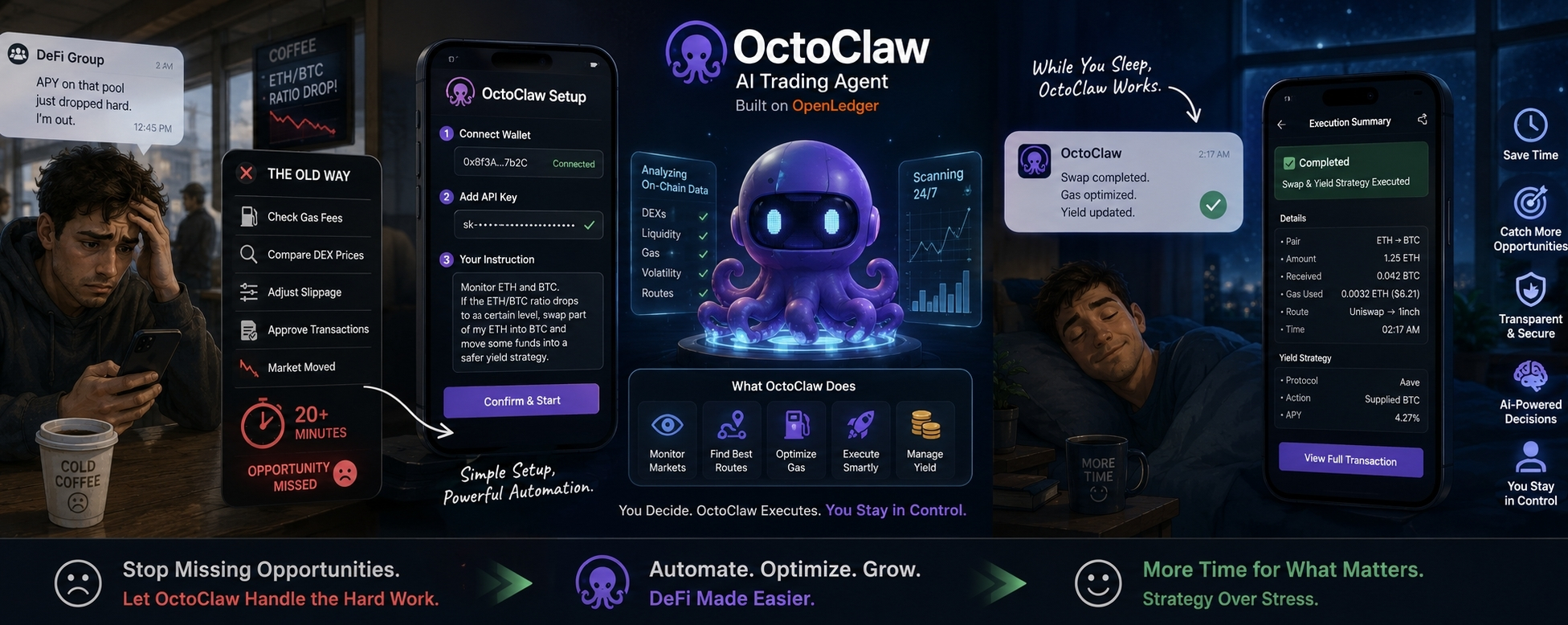
I instantly opened my wallet and saw my ETH was still sitting there. Then came the usual routine — checking gas fees, comparing DEX prices, adjusting slippage, approving transactions…
By the time I finished everything, the market had already moved.
Again.
I remember sitting there with cold coffee thinking:
Why does DeFi still feel like a full-time job sometimes?
No matter how fast you react, it always feels like the best opportunities happen when you’re busy, asleep, or simply away from your screen.
Later that day I came across a post about OctoClaw, an AI trading agent built through OpenLedger. Normally I ignore most “AI trading” hype because a lot of it sounds too good to be true.
But this one caught my attention because it focused less on predictions and more on execution.
So I decided to test it myself over the weekend.
Setup was honestly easier than I expected. I connected my wallet, added my API key, and gave it a simple instruction:
“Monitor ETH and BTC. If the ETH/BTC ratio drops to a certain level, swap part of my ETH into BTC and move some funds into a safer yield strategy.”
That was it.
What I liked immediately was that it didn’t just blindly execute trades. First, it repeated my instructions back to me in simple language and explained the risks — things like slippage, gas spikes, and liquidity changes.
After I confirmed, it started scanning live on-chain data across different platforms.
A few seconds later, the trade route was ready.
Instead of spending 20 minutes jumping between tabs and calculators, I only had to approve the final transaction.
That felt different.
The biggest thing for me is the automation side.
Before this, if you wanted automated DeFi strategies, you usually needed scripts, bots, or complicated setups that most normal users don’t have time for.
With OctoClaw, it felt more natural — almost like talking to a trading assistant instead of programming a machine.
And the best part?
It doesn’t sleep.
A couple nights ago, while I was completely offline, it caught a small opportunity and executed exactly within the limits I had set.
When I woke up, I had a short notification waiting:
“Swap completed. Gas optimized. Yield updated.”
Clean and simple.
I could also review every step afterward, which made me feel much safer using it. In DeFi, transparency matters a lot.
Of course, I’m still careful. I started with a small amount first and kept hardware wallet confirmations enabled because no tool is risk-free.
But after using it for a few days, I realized something:
Most of us spend too much time doing repetitive manual work in DeFi.
Watching charts.
Refreshing apps.
Moving funds around.
Staying awake for opportunities.
It gets exhausting.
This was the first time DeFi actually felt a little lighter for me.
Now I spend less time reacting and more time thinking about strategy.
The agent handles the monitoring.
I stay in control.
And honestly?
Getting your time back might be the best alpha of all.