
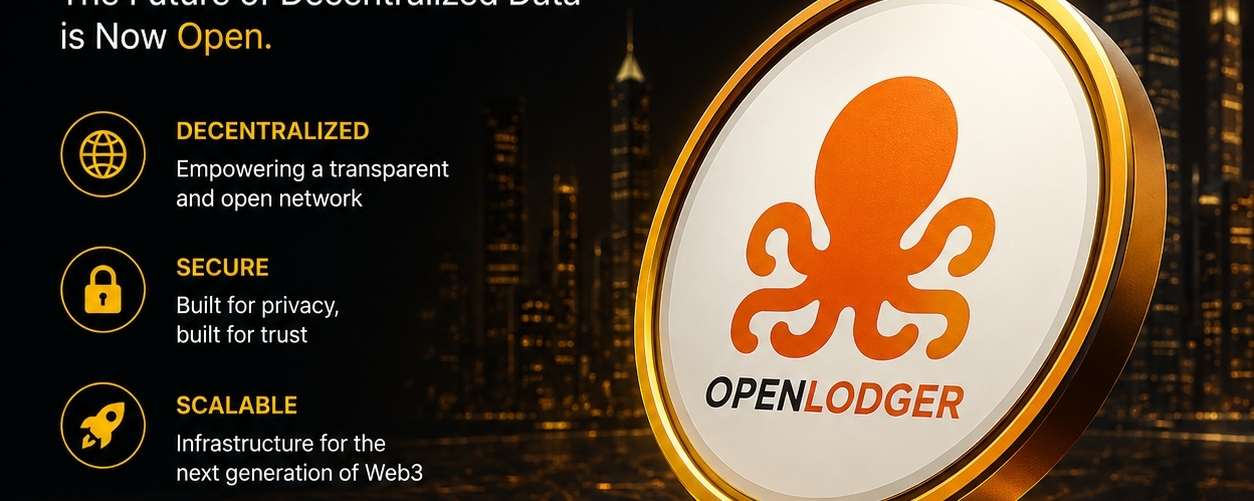
The digital world is changing at an extraordinary pace, and blockchain technology has become one of the most transformative innovations of the modern era. Over the last decade, blockchain has evolved from a niche concept associated primarily with cryptocurrencies into a powerful technology with applications in finance, supply chains, digital identity, gaming, artificial intelligence, and decentralized applications. Within this rapidly growing ecosystem, projects and tokens are continuously emerging with the goal of improving scalability, security, and accessibility. Among these emerging initiatives is OpenLedger Token, a project that aims to support innovation and participation in the evolving Web3 landscape.
The concept of decentralization lies at the heart of blockchain technology. Traditional systems often rely on central authorities or intermediaries to manage transactions and maintain trust between users. While such systems have functioned for many years, they can face challenges related to transparency, control, efficiency, and accessibility. Blockchain technology introduces an alternative approach where networks operate through distributed systems that allow participants to interact directly while maintaining transparency and security.
OpenLedger Token represents a vision connected to these decentralized principles. As the digital economy grows, there is increasing demand for ecosystems capable of supporting users, developers, and organizations in an efficient manner. Modern blockchain projects aim to create infrastructures that are scalable enough to handle increasing activity while remaining secure and user-friendly.
One of the important aspects of blockchain ecosystems is transparency. Blockchain networks record transactions on distributed ledgers that can be verified by participants. This creates an environment where information is more accessible and trust can be strengthened through technology rather than depending entirely on centralized institutions. Transparency has become a key factor attracting individuals and organizations to blockchain-based systems.
Security is another major element in digital innovation. As online systems continue expanding, concerns regarding data protection and privacy are becoming increasingly important. Blockchain technology often incorporates cryptographic methods designed to secure transactions and network activity. Emerging ecosystems such as OpenLedger seek to participate in this broader movement toward secure and efficient digital interaction.
Scalability also plays an important role in the future of blockchain adoption. As millions of users engage with digital platforms worldwide, networks must be capable of handling large transaction volumes efficiently. Early blockchain systems sometimes faced limitations regarding transaction speed and processing capacity. Modern projects increasingly focus on building systems that can support wider adoption while maintaining performance.
Community participation is another factor that contributes significantly to blockchain ecosystems. Unlike traditional systems where decisions may be concentrated within specific organizations, many decentralized projects encourage user engagement and collaboration. Communities often play a role in development, governance discussions, ecosystem growth, and awareness initiatives. Strong communities can help projects grow by bringing together users with shared interests and long-term goals.
The growth of Web3 has also created new possibilities across multiple industries. Decentralized finance, commonly referred to as DeFi, has introduced alternative financial systems that allow users to interact with financial services through blockchain technology. Digital ownership has expanded through non-fungible tokens, while gaming ecosystems increasingly integrate blockchain-powered economies. Artificial intelligence and decentralized infrastructure are also becoming areas of interest for innovation.
As technology evolves, the importance of adaptable ecosystems continues to increase. Projects entering the blockchain space often focus on creating environments that can support future developments rather than simply addressing current demands. Flexibility, interoperability, and continuous innovation are becoming central themes across the industry.
OpenLedger Token can be viewed within this broader context of blockchain advancement and digital transformation. As users continue exploring opportunities in Web3, projects emphasizing openness, innovation, and participation are likely to attract growing attention. The journey toward decentralized technology remains in its early stages, and the future may bring entirely new possibilities that are difficult to predict today.
The evolution of blockchain is not solely about digital assets; it represents a larger movement toward redefining how individuals interact, share information, and participate in online ecosystems. Whether through improved transparency, stronger security, scalable systems, or community-driven development, innovation continues to shape the future.
As the digital era progresses, initiatives like OpenLedger contribute to ongoing discussions about what the next generation of technology may look like. The future of Web3 is still being built, and every emerging project adds another chapter to the continuing story of blockchain innovation.
#OpenLedger #Binance #Crypto #defi #INNOVATION
