I was sitting with a friend who does a lot of trading with automation a nights ago. He mostly uses workflows that are stitched together. Dashboards connected to bots connected to scripts connected to fragmented APIs.. He is not using fully autonomous systems yet. At one point he stopped talking. Said something that I still remember. He said "none of these systems actually understand each other we just keep forcing connections until something breaks." I think that says a lot about where AI and crypto're right now.
Everyone talks about models and agents and other things. Nobody has really solved the problem of getting all these systems to work together. AI systems can do a lot of things like generate outputs and summarize markets. The infrastructure around them is still not very stable. It is still. Relies on humans a lot. Someone has to connect permissions and validate actions and do things to make it all work.
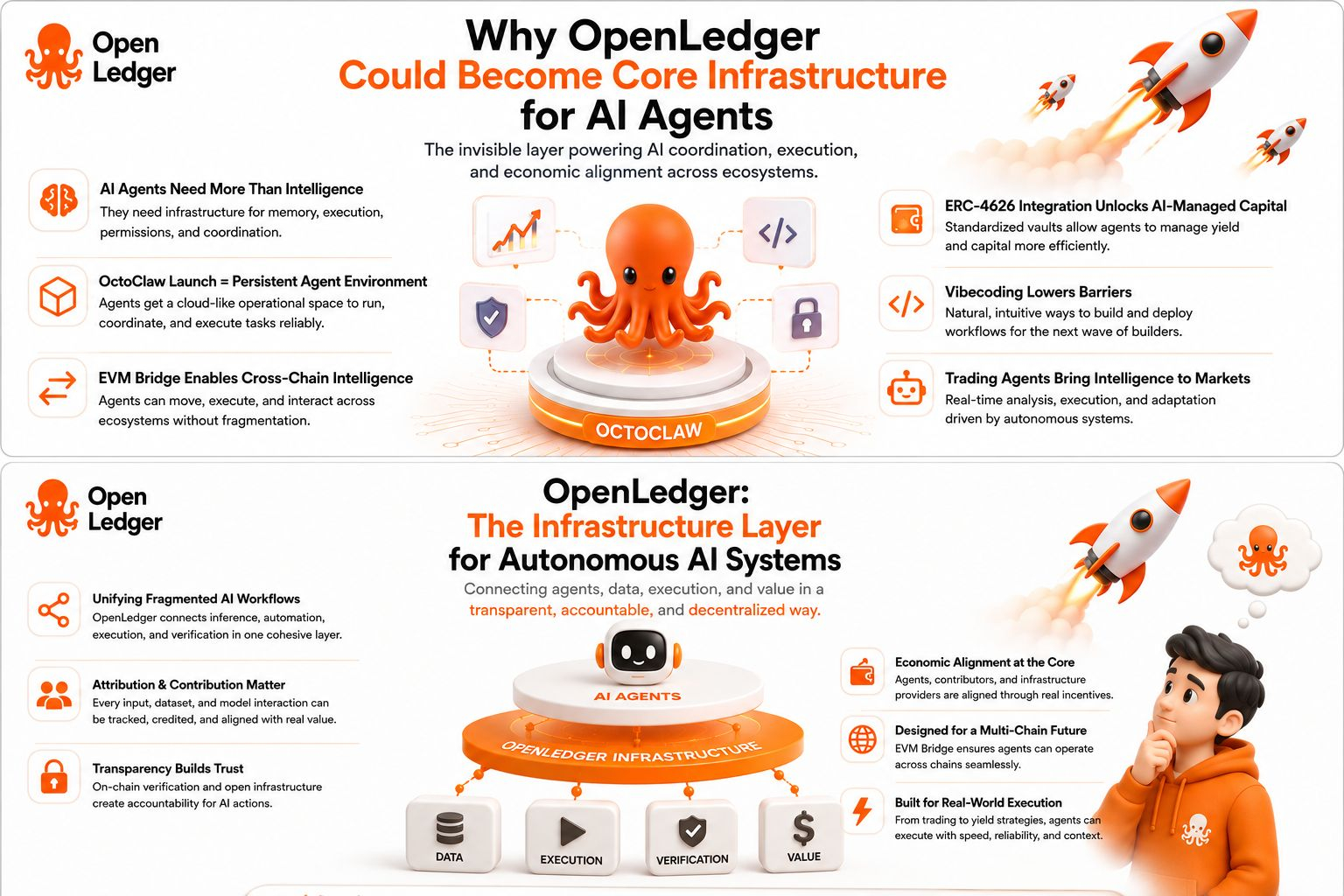
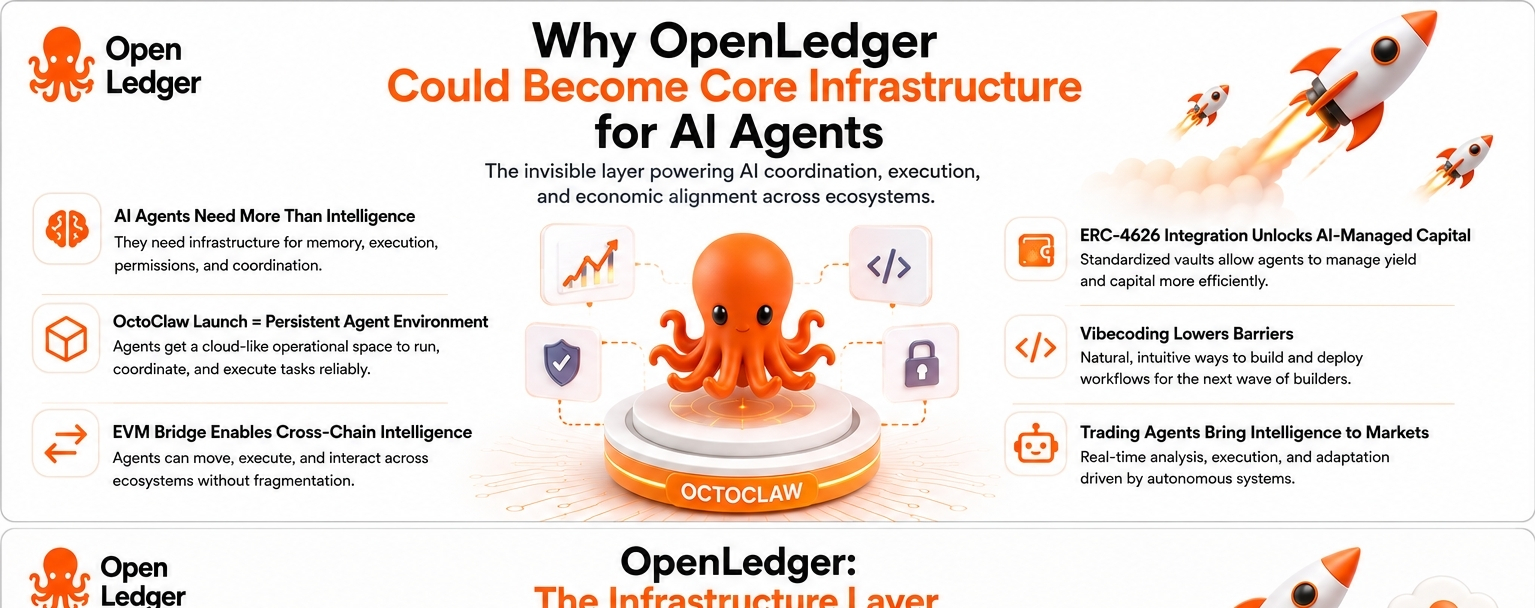
That is why I have been looking at OpenLedger lately. It is not because they promise some future but because they seem to be focused on the underlying layer that most people ignore. This layer is where agents and contributors and infrastructure and economic systems all have to work in a reliable way. The OctoClaw launch was interesting to me because it seemed like a sign of where this space might be heading. It was not about the branding or how it looked. About the idea that AI agents might need environments that they can operate in just like applications need cloud infrastructure.
Not isolated prompts or disconnected bots but actual systems that can coordinate and execute and remember things.. Once you start thinking about AI agents as participants in the economy instead of just software tools the whole conversation changes. What makes this shift uncomfortable is that most people still focus on what AI can produce without thinking about who maintains the systems that enable those interactions. Who contributes the data, who verifies execution, who absorbs failures, who captures long-term value. The system remembers data. The economy forgets people.
This imbalance is obvious when you look at how fragmented AI-agent workflows are. One service handles one thing another handles another. Trust gets lost in the complexity. OpenLedger seems to be trying to reduce some of that fragmentation by creating a framework where agents can operate coherently. The EVM bridge matters because interoperability is not about liquidity but about coordination. If agents are going to participate across ecosystems, movement and execution and verification become core requirements.
Even the ERC-4626 integration says something about where this might go. Standardized vault structures might become AI-managed capital allocation might become a thing. That creates efficiency but discomfort. Because once systems start optimizing yield and execution timing and resource allocation human participation starts shifting from direct action to supervisory trust.. Trust is fragile, especially online.
Vibecoding conversations around OpenLedger also reveal something. More people are interacting with infrastructure through natural coordination layers than traditional development complexity. That lowers barriers. Also changes responsibility structures. Accessibility increases participation. Participation increases noise and noise increases manipulation risks. None of this is clean yet.
Maybe that is the part worth paying attention to. Not whether OpenLedger succeeds,. Whether projects like this represent an early blueprint for how digital coordination evolves when AI systems stop behaving like passive assistants and start behaving like persistent actors. The trading agent direction makes this visible because markets expose weaknesses fast. An AI system executing trades across environments requires reliability and permissions and transparency and infrastructure that can handle mistakes.
Most people underestimate how difficult that coordination layer is. Outputs are collective. Execution becomes personal when money and ownership and accountability enter the picture. I think that is why OpenLedger feels interesting to watch. Not because the answers are finished,. Because the questions underneath the project feel honest. There is still uncertainty around scaling and governance and manipulation resistance and contributor incentives. Those concerns matter, maybe more than the technology itself.
It feels like the industry is moving toward a world where invisible infrastructure matters more than applications. The systems quietly coordinating trust and data and execution and contribution may shape the phase of digital economies more than the interfaces people interact with daily.. If that is true then projects, like OpenLedger are not competing to become applications but to become environments where autonomous systems can exist and cooperate and transact without human stitching holding everything together. I am not entirely sure yet whether humanity is building these systems because coordination is becoming impossible without them or because we have already started accepting a future where human coordination alone no longer scales.$OPEN