
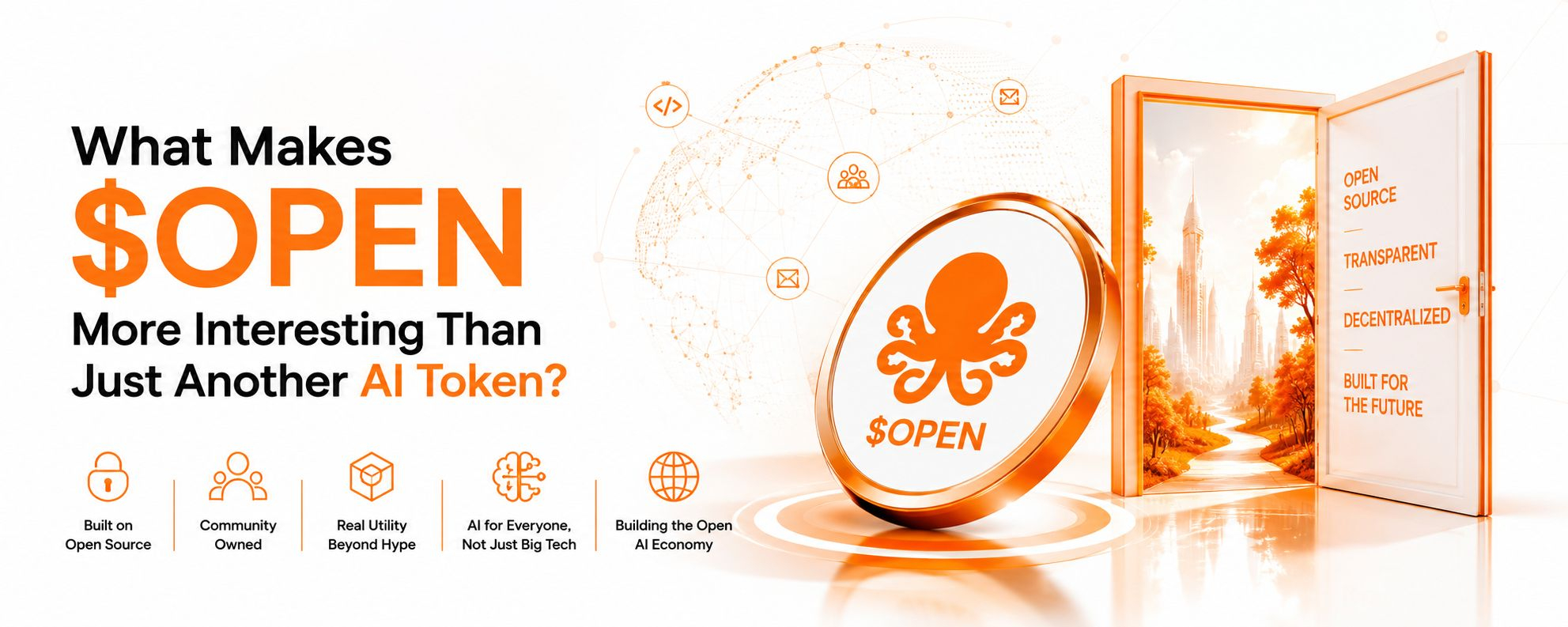
Over the past few weeks, I’ve been spending more time researching AI-related crypto projects, and honestly, one thing has started becoming very obvious to me:
The market is full of AI narratives… but very few people are actually discussing ecosystem sustainability.
Almost every project today wants to position itself as “AI-powered.”
But after looking deeper into multiple ecosystems, I’ve realized that long-term success usually depends on something much more important than hype:
Utility.
That’s one reason I started paying closer attention to @OpenLedger and the broader role of $OPEN inside the ecosystem.
Because in crypto, narratives may attract attention initially… but utility is what usually determines whether an ecosystem survives once excitement fades.
_________________________________
When I first came across OpenLedger, I expected another typical AI narrative.
You know the kind: futuristic branding, bold promises, and endless conversations about “revolutionizing AI.”
But the deeper I looked, the more I noticed the discussion around OpenLedger wasn’t only focused on AI models themselves. Instead, the project appeared more focused on participation, coordination, and ecosystem infrastructure.
And honestly, I think that changes the conversation completely.
Because AI ecosystems don’t grow from technology alone.
They grow from:
contributors
developers
infrastructure
incentives
community participation
Without proper coordination between these layers, even strong technologies can struggle to maintain momentum long term.
That’s where token utility becomes important.
________________________________
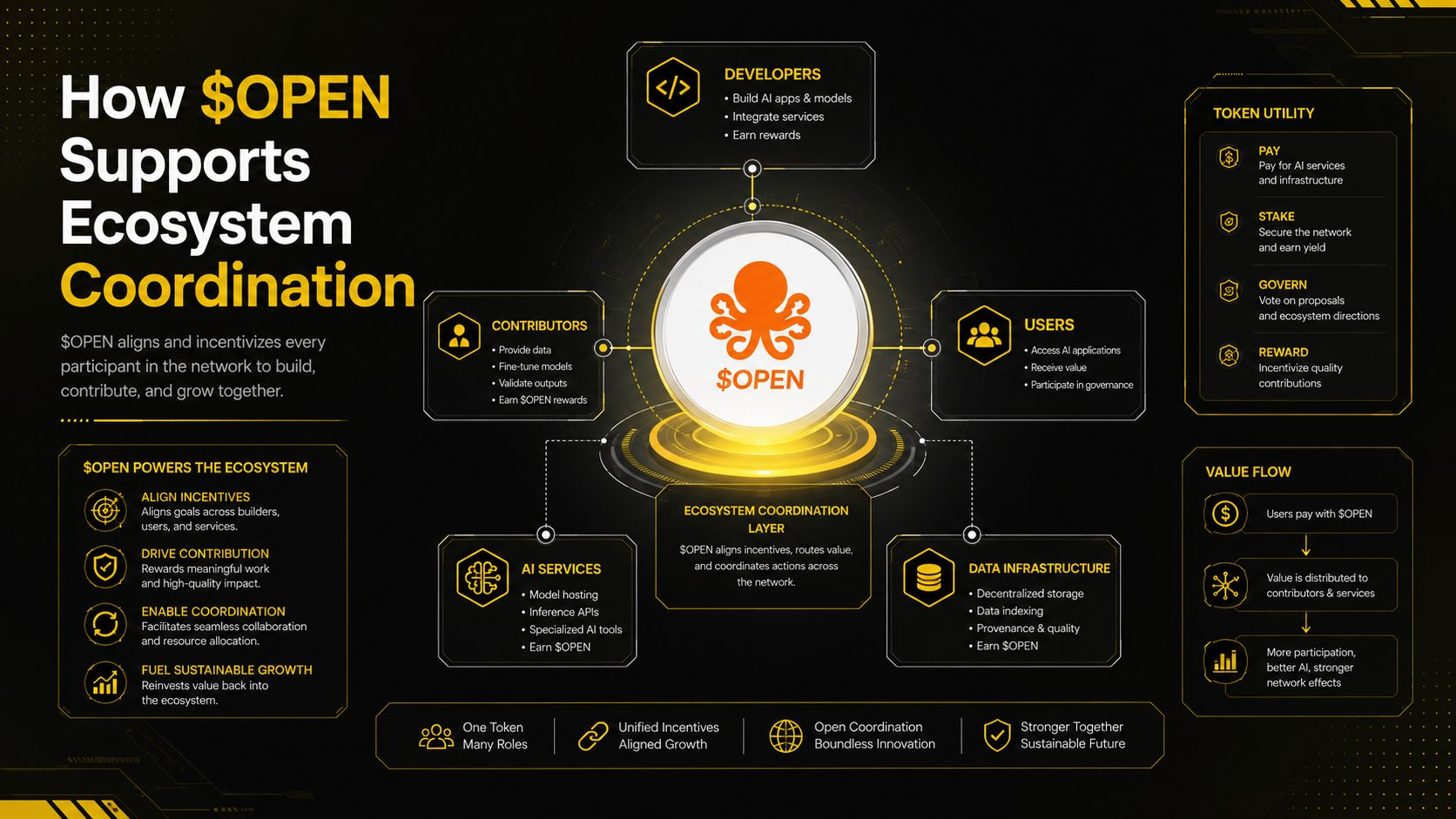
One thing I’ve learned in crypto is that many ecosystems look exciting during early hype phases.
But eventually, investors begin asking harder questions:
Does the token have a real role?
Does participation create value?
Can the ecosystem sustain activity long term?
Are incentives aligned properly?
And honestly, I think these questions matter even more in AI ecosystems.
Because AI infrastructure requires constant participation, data coordination, development activity, and network growth. If ecosystems fail to incentivize contributors properly, sustainability eventually becomes difficult.
From what I’ve observed so far, OpenLedger seems to be exploring a broader participation-driven model where contributors and ecosystem participants become part of the network itself rather than remaining passive users.
That idea immediately made the project more interesting to me than many surface-level AI narratives currently dominating the market.
________________________________
I think one of the biggest misconceptions in the current market is that better AI models automatically guarantee stronger ecosystems.
But realistically, technology alone is rarely enough.
The strongest ecosystems usually create:
aligned incentives
active communities
developer participation
sustainable contribution systems
And this is where blockchain infrastructure may actually become valuable for AI ecosystems over time.
Because blockchain introduces things AI ecosystems naturally need:
transparency
coordination
ownership
incentive systems
The more I researched this sector, the more I started feeling that the future AI economy may not only be about who builds the smartest models…
but also about who builds the strongest ecosystems around them.
__________________________________
Personally, I think it’s still early to make massive assumptions about any AI-related crypto ecosystem.
This sector is evolving incredibly fast.
New projects launch constantly, competition is growing aggressively, and narratives shift quickly in crypto markets.
But strategically, I do think OpenLedger is positioning itself inside one of the most important conversations currently happening across technology and Web3: how decentralized systems may participate in the future of AI infrastructure.
And if the ecosystem continues expanding through real adoption, developer growth, and contributor activity, then utility-driven participation models could become increasingly important over time.
Of course, execution will decide everything.
Crypto markets eventually reward ecosystems that build consistently — not just projects that market aggressively.
_________________________________
Even though the AI narrative remains extremely strong, investors should still stay realistic.
Competition inside the AI + Web3 sector is becoming intense very quickly.
That means projects like OpenLedger will eventually need to prove:
ecosystem growth
sustainable activity
real participation
developer engagement
long-term adoption
Narratives create visibility.
Execution creates longevity.
And honestly, I think that’s the biggest thing investors should watch moving forward.
_________________________________
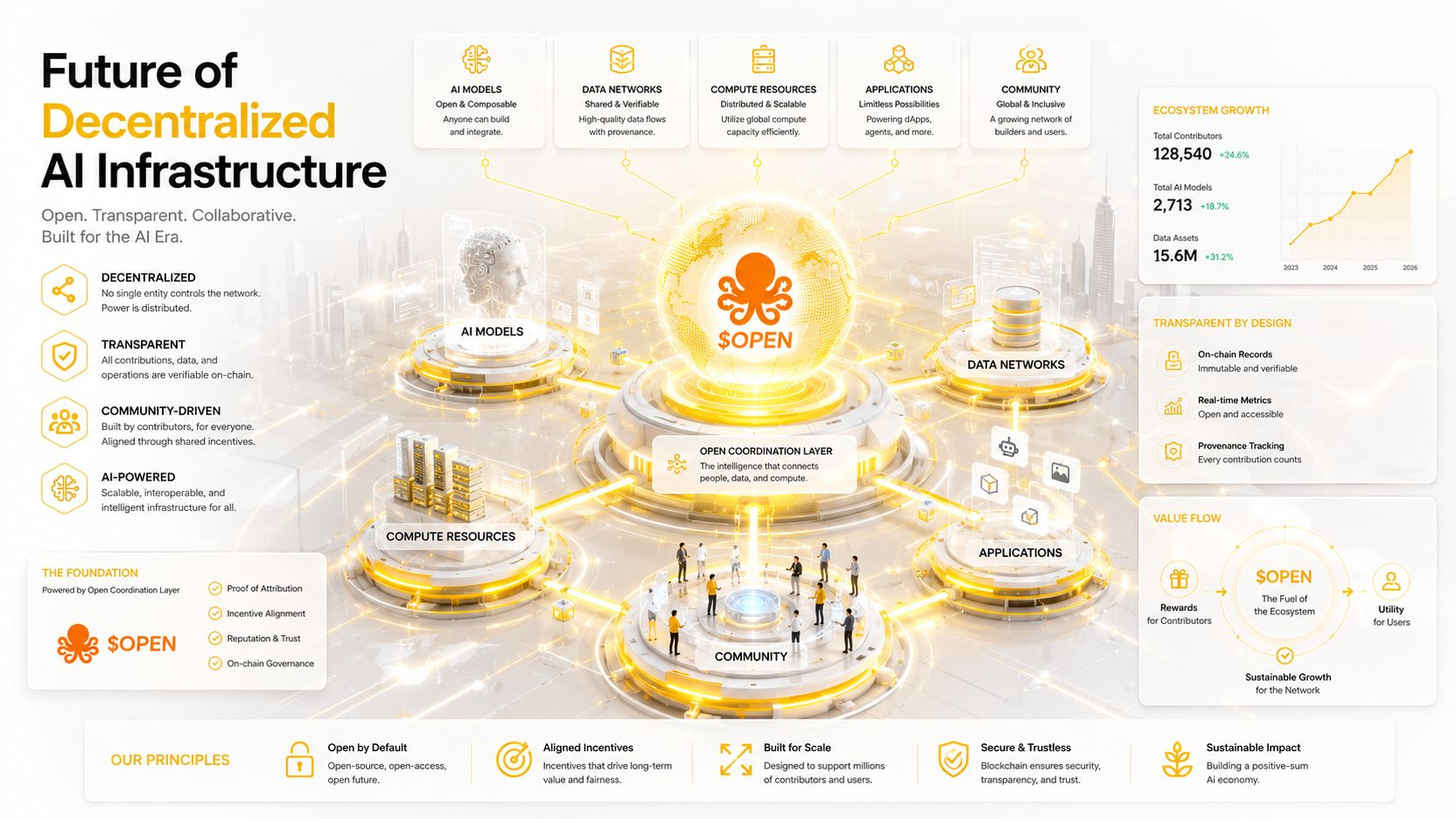
After researching OpenLedger more closely, I don’t see $OPEN as just another AI token trying to follow market trends.
I see it as part of a much larger discussion around how AI ecosystems, participation models, and decentralized infrastructure could evolve together over the next several years.
And personally, I think that conversation is only getting started.
The real question is:
As AI ecosystems continue expanding globally, will future networks remain centralized around a few major companies…
or will decentralized participation eventually become part of the next evolution of AI infrastructure?