
I’ve been around crypto long enough to notice how every cycle creates its own obsession. One year it’s DeFi, then suddenly everyone moves to NFTs, then AI becomes the center of attention almost overnight. The pattern is always similar. A new narrative appears, people rush toward it, timelines become flooded with excitement, and eventually hundreds of projects start repeating the same words until it becomes difficult to separate real ideas from temporary noise. That’s honestly why I’ve become slower when looking at new projects now. I don’t react to announcements the way I used to a few years ago because I’ve seen too many ecosystems explode with attention early and quietly disappear later when the market moves on.
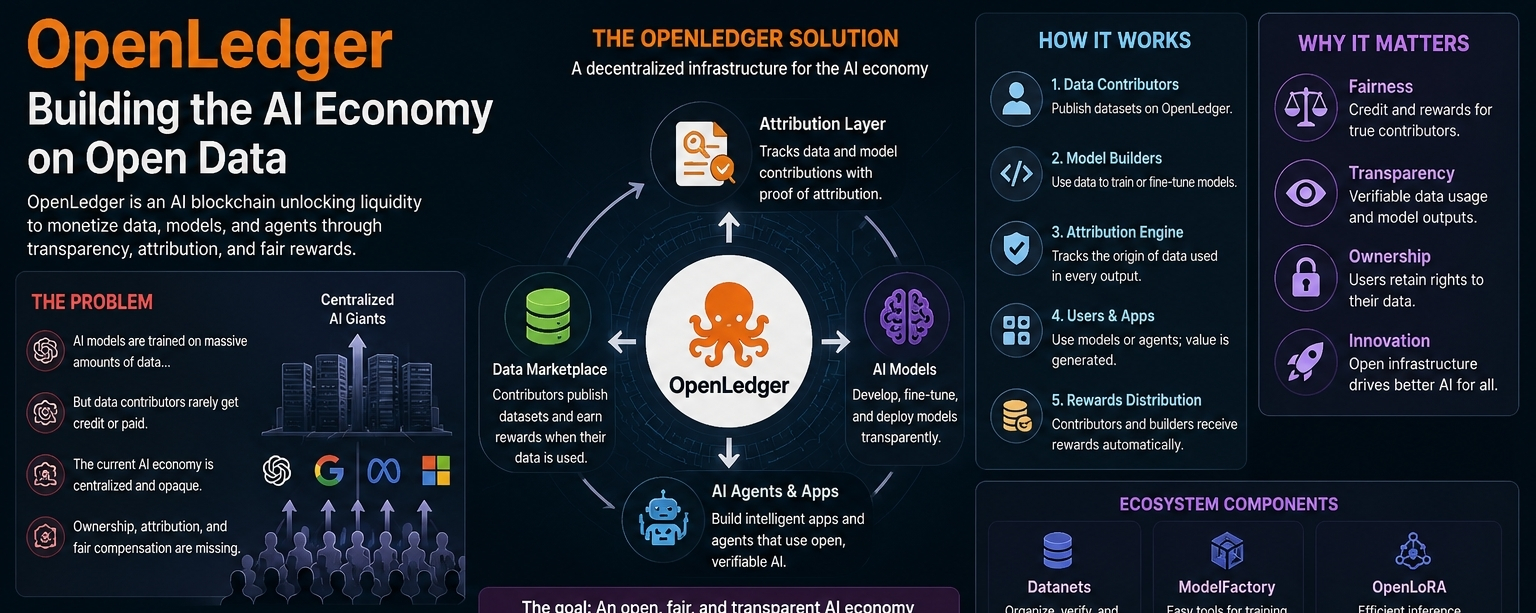
When I first came across OpenLedger, I expected the usual AI-blockchain combination that most projects are trying to push right now. I thought it would probably be another platform talking about intelligent agents, automation, and decentralized infrastructure without clearly explaining why blockchain is even necessary in the first place. But after spending time reading through the project, I realized the conversation around OpenLedger feels slightly different. The project seems less focused on selling futuristic dreams and more focused on one uncomfortable question that the AI industry still hasn’t properly answered — who actually owns the value created by AI systems?
That question keeps becoming bigger the more AI evolves. Every advanced AI model today is trained on enormous amounts of human-created information. Articles, conversations, images, videos, code, research papers, public forums, and years of online activity are constantly being absorbed into datasets. AI companies are building billion-dollar systems using information created by millions of people across the internet, yet most contributors never receive recognition, ownership, or compensation for their role in training those models. I’ve seen writers complain about it, artists talk about it, developers debate it, and even researchers are starting to question how sustainable this structure really is long term.
That’s the exact area where OpenLedger seems to be positioning itself. Instead of treating AI as a closed system controlled entirely by centralized companies, the project is trying to build infrastructure where data contributions, model activity, and AI outputs can become traceable and monetized more transparently. The idea sounds ambitious, but at least it feels connected to a real problem instead of being another random blockchain narrative created only for speculation.
The more I looked into it, the more I noticed that OpenLedger keeps emphasizing attribution. At first, that word sounds technical and easy to ignore, but when you think about it carefully, attribution may eventually become one of the most important parts of the AI economy. If AI systems are learning from public knowledge and generating massive economic value from it, then eventually people will start demanding systems that can identify where value originated and who deserves a share of it. Right now the AI industry feels extremely one-sided. Large corporations collect data, train massive models, and keep most of the value inside closed ecosystems. OpenLedger appears to be challenging that structure by trying to create an open network around data ownership and contribution tracking.
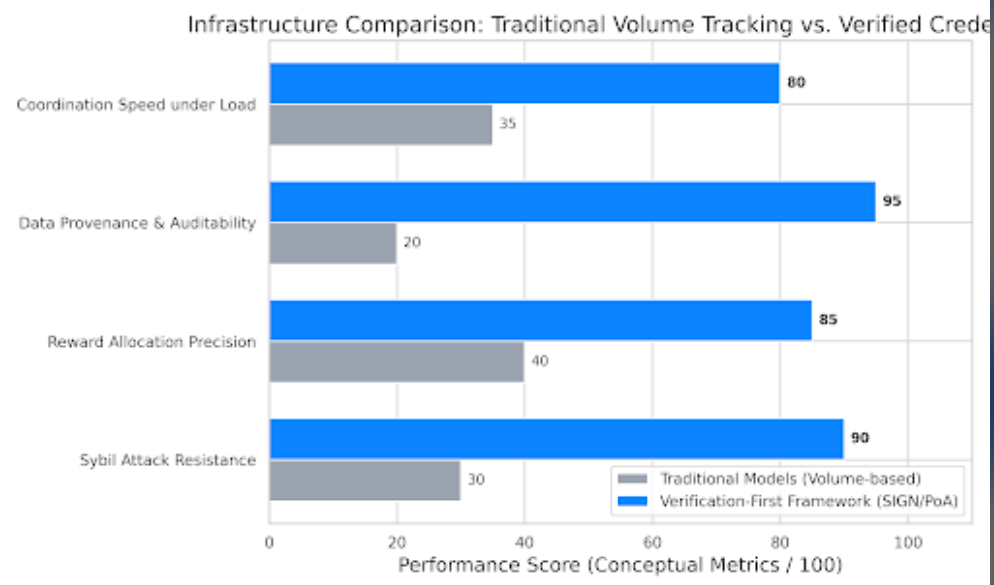
I also noticed that the project is trying to build actual infrastructure instead of relying entirely on narrative momentum. They talk about Datanets, AI models, attribution layers, and tools for developers rather than only focusing on token economics. That doesn’t automatically guarantee success, but it does make the project feel more grounded compared to many AI tokens that exist mostly as speculation vehicles. I’ve seen too many projects in crypto rely entirely on social hype without ever building something developers genuinely want to use. OpenLedger at least appears to understand that long-term ecosystems survive through utility, not excitement alone.
Still, I think it’s important to stay realistic. Crypto has a history of making early traction look much bigger than it actually is. A project launches a testnet, users flood in for rewards, transaction counts explode, social engagement becomes massive, and suddenly everyone starts assuming adoption is already happening. But real adoption is very different from temporary participation driven by incentives. I’ve seen countless projects create impressive activity numbers during campaigns only to struggle later once rewards disappear and people lose interest.
That’s one of the biggest things I’m watching with OpenLedger right now. The early momentum around the project has been strong because AI remains one of the most attractive narratives in both crypto and technology overall. The project gained attention through node activity, campaigns, exchange listings, and growing community participation. That naturally creates excitement because people see potential in the intersection between blockchain and AI. But attention alone is never enough to sustain an ecosystem over time.
What matters more is whether developers continue building after the initial phase cools down. I’ve learned over the years that developer retention is usually one of the clearest indicators of whether a blockchain ecosystem has long-term potential. Communities can become emotional quickly, traders can create temporary momentum, but developers are usually much more practical. They stay where tools are useful, infrastructure works efficiently, and ecosystems help them solve real problems. If OpenLedger can create an environment where developers genuinely want to train models, manage datasets, and build AI-related applications, then the project could slowly establish real relevance over time.
But that’s also where the challenge becomes difficult. The AI industry is moving incredibly fast right now, and most of the power is concentrated inside large centralized companies with enormous resources. These companies already control massive datasets, expensive hardware, advanced research teams, and distribution channels used by millions of people globally. Competing against that level of infrastructure is not easy. Even if decentralized systems offer better transparency or fairer economics, developers may still choose centralized platforms simply because they’re faster, cheaper, and easier to use.
I think that’s why projects like OpenLedger need patience more than hype. Infrastructure projects rarely become successful overnight. Most important networks in crypto spent years developing quietly before the market fully understood their value. At the same time, I’ve also seen projects with strong narratives disappear because they never managed to move beyond speculation. That’s why I try not to become too emotional about early momentum anymore. In crypto, the first wave of attention often tells you less than what happens after the excitement fades.
Another thing I find interesting about OpenLedger is how it reflects the larger direction technology seems to be moving toward. Data is becoming one of the most valuable resources in the world. AI models depend on constant streams of information to improve, adapt, and compete. Whoever controls data increasingly controls intelligence itself. In that environment, systems designed around attribution, ownership, and monetization naturally become more relevant. Whether blockchain is ultimately the best solution for that remains uncertain, but I can understand why projects are experimenting with these ideas now.
What makes the situation even more complicated is that most users probably don’t think about infrastructure until it directly affects them. People love using AI tools because they’re convenient and powerful, but very few stop to question where the models learned their behavior or who contributed to their development. That may eventually change as the industry matures. We’re still very early in understanding how AI economies will function at scale, and I think many of the debates around ownership, compensation, and transparency are only beginning.
For now, OpenLedger feels like one of those projects sitting in an interesting but uncertain position. The vision makes sense. The timing aligns with major shifts happening across both AI and crypto. The infrastructure focus feels more serious than many trend-based projects currently flooding the market. But there are still many unanswered questions around adoption, competition, sustainability, and whether decentralized AI ecosystems can truly attract long-term usage beyond speculation.
I’ve learned not to judge these kinds of projects too early because crypto history is full of surprises. Some ecosystems looked unstoppable during their launch phase and vanished within two years. Others spent years ignored before eventually becoming important infrastructure later on. OpenLedger could realistically move in either direction depending on how the ecosystem develops once the market becomes less emotional and more practical.
Right now, I think the most honest position is simply observation. Watching how developers behave, how real usage evolves, and whether the project continues growing after the easy attention disappears will probably reveal far more than short-term price action or social media excitement ever could.