
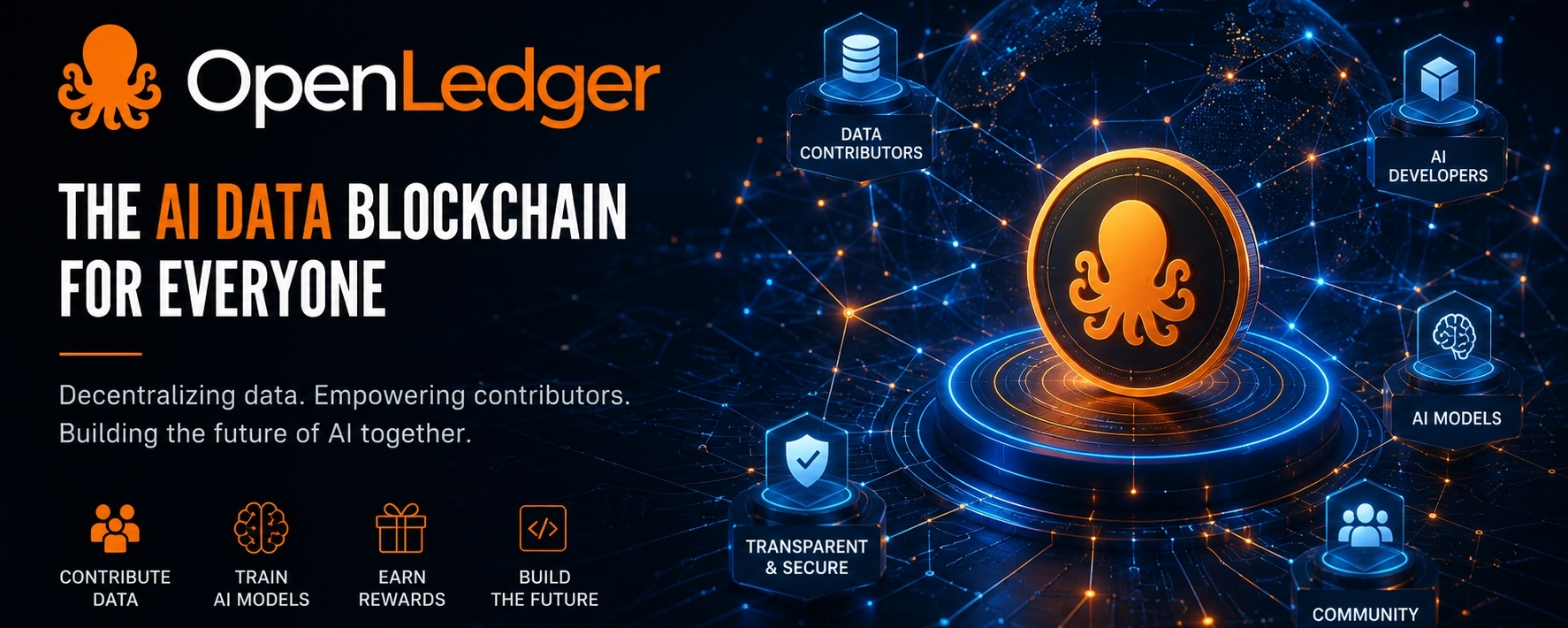
Artificial intelligence is evolving faster than ever. Every day, new AI tools are changing the way people work, create content, trade, research, and communicate. At the same time, blockchain technology continues to push the world toward decentralization and digital ownership. OpenLedger is one of the projects trying to combine these two powerful technologies into a single ecosystem built for the future.
What makes OpenLedger interesting is its focus on decentralized AI. Right now, most AI systems are controlled by a small number of major tech companies. These companies own the infrastructure, the datasets, and the models behind many of today’s most advanced tools. While they continue to innovate, there is also growing concern about transparency, data ownership, and centralized control.
OpenLedger approaches the problem differently. The project aims to create an open ecosystem where developers, users, and contributors can participate together instead of relying on a single authority. It represents a vision where AI becomes more community-driven and accessible rather than locked behind corporate walls.

One of the strongest ideas behind OpenLedger is fair participation. In traditional AI systems, people often contribute data or value without receiving recognition or rewards. OpenLedger wants to change that by building an environment where contributors can benefit from the growth of the network. This creates a more balanced model that encourages collaboration and innovation.
Blockchain technology plays a major role in making this possible. By using decentralized infrastructure, OpenLedger can improve transparency and create verifiable records of activity within the ecosystem. This matters because trust is becoming increasingly important in the AI industry. People want to know how models are trained, where data comes from, and whether systems are operating fairly.
Another reason projects like OpenLedger are gaining attention is because decentralized AI is becoming a major conversation in Web3. Many investors and developers believe AI and blockchain together could become one of the biggest technological trends of the next decade. AI brings automation and intelligence, while blockchain introduces transparency, ownership, and decentralized coordination. Together, they create opportunities for entirely new digital economies.
OpenLedger also reflects a broader shift happening across technology. Users no longer want to be passive participants in digital ecosystems. They want ownership, transparency, and a voice in how platforms evolve. This mindset is already shaping crypto, decentralized finance, and online communities. OpenLedger is applying similar ideas to artificial intelligence.
Of course, the decentralized AI sector is still developing, and competition is growing quickly. But projects that focus on openness, strong infrastructure, and real utility may have a significant advantage in the future. OpenLedger is positioning itself as part of that movement by building tools and systems designed for long-term participation rather than short-term hype.
The future of AI may not belong only to large centralized corporations. It could also belong to open networks powered by communities across the world. That possibility is exactly why projects like OpenLedger are attracting attention from the Web3 space.
As AI continues to evolve, decentralized platforms may become essential for ensuring fairness, accessibility, and transparency. OpenLedger is building toward that vision, and many people are watching closely to see how the project develops in the years ahead.
#OpenLedger #AI #Web3 #Blockchain #Crypto