


Terra Classic (#LUNC 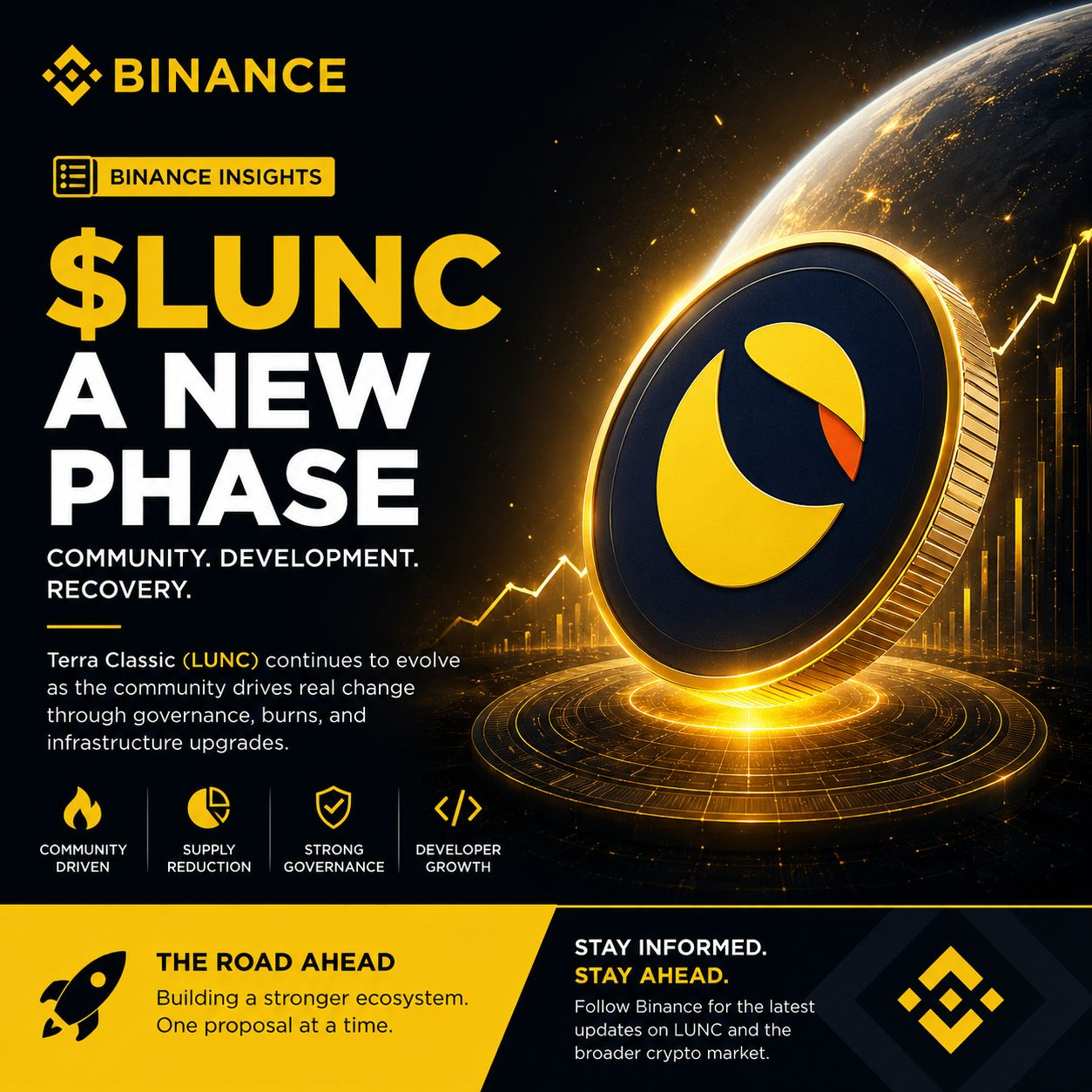 continues to evolve as one of the most closely watched community-led recovery stories in the crypto market. While the project has gone through significant volatility since the collapse of the original Terra ecosystem, recent developments suggest a shift toward sustained rebuilding efforts rather than short-term speculation.
At the center of this transition is the growing role of on-chain governance. LUNC’s community has steadily pushed forward proposals focused on token burns, supply management, and infrastructure upgrades designed to gradually restore confidence in the ecosystem. These mechanisms are not instant fixes, but they represent a structured attempt to reduce circulating supply pressure over time.
Another key factor is renewed developer interest. Although LUNC no longer operates under the same centralized leadership model as before, independent contributors continue to experiment with utility layers, DeFi integrations, and validator coordination improvements. This distributed approach reflects a broader trend in Web3: communities taking direct responsibility for protocol direction.
Market sentiment, however, remains highly sensitive. Like most legacy assets, LUNC is still influenced heavily by broader crypto cycles, liquidity conditions, and Bitcoin-driven momentum shifts. As a result, volatility is expected to remain a defining characteristic in the near term.
What makes LUNC notable is not a sudden transformation, but rather its persistence. Few projects in crypto have attempted such a large-scale recovery under full community governance. Whether this experiment ultimately leads to long-term sustainability will depend on continued development discipline, real utility creation, and consistent participation from holders.
For now, LUNC stands as a case study in how decentralized communities attempt to rebuild after systemic failure — and how far governance-driven recovery models can realistically go in Web3.
