

I’ve been spending more time studying @OpenLedger lately, and the more I look into it the more I feel like most people may still be looking at it through the wrong lens. The usual AI conversation still revolves around bigger models, faster inference, cheaper compute and smarter agents.
And to be fair that thinking made sense for the last phase of AI.
But recently, I’ve started wondering if the next bottleneck in AI might look different. Maybe the next important layer is not only about making intelligence more powerful.
Maybe it’s about making intelligence more attributable.
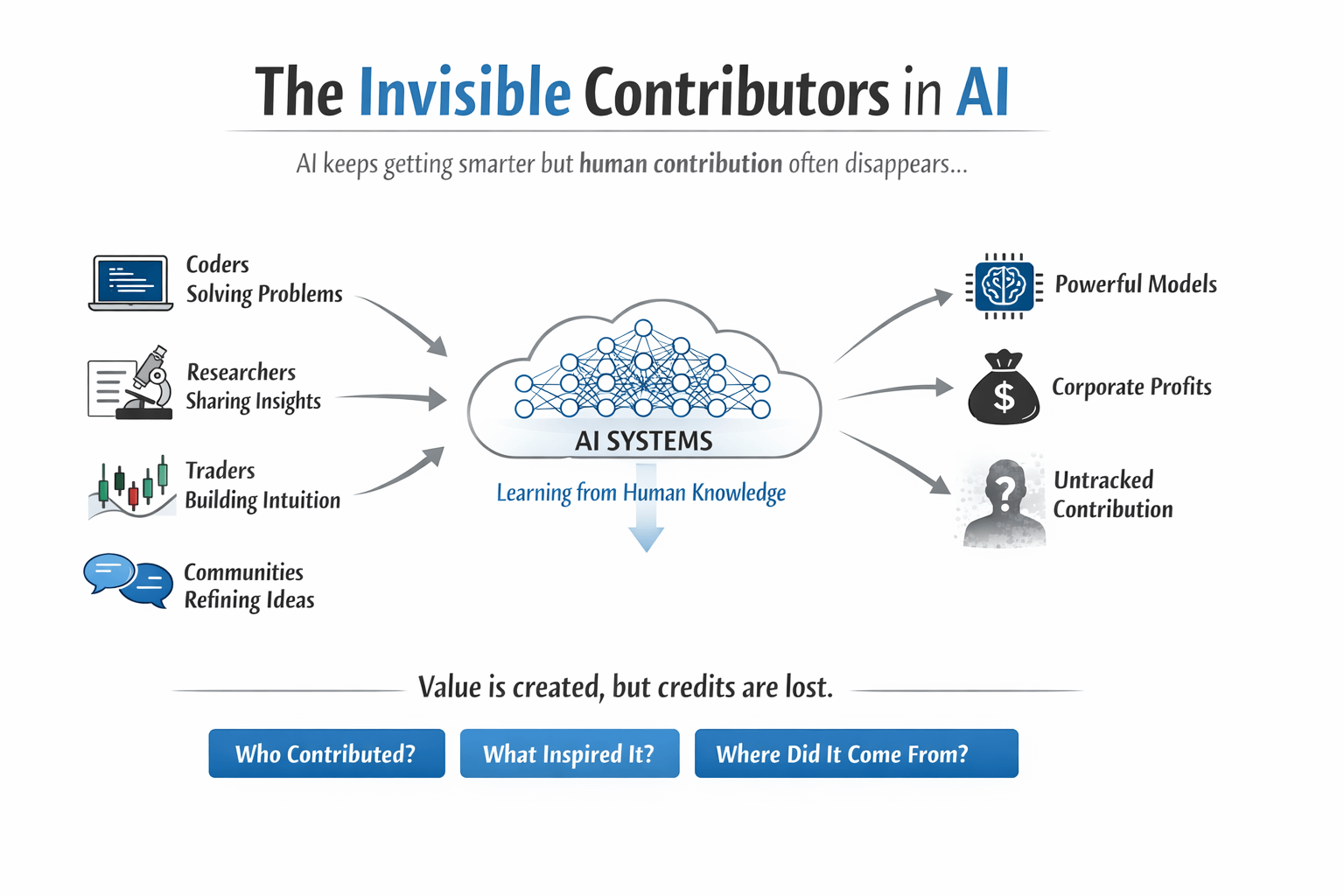
One thing I keep coming back to is how invisible human contribution has quietly become inside modern AI systems. Every day millions of people create useful intelligence online without even realizing it.
Developers solve technical problems in public forums. Researchers share niche insights. Traders build intuition through experience. Communities refine ideas through discussion.
Over time all of this becomes signal. And increasingly, AI systems are learning from that signal.
But somewhere in the process, contribution disappears. The systems improve, companies create enormous value, models become smarter yet the humans behind much of that intelligence rarely remain connected to the upside.
I’m not even saying this critically. It’s simply the structure the internet evolved into.
We became comfortable with platforms extracting value from participation while contributors mostly stayed invisible.
This is partly why @OpenLedger caught my attention.
A lot of people still frame it as just another decentralized AI project. Honestly, I think that framing feels too narrow.
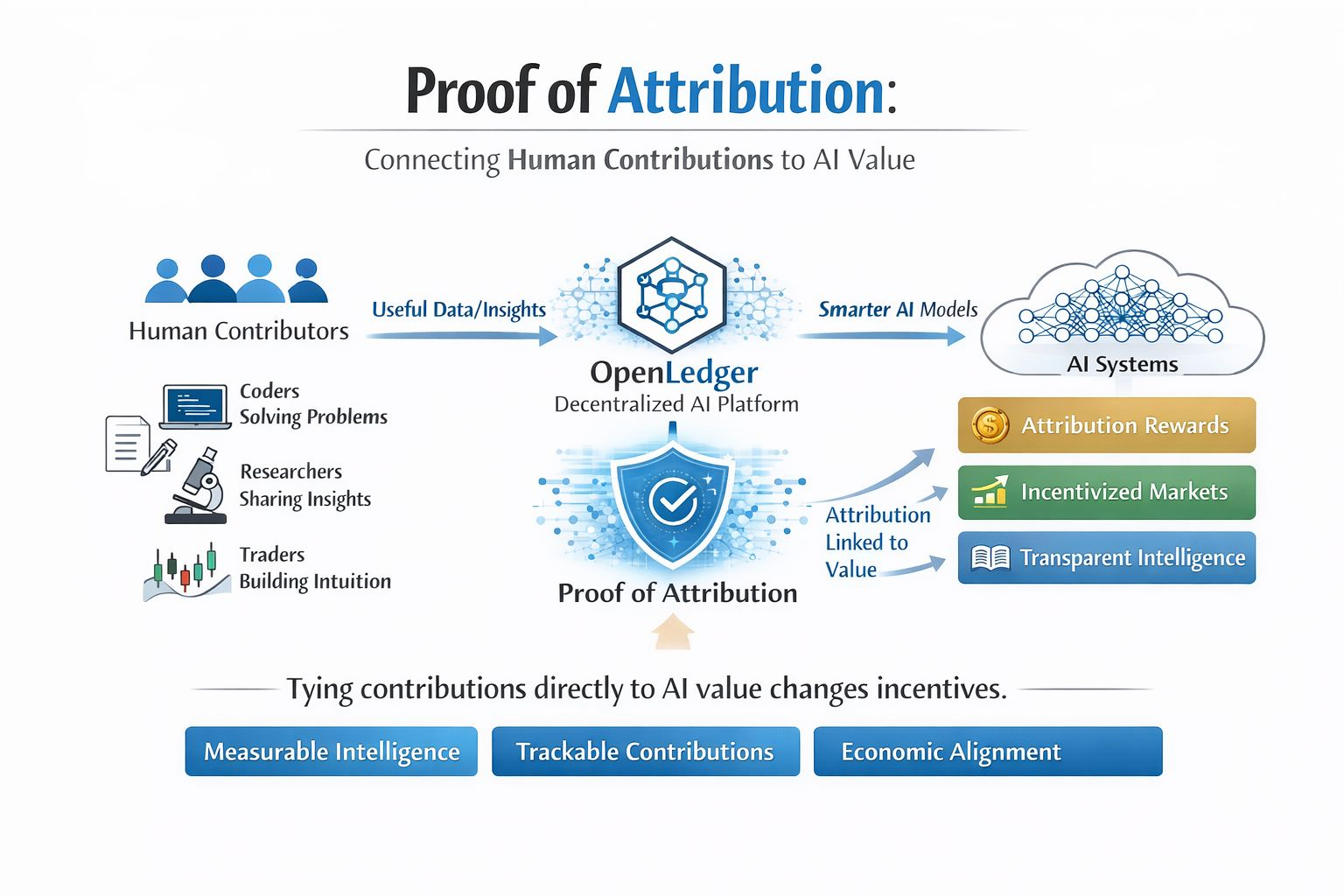
The more I study it, the more it feels like OpenLedger may be experimenting with something bigger a system where intelligence itself becomes measurable, attributable, and economically connected to value creation.
That idea feels much bigger than it first sounds.
This is where Proof of Attribution becomes interesting to me. Not because attribution suddenly becomes perfect realistically, it probably never will.
But stronger attribution changes incentives.
And incentives quietly shape markets more than people realize.
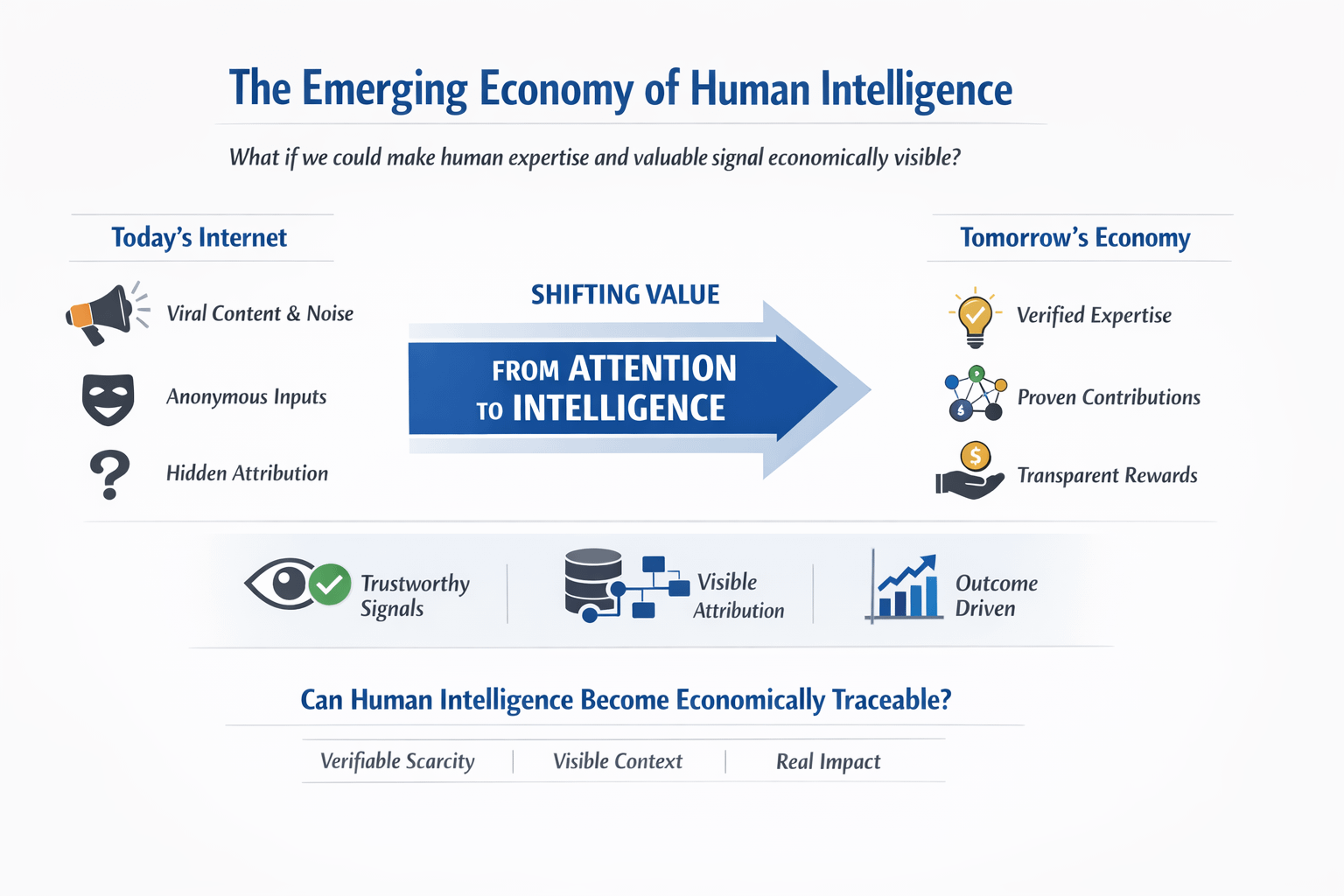
Right now, the internet rewards attention extremely well. Sometimes better than expertise itself. The loudest voices often outperform the smartest ones, and virality regularly beats usefulness.
But what happens if systems eventually start rewarding signal instead?
What if useful contribution becomes visible? What if people are rewarded for consistently improving outcomes, contributing expertise, or creating genuinely valuable intelligence?
The more I think about it, the more this feels like a much bigger economic question than a technical one.
Crypto has always been interesting because it changes ownership structures. Bitcoin introduced verifiable scarcity. Ethereum made coordination programmable.
Maybe @OpenLedger is exploring whether intelligence itself can eventually become economically traceable.
Not intelligence as an abstract idea.
Real human contribution. Visible lineage. Useful signal that no longer disappears into black boxes.
There’s another reason I think this matters.
AI is pushing us toward a world where content becomes abundant. Text, research, predictions, opinions everything becomes easier and cheaper to generate.
And historically, abundance creates new scarcity.
I’m starting to think the next scarcity may not be information itself.
It may be trustworthy human signal.
Not just content, but context. Not just outputs, but expertise with visible origin.
That possibility makes OpenLedger feel directionally important to me, even if many hard problems still exist.
Attribution at scale is difficult. Reward systems can attract spam. Incentives can be manipulated.
Those are real challenges.
Still, I can’t shake the feeling that the market may be underestimating the importance of this idea.
Most people still evaluate OpenLedger through a standard AI lens models, agents, infrastructure, tooling.
But I keep wondering if the deeper opportunity is hiding underneath all of that.
What if the real shift isn’t simply smarter AI?
What if it’s finally building an economy where human intelligence stops being invisible?
