
Markets have a habit of flattening new technologies into whatever narrative is easiest to trade. In crypto, that often means reducing complex systems into metrics like throughput, cost, or speculative momntum. In AI, it becomes a race for larger models, faster inference, or cheaper compute. These simplfications aren’t entirely wrong but they tend to miss the layer where real economic transfrmation hapens: coordnation.
Coordination is the invisible infrastructure behind every major market. It’s what allows millions of participants buyers, sellers, creators, intermediaries to align incntives without colapsing into chaos. The internet didn’t just scale information; it restructured how coordination happens. Cloud platforms didn’t just reduce costs; they standardzed how Nisha poni resources are shared and monetized. And yet, when markets look at AI + blockchain projects today, they still tend to default to the surface: “Is it faster? Is it cheaper? Is it decentralized?”
That framing may be missing the point.
OpenLedger is often described as an “AI blockchain”a phrase that risks being dismissed as just another attempt to merge two already-hyped sectors. From that angle, it sounds like infrastructure chasing a narrative: putting models on-chain, connecting wallets, aligning with Ethereum standards, and enabling agents to operate within smart contract environments. The market reads this as technical integration.
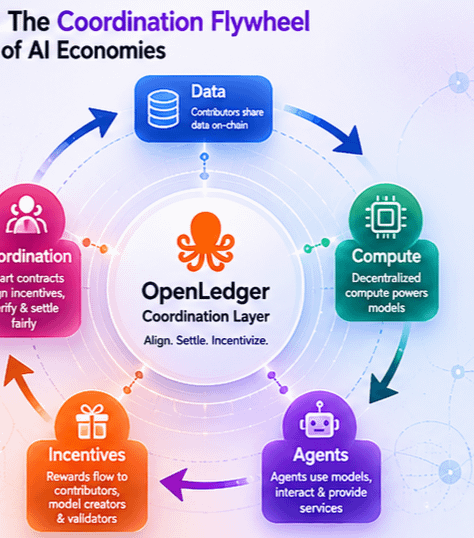
But at a deeper level, OpenLedger might not be about AI excution at all. It may be about cordination of AI economies.
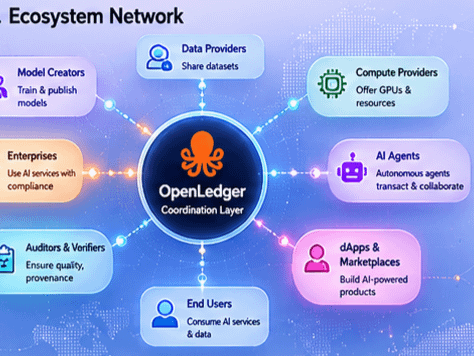
Consider how fragmented the current AI landscape is. Data lives in silos, models are trained in isolation, and agents if they exist operate within closed systems. There is no shared economic layer where contrbutions can be priced, verified, and exchanged. In traditional cloud ecosystems, coordination is enforced by centralized platforms. In open systems, it’s much harder. Who owns the output of a model trained on distributed data? How are contributors compensated? How do autonomous agents nisha poni transact with each other without trusted intermediaries?
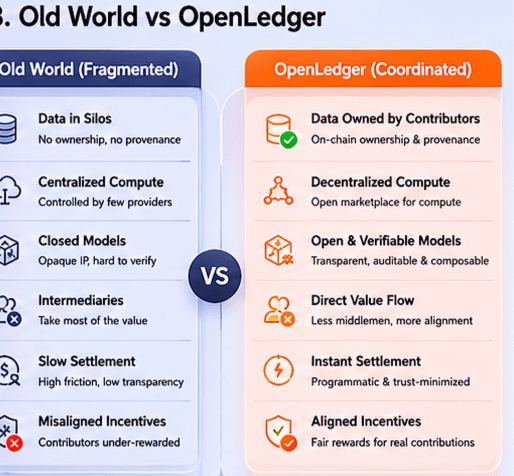
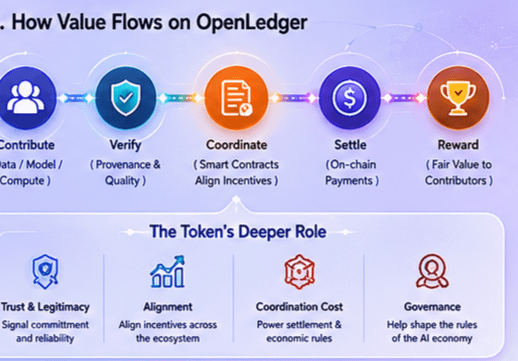
This is where OpenLedger’s design starts to look less like infrastructure and more like a coordination protocol. By putting data, models, and agents on-chain, it creates a shared environment where economic relationships can be defined and enforced programmatically. Not just execution, but settlement. Not just access, but alignment.
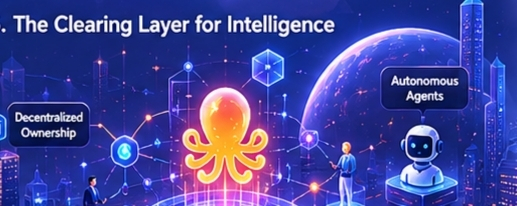
A useful analogy might be financial markets before clearinghouses. Trades could happen, but settlement was slow, fragmented, and risky. The introduction of standardized clearing systems didn’t just improve efficiency it enabled entirely new scales of participation. OpenLedger, in this sense, could be attempting something similar for AI: a clearing layer for intelligence itself.
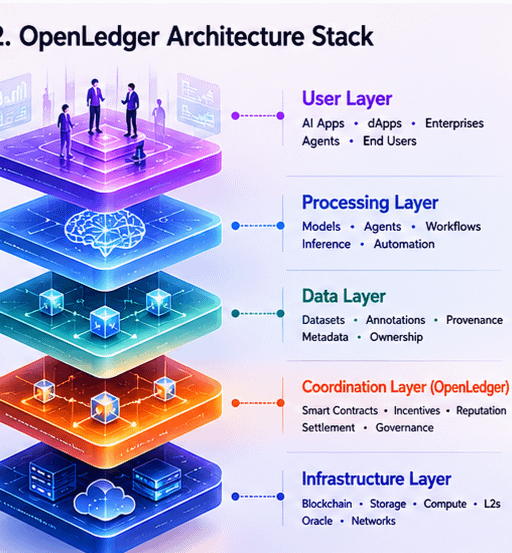
This reframing also changes how one might think about the token. It’s easy to default to the usual explanations fees, staking, governance but those descriptions feel insufficient here. If OpenLedger succeeds as a coordination layer, the token may be pricing something more abstract: the cost of aligning incentives in a decentralized AI economy. It becomes less about usage and more about legitimacy. A mechanism through which participants signal trust, commit resources, and agree on shared rules.
That, however, introduces friction.
Coordination systems are notoriously difficult to bootstrap. Developers must choose to build within constraints they don’t fully control. Enterprises will demand auditability, compliance, and clear accountability requirements that often clash with decentralized ideals. Data providers may hesitate to expose valuable assets without strong guarantees. And agents, despite the narrative, are still far from being autonomous economic actors at scale.
There’s also the question of demand. Even if the infrastructure works, will participants converge on a single coordination layer? Or will fragmentation persist, with multiple competing standards diluting network effects? History suggests that coordination tends to consolidate but only after prolonged periods of experimentation and failure.
So the risk is not that OpenLedger is too ambitious. It’s that it’s attempting to solve a problem the market hasn’t fully recognized yet. Coordination is rarely visible until it breaks. And by the time it becomes obvious, the systems that solve it are already deeply embedded.
Which leaves an open question: is OpenLedger building infrastructure for today’s AI narratives or quietly defining the economic rules for something that doesn’t fully exist yet?
