
I’m watching OpenLedger with the same mindset I use for any market infrastructure. I’m not looking for the most impressive demo or the biggest performance claim. I’m waiting to see how it behaves when conditions get uncomfortable. I’ve learned that markets reveal the truth during stress, not during calm periods. I focus on the moments when liquidity becomes thin, volatility spikes, and everyone suddenly wants certainty at the same time. That is where real trust is built.
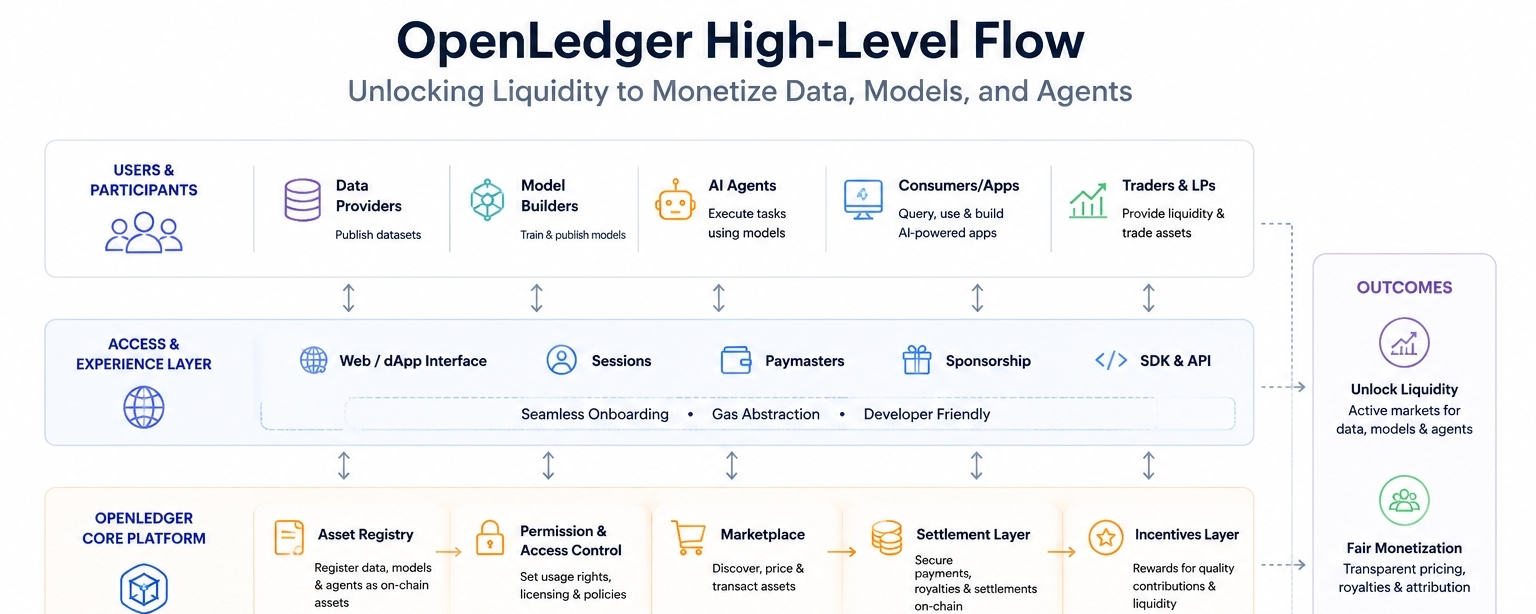
OpenLedger is being positioned as an AI-focused network that aims to create value around data, models, and autonomous agents. It is an interesting idea, especially as AI becomes a bigger part of how businesses and users interact with digital systems. But ideas alone are never enough. Markets have a habit of cutting through narratives very quickly. In the end, participants care less about what a platform promises and more about how it performs when things stop going according to plan.
That is why I keep coming back to one simple question: can the system stay predictable when the market becomes unpredictable?
Most projects like to talk about speed. Speed is easy to market because it sounds impressive. Bigger numbers make for better headlines. But anyone who has spent time around active markets knows that average speed is rarely the whole story. What matters is consistency. A platform that performs well most of the time but struggles during moments of heavy demand can create more problems than a platform that is slightly slower but far more predictable.
The difference becomes obvious during periods of market stress. When activity suddenly surges, every small weakness becomes visible. Delays become larger delays. Small execution problems become noticeable slippage. Wider slippage leads to worse trading outcomes. Those outcomes can trigger liquidations, and liquidations can create a chain reaction that spreads across the entire system.
The challenge is not avoiding volatility. No platform can control the market itself. The challenge is preventing volatility from turning into chaos.
That is where trust comes from. Users want to know that the rules remain the same even when emotions are running high. They want confidence that the platform will continue functioning as expected when everyone is trying to act at once. Reliability matters because uncertainty is expensive.
For OpenLedger, that reality is especially important. If the goal is to support an economy built around AI-related assets, participants need confidence that the underlying infrastructure can handle pressure without becoming unpredictable. The value of any marketplace depends heavily on how comfortable people feel committing their time, resources, and capital to it.
What makes this difficult is that every system faces tradeoffs.
The crypto industry often acts as if performance, openness, decentralization, convenience, and security can all be maximized simultaneously. In reality, every design decision pushes against another. Improving one area usually introduces costs somewhere else.
Performance is a good example. Strong performance often requires coordination. Coordination can improve efficiency, but it can also create concentration. More structure can reduce operational problems, but it can also raise questions about who gets to make important decisions. These tradeoffs are not necessarily bad. They are simply unavoidable.
If OpenLedger relies on any form of validator selection or performance-based participation standards, the logic is understandable. Markets are ultimately limited by their weakest operational components. A few consistently slow participants can affect everyone else. In that sense, maintaining performance standards can be viewed as protecting the overall quality of the venue.
But there is another side to that conversation.
The moment participants begin feeling that decisions are selective rather than objective, confidence starts to weaken. What appears to be quality control from one perspective can appear political from another. That perception matters because markets rely heavily on trust. People do not need to agree with every decision, but they need confidence that decisions are being made according to clear and consistent principles.
This is one of the hardest balancing acts in modern infrastructure. The stronger the curation becomes, the greater the responsibility to maintain transparency. Without that transparency, discipline can eventually look like favoritism. Once that happens, governance becomes part of the risk profile rather than part of the solution.
The social side of infrastructure is often underestimated.
Many people focus entirely on technology, but technology alone does not determine credibility. Credibility comes from the relationship between the system and its participants. It comes from people believing that tomorrow's rules will look similar to today's rules. It comes from confidence that difficult decisions will be handled fairly rather than conveniently.
That trust takes years to build and can disappear surprisingly quickly.
The same principle applies to operational models that involve geographic distribution, regional coordination, or rotating responsibilities across different locations. These approaches can improve resilience and reduce dependence on any single point of failure. In theory, they can make a system stronger.
In practice, however, they require discipline.
Geography does not automatically create reliability. It creates additional coordination requirements. Teams must communicate effectively. Responsibilities must be clear. Processes must be repeatable. What matters is not the architecture itself but how consistently people execute within that architecture.
The strongest systems make complicated operations feel routine.
The weakest systems turn routine operations into recurring drama.
Markets notice that difference immediately. Participants gain confidence when infrastructure quietly handles challenges without constant disruption. They become nervous when every operational adjustment turns into a visible struggle.
The same realistic perspective should be applied to high-performance software clients and technical optimizations. Better software is important, but it should not be treated as a permanent competitive advantage. Fast infrastructure is becoming an expectation rather than a differentiator.
The bigger question is whether the entire environment is optimized for stability.
A highly optimized client means very little if the surrounding system introduces unpredictability elsewhere. Performance improvements only matter when they contribute to consistent outcomes. Otherwise, they become impressive statistics that fail to solve practical problems.
There is also a dependency risk worth considering. When too much of the ecosystem relies on a small number of critical implementations, resilience can suffer. Efficiency may improve, but flexibility declines. The result is often a system that looks strong during normal conditions while becoming more vulnerable during extraordinary ones.
User experience features face a similar challenge.
Tools that simplify onboarding, reduce transaction costs, or make participation easier are valuable. They remove friction and help attract new users. That is a positive development for any growing ecosystem.
At the same time, convenience can create hidden dependencies. Services that make the experience smoother can become critical points of failure if policies change, support disappears, or outages occur. Features that seem helpful during growth periods can become pressure points during difficult periods.
That is why I keep coming back to the same observation.
The future of OpenLedger will not be decided during comfortable market conditions. It will be decided when activity spikes unexpectedly. It will be decided when liquidity becomes more cautious. It will be decided when participants start testing the system under pressure rather than simply exploring it during optimistic periods.
Those moments reveal whether infrastructure was built for real-world conditions or for ideal scenarios.
If OpenLedger succeeds, the result will probably look surprisingly boring. Transactions will remain predictable. Operations will feel routine. Participants will gradually build confidence because the system continues working as expected regardless of market conditions. Trust will compound over time, and volatility will remain manageable instead of becoming disorder.
If it fails, the signs will be equally clear. Confidence will weaken. Governance decisions will face growing scrutiny. Curation will start looking like insider preference rather than quality control. Speed will no longer feel important because participants will be more concerned about certainty than performance. Liquidity will become hesitant, and growth will struggle to sustain itself.
That is the real challenge ahead.
Not proving that OpenLedger can perform well when everything is going right, but proving that it can remain dependable when everything around it starts going wrong. Because in markets, the systems that survive are rarely the ones with the loudest promises. They are the ones that continue doing their job when nobody is having a good day.