

Most token economies in crypto are designed backwards. Someone builds a product, slaps a token on top, and then spends months trying to explain why the token needed to exist. The utility feels forced because it is forced. The economics feel manufactured because they were manufactured after the fact.
OpenLedger didn't do that. And the difference shows.
Open isn't a reward mechanism tacked onto OpenLedger as an afterthought. It's woven into the protocol at a structural level — the way fuel is woven into an engine. Remove it and the whole system stops making sense. That's a rare thing to be able to say about a crypto token honestly.
Let me explain what I mean practically. The OpenLedger network runs on a simple but powerful loop. Contributors bring data. That data gets verified and attributed on-chain. AI developers access that verified data and pay in OPEN. Contributors receive $OPEN for their contributions. The network grows because both sides have real incentives to participate. Rinse, repeat, compound.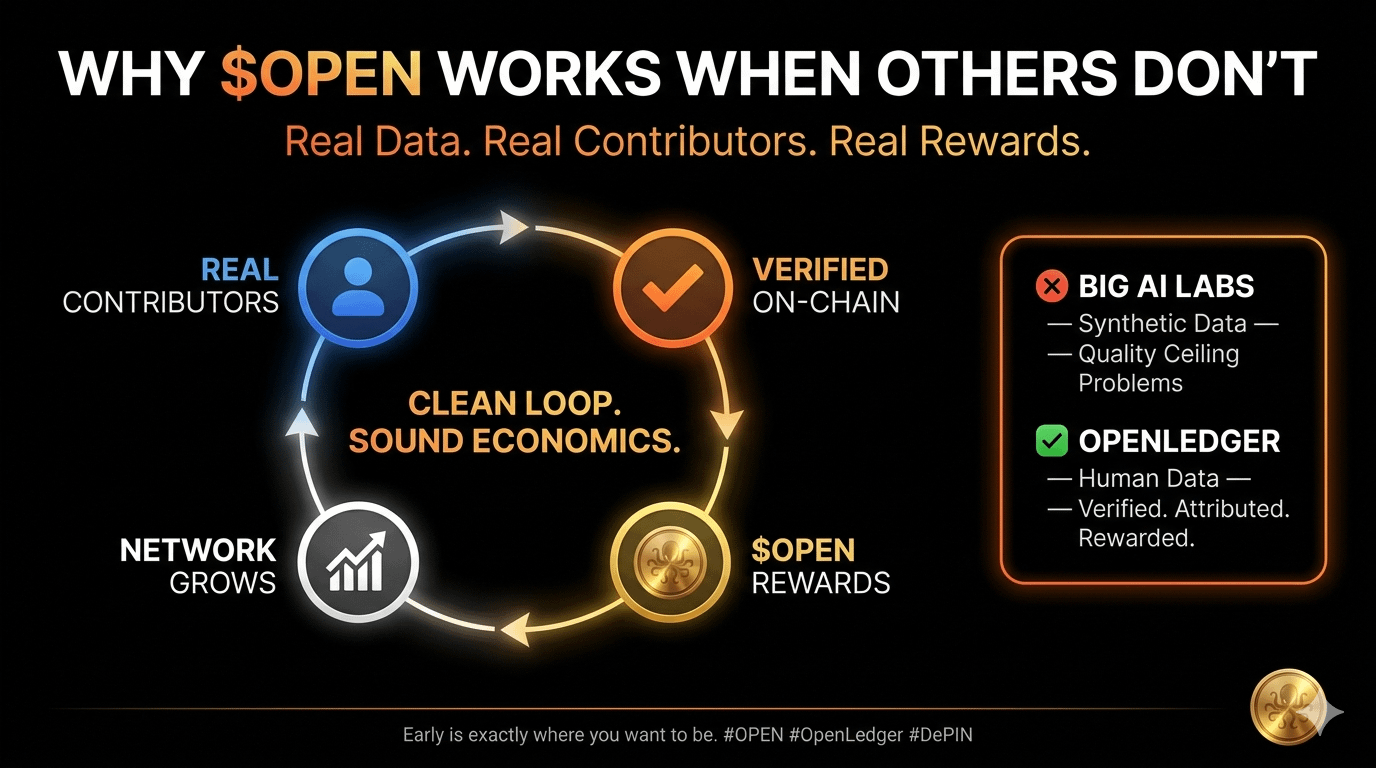
What makes this loop interesting isn't any single part of it. It's that every part depends on every other part. OpenLedger didn't design a platform with a token attached. It designed a token economy where the platform emerges naturally from the incentives. That's a fundamentally sounder architecture than most of what exists in this space.
There's a conversation happening right now in AI circles that OpenLedger is quietly very relevant to. It's about synthetic data — AI-generated training data used to train more AI. Some labs are leaning heavily into this because real human-generated data is becoming legally complicated and expensive to source. But synthetic data has serious quality ceiling problems. Models trained primarily on synthetic data tend to degrade in subtle ways over time — losing the texture, the inconsistency, the genuine messiness that makes human-generated data actually useful.
OpenLedger's network is a direct answer to this problem. Real contributors. Real data. Real attribution. The open incentive structure exists specifically to keep human-generated data flowing into the ecosystem at scale. In a world where synthetic data is becoming more common, genuinely human-sourced verified data through Open becomes more valuable, not less.
I want to talk about something that rarely comes up in OpenLedger discussions. The governance dimension. As open matures as a token and the Open network grows, the people holding OPEN aren't just passive recipients of rewards. They're participants in how the protocol evolves. Which data categories get prioritized. How verification standards develop. How rewards are calibrated as the network scales.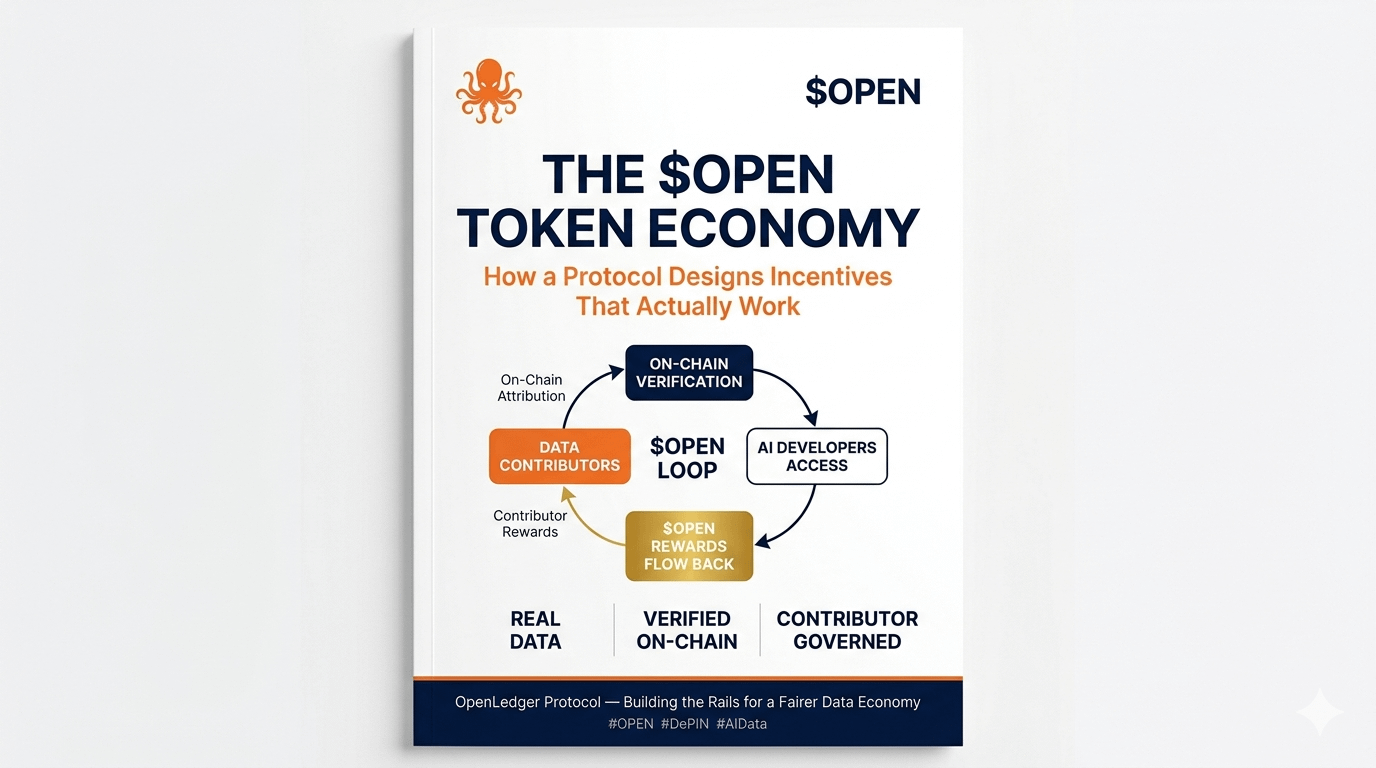
That's not a small thing. Most platforms — even crypto platforms — concentrate governance power at the top. OpenLedger's design pushes in the opposite direction. Contributors who bring real value to the Open ecosystem accumulate open and with it, a genuine voice in how the network develops. That alignment between economic stake and governance participation is exactly what decentralized infrastructure should look like.
Here's my honest take on where OpenLedger sits right now. The protocol is early. The network is still building depth. The open token hasn't yet had its moment where mainstream crypto audiences fully understand what it represents. Most people still look at Open and see another AI-adjacent project in a crowded field.
That misreading is actually an opportunity. When the market doesn't fully understand something yet, the window for informed OpenLedger is approaching it from outside the incumbent power structure — using blockchain infrastructure to create a parallel system where incentives are correctly aligned from day one.
Open is how that system runs. Not a symbol of participation. Not a speculative bet on vibes. An actual functional component of a protocol fixing something genuinely broken.
That's worth understanding. That's worth watching. And for the people who get there early — before the rest of the market catches up — that's potentially worth a lot more than it looks like today.
