


I want to take this claim seriously because I think it deserves serious examination rather than either reflexive enthusiasm or reflexive dismissal.
The idea that verifiable attribution could reshape AI research standards is not inherently implausible. The current situation in AI research around data provenance is genuinely problematic in ways that people outside the field don't always appreciate. Large language models are trained on datasets assembled from the internet, books, code repositories, and proprietary sources, and the documentation of exactly what went into which model is inconsistent at best and deliberately opaque at worst. Researchers building on top of these models often don't know what biases, errors, or copyrighted material their foundation inherited. That's a real problem with real consequences for the reliability of AI research outputs.
OpenLedger's verifiable attribution proposition is that every piece of data in the training pipeline should have a cryptographically verifiable provenance record. Who contributed it, when, under what licensing terms, and how it was transformed before entering the model. If that record exists and is trustworthy, researchers using models trained on OpenLedger's infrastructure have something they currently lack with most commercial models. An auditable account of what shaped the system they're building on.
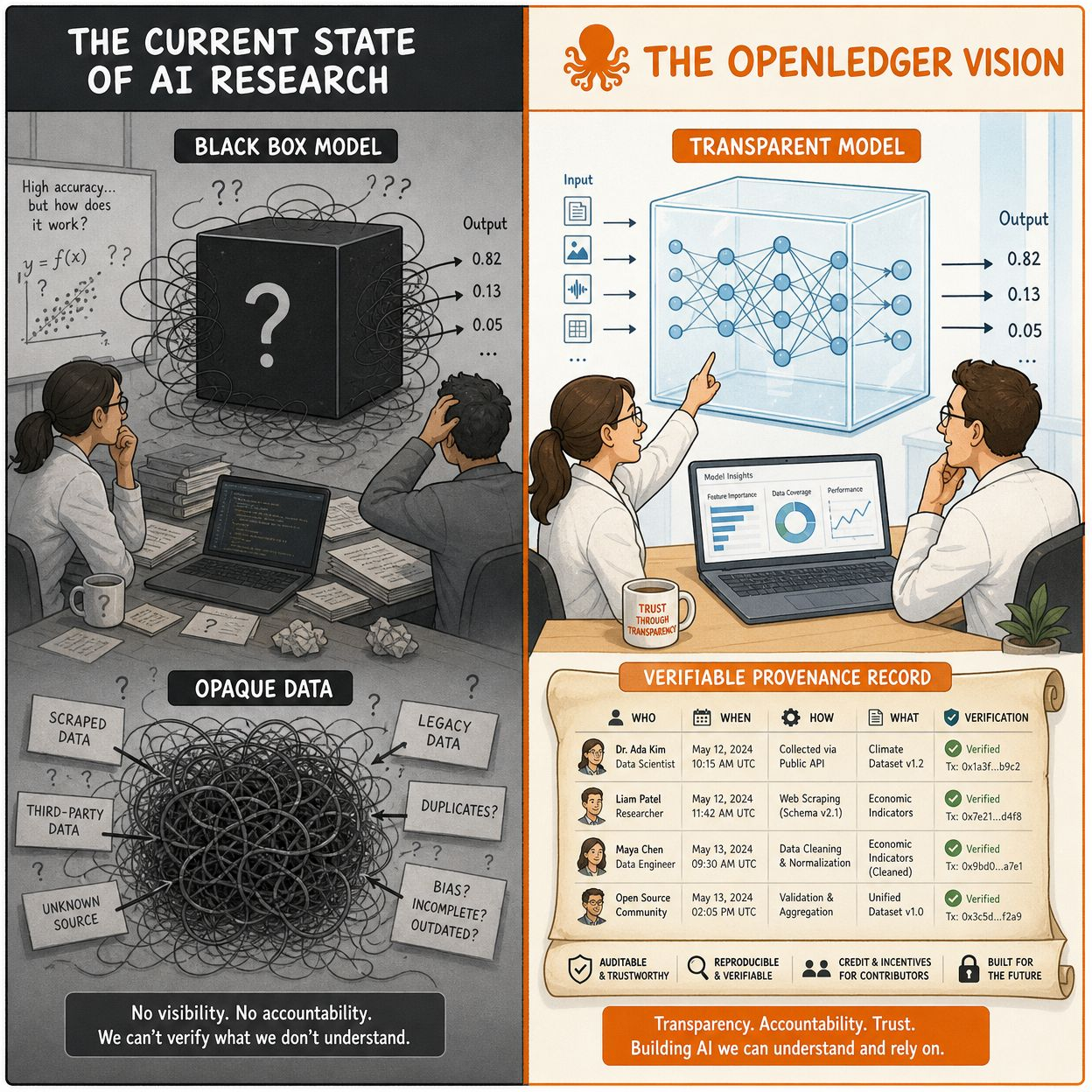
The global research standards angle is where I start measuring the distance between the ambition and the current reality.
Research standards change slowly and through institutional processes that blockchain infrastructure doesn't automatically influence. Academic journals, funding bodies, ethics review boards, and major research institutions set the norms that researchers actually follow. For OpenLedger's attribution approach to affect those norms, it would need to be adopted widely enough that a critical mass of research is using verifiable attribution, and that critical mass would need to be large enough that journals and institutions start treating unverifiable provenance as a deficiency rather than a default.
That's a long chain of adoption events, each dependent on the previous one, and it starts from a position where OpenLedger is a relatively early stage project and decentralized AI data markets are still a niche within a niche.
I don't think the vision is wrong. I think the timeline implied by phrases like global impact on research standards is considerably longer and more contingent than the framing suggests. Changing how academic and corporate AI research handles attribution is a decade-scale project at minimum, assuming the technical infrastructure works as designed, assuming adoption spreads beyond early Web3 enthusiasts, and assuming the standards bodies that actually control research norms find the approach credible enough to engage with seriously.
What OpenLedger can more realistically claim in the near term is influence at the edges of the research community. Open source AI projects that already care about data transparency. Academic researchers working specifically on AI fairness and provenance. Organizations that have faced legal or reputational challenges around training data and want a defensible audit trail. These are real audiences with real needs that verifiable attribution addresses directly.
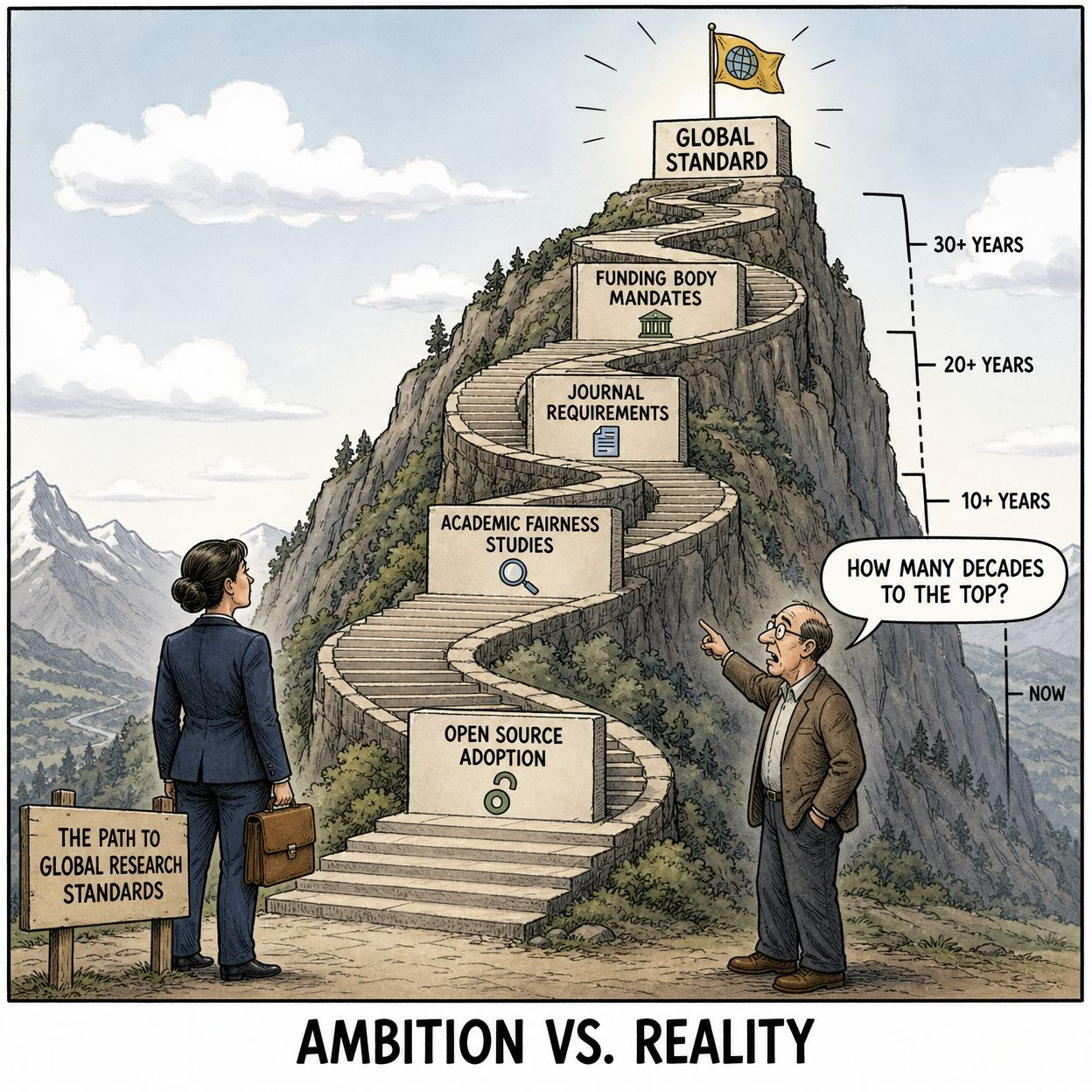
Starting with those audiences and building credibility through demonstrated utility is a more honest path to broader influence than positioning the project as already set to reshape global standards. The latter framing invites scrutiny that the current stage of development can't fully satisfy.
The underlying insight driving OpenLedger's attribution work is sound. AI research has a provenance problem and solving it matters for the reliability and accountability of the systems being built. Whether OpenLedger specifically becomes the infrastructure that the research community coalesces around depends on execution, adoption, and a fair amount of timing.
I find myself genuinely hoping the vision lands. The problem it's solving is real enough that a working solution would matter.
I just want the claims to stay close enough to the current reality that the gap between them doesn't become its own credibility problem.
That gap is worth watching as closely as the technology itself.