
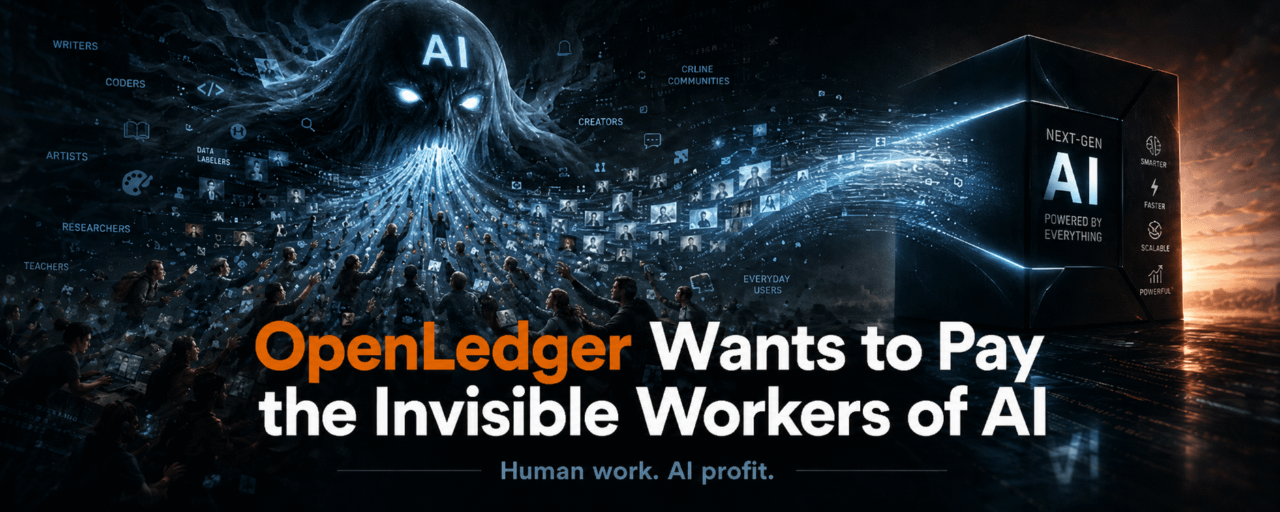

i will be honest my friends.... OpenLedger is touching the exact part of AI that bothers me more than people realize. AI keeps getting called “magic,” but no way bro, nothing about it is magic. It is built on people. Real people. Writers, coders, researchers, designres, forum users, niche communities, translaters, educators, meme makers, data cleaners, and random internet users who have spent years creating the material these systems now learn from & yet when the AI output appears, those people almost completely disappear from the story.
tbh... OpenLedger makes this problem harder to ignore because AI feels broken right here. The world celebrates the model, the company, the interface, the speed, the answer, the “wow this is crazy” moment. But nobody asks the uncomfortable question: who gave the system the knowledge in the first place? Who wrote the explanations..?? Who shared the code? Who built the communities? Who created the examples, corrections, comments, reviews, postsand datasets that made the machine smarter? It feels like a whole generation of human contribution got swallowed, compressed, and repackagd as a product.
And yeah, this excuse that “that is just how the internet works” does not sit right with me anymore. AI is not just indexing information like old search engines. AI is learning from it, remixing it, generating with it, and in many cases replacing the same people who helped train the system. That’s the painful part. , most of them were left outside the reward loop.
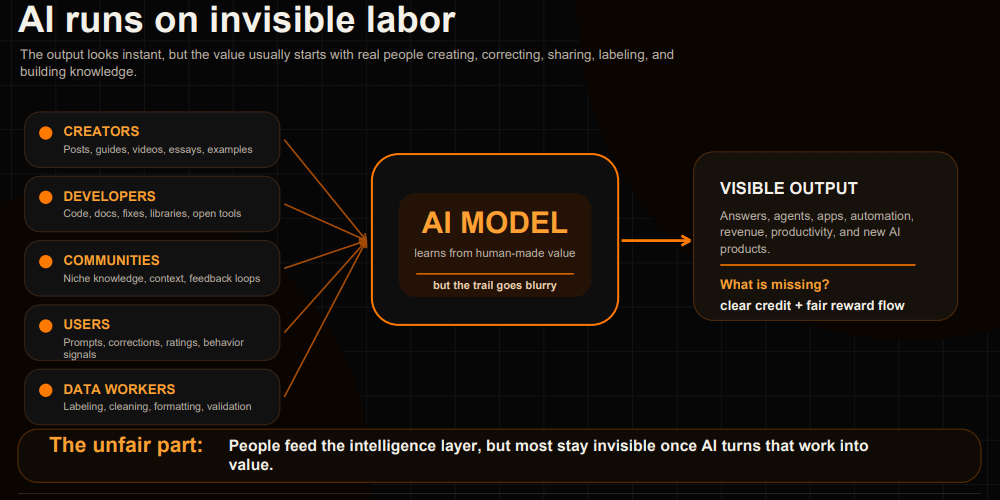
This is why OpenLedger feels so much interesting to me, like seriously, it hits different. Not because it throws AI and crypto into the same sentence. Everyone is doing that now. Most AI crypto projects sound exciting for five minutes and then start feeling like another hype wrapper. But OpenLedger is touching something deeper. It is asking a question the AI industry doesn't really want to sit with...
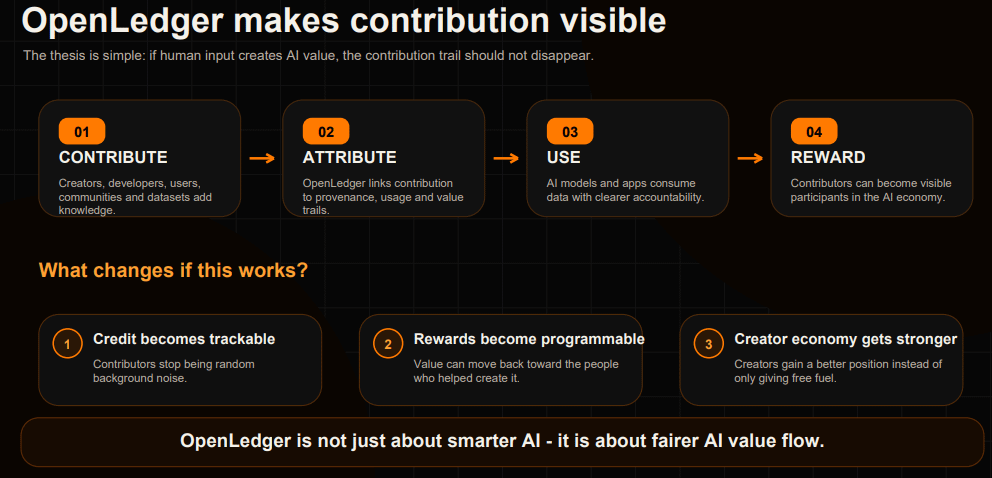
Honestly, that simple idea is actually a much bigger shift than people think. Because today, contribution is mostly invisible. A creator might write a thread that helps explain a complex topic. A developer might publish open-source code that becomes part of training material. A community might spend years discussing a niche subject and building real knowledge around it. A user might correct, label, organize, or improve data. But once that value enters the AI pipeline, it becomes foggy. Nobody knows who should recieve anything.
I really think OpenLedger is trying to build that missing layer, and eeh, that is the part most people should pay attention to. A layer where data, models, contributors, and usage can be connected more clearly. A layer where attribution isn't just a nice moral idea, but actual infrastructure. the whole economy around human knowledge starts to feel unfair and honestly kind of parasitic. People keep creating, systems keep extracting, and the rewards keep flowing upward to the platforms with the biggest servers and closed models.
No way bro, that ain’t sustainable forever. You can't build the future of intelligence on top of invisible labor and pretend nobody will care. At some point, creators will ask why their work powers tools they don't benefit from. Developers will ask why their open contributions are monetized by someone else. Communities will ask why their collective knowledge became training fuel without any return. and users will start realizing that “free Contribution” was never really free. It was just unpaid value.....,!
This is where OpenLedger’s reward and attribution layer could become important, and honestly it feels pretty obvious once you see it. If it works, it could change the role of AI contributors from passive fuel into visible participants. Not just “content on the internet,” but contributors with trackable value. Not just data points, but people, teams, communities, and builders who helped make intelligence better. That changes the emotional weight of the whole thing. $OPEN makes AI feel less like extraction and more like a shared economy.
For the creator economy I think this could be huge, like actually huge. Because creators are already tired. They are told to post more, teach more, share more, build more, give more value, and somehow be grateful for exposure. Then AI arrives and absorbs everything at scale. If there is no attribution layer, creators become even weaker. But if systems like OpenLedger can help prove contribution and connect it to rewards, creators may finally have a stronger position in the AI age.
I am not saying OpenLedger has solved everything, because come on, nobody should pretend this is easy. Attribution is messy. Data is messier. AI value is messy. But the direction feels right. Because the future shouldn't only belong to the companies training the models. It should also include the invisible workers who made those models useful in the first place tbh. wow!! one minute we are talking about AI workers and the next minute it feels like a market chart sitting beside an empty coffee cup at 2am. AI should have been forced to answer long ago, but everyone kept scrollingg.
@OpenLedger #OpenLedger
$OPEN
