

Everyone discussing OctoClaw is asking the same question: what can the agent do?
The more important question for the long-term value of @OpenLedger is fundamentally different. What can the agent be prevented from doing, and who controls that boundary at the protocol level?
This is not a safety narrative. It is an infrastructure thesis. And right now it is the most underpriced part of the entire OctoClaw architecture.
The Skill Ecosystem Changes the Risk Profile Entirely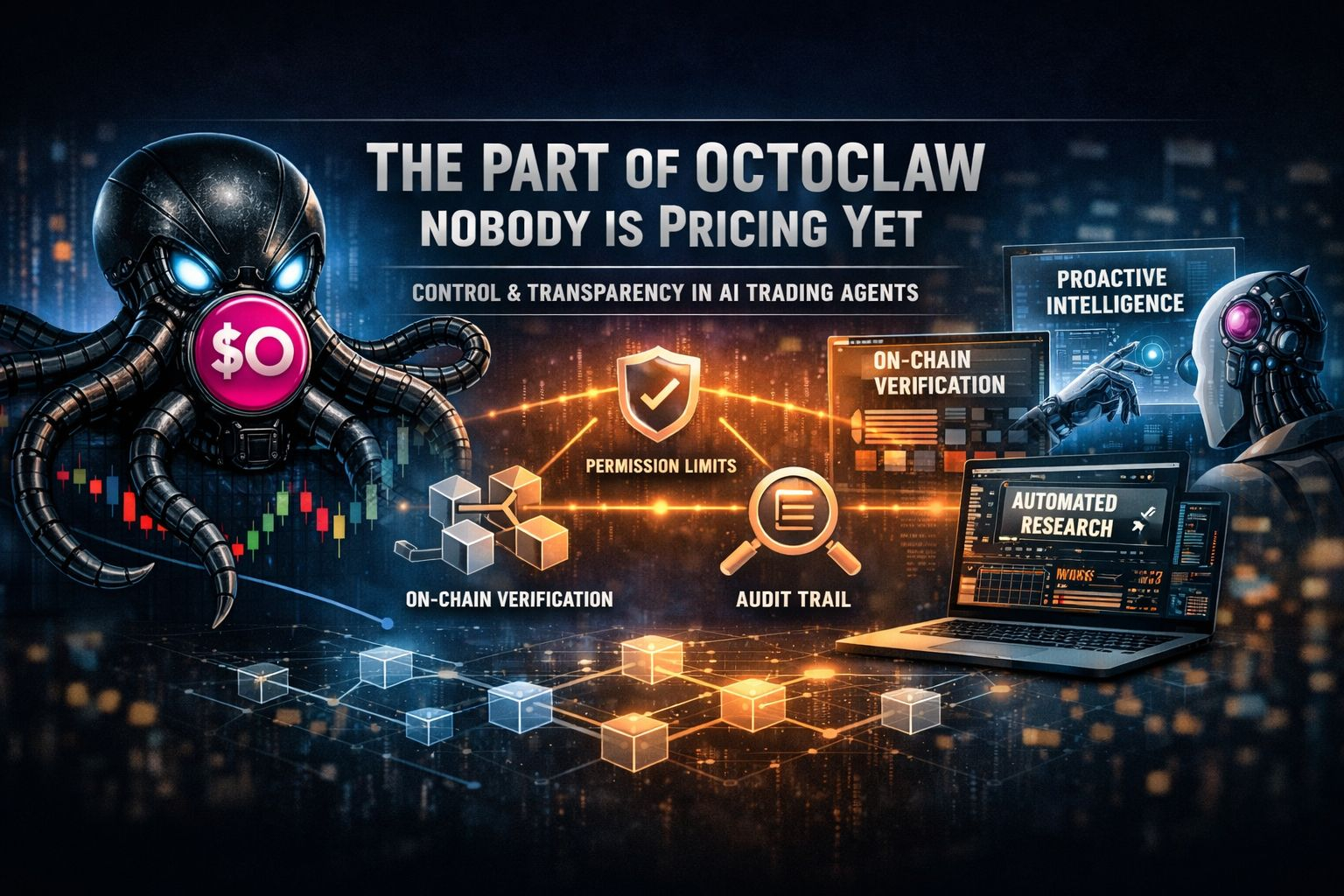
OctoClaw's documented skill capabilities go well beyond basic trade execution. Playwright Automation handles browser-level workflow operations. Market Research runs continuous narrative and signal scanning across external sources. Proactive Intelligence initiates actions based on detected market conditions rather than waiting for manual input. Self-Improving Agents refine their own behavior based on outcome feedback over time without requiring human intervention at each iteration.
Each of those skills represents a meaningful expansion of what the agent can touch. Browser operations. External data pipelines. Autonomous initiation without a human prompt. Self-modification loops that compound across sessions.
That combination is powerful. It is also the combination that makes orchestration control the actual competitive moat of the system rather than the skill quality itself. An agent that can initiate actions proactively and improve its own behavior based on outcomes needs clearly defined permission boundaries baked into the execution layer. Not because the technology is untrustworthy. Because the value of deploying it at scale depends entirely on the operator's ability to constrain scope, verify behavior in real time, and audit the full execution record after the fact.
The reference conversation in this space keeps returning to what AI agents can do. The infrastructure question is what the system can prove they were permitted to do.
Proof of Attribution Is Already Building This Layer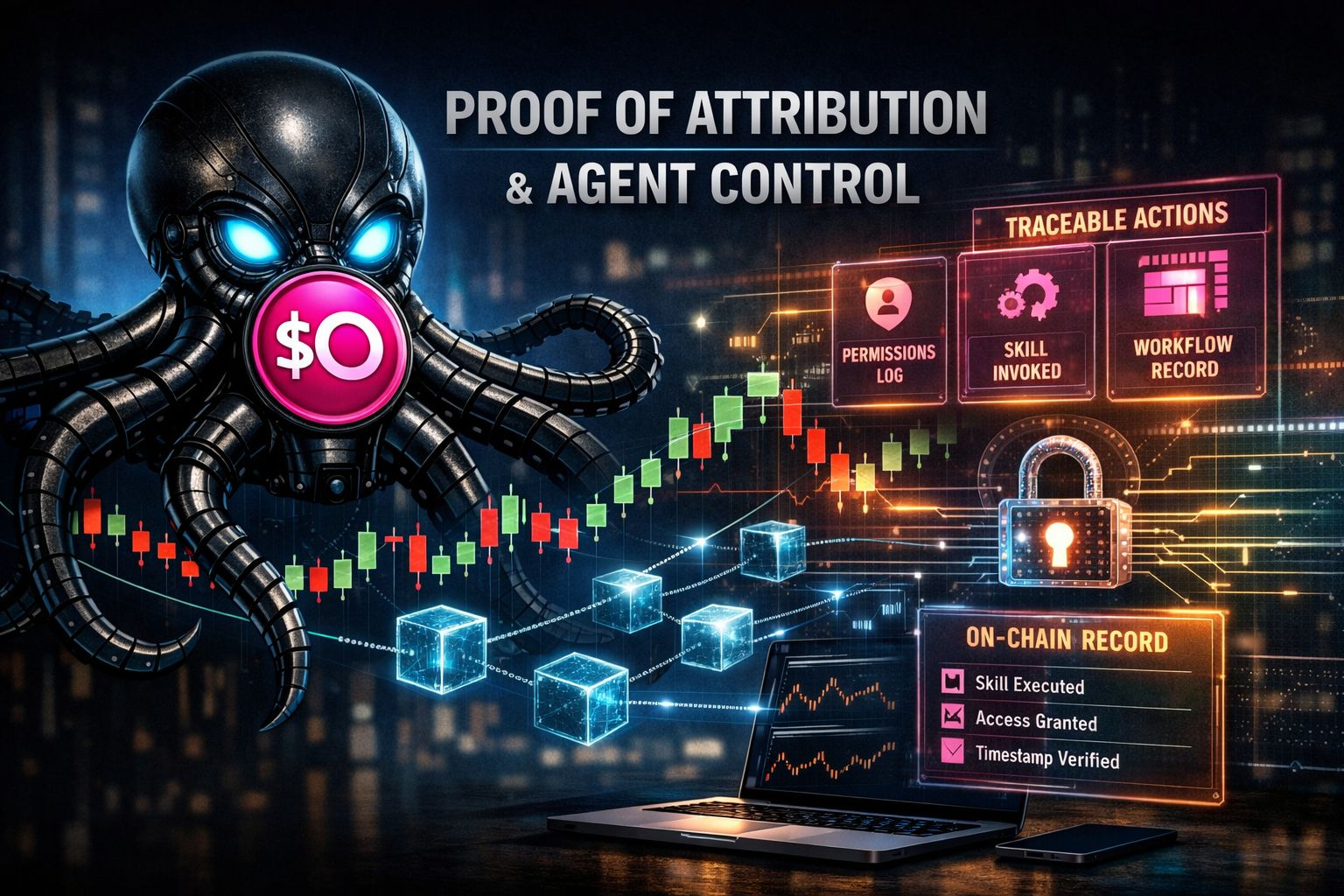
This series has covered Proof of Attribution primarily from the data contributor angle. Data enters the network, influence is measured on-chain, and $OPEN rewards flow to the verified source automatically via smart contract.
The orchestration layer is where PoA becomes relevant to agent behavior rather than just data behavior. Every action OctoClaw executes is a traceable on-chain event. Every skill invoked, every permission accessed, every workflow completed leaves an attribution record inside the #OpenLedger chain.
Orchestration control and attribution are not separate systems. They are the same system operating at different depths. Attribution answers what data produced this output. Orchestration answers what scope this agent was permitted to operate within when it produced that output.
Together they build something institutional capital has required from execution infrastructure for decades: a verifiable, timestamped record of what happened, under what authorization, and within what defined boundary.
What This Adds to the Open Demand Argument
Previous posts tracked Open demand through gas consumption, ERC-4626 vault interactions, ModelFactory deployments, and attribution reward cycles. The orchestration layer adds a structurally different demand mechanism.
As agents become more capable and self-directed, operators deploying real capital need verifiable scope records to run them responsibly across live markets. That verification runs on-chain. The Open consumed in that process is not speculative demand. It is compliance infrastructure cost paid per execution cycle, recurring every time an agent acts within the system.
Institutional desks deploying capital through autonomous agents will not accept unaudited execution histories. The orchestration record that OpenLedger's architecture generates is not a feature they will evaluate at the margin. It is a prerequisite they will require before deploying meaningful size.
That demand is not in the current price of OPEN. It enters the price when adoption shifts from retail experimentation toward institutional deployment pipelines. The infrastructure being built now determines whether that transition happens on OpenLedger's chain or somewhere else entirely.
My Open position remains in profit. The orchestration architecture was not part of my original entry thesis. It has become central to the holding thesis. When the scope of what agents can autonomously do expands this quickly, the systems governing what they are permitted to do become the most valuable part of the entire stack.
This is not financial advice. Always do your own research before making any investment decisions.