
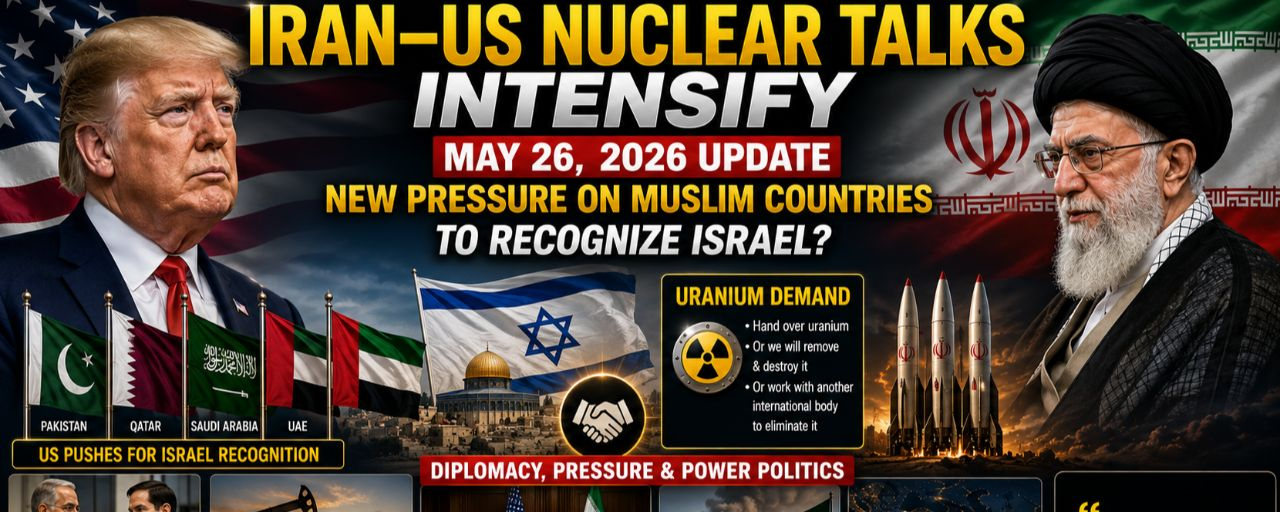
🌍 Iran–US Nuclear Talks Intensify As New Regional Pressure Emerges
May 26, 2026 has brought another major wave of geopolitical developments across the Middle East as negotiations between Iran and the United States continue under growing international pressure.
The situation is no longer only about ceasefire discussions or military tensions.
Now the focus is shifting toward: ▪️ nuclear control ▪️ regional alliances ▪️ Israel recognition pressure ▪️ Gulf diplomacy ▪️ future security arrangements across the Middle East
And according to multiple political reports circulating across international and regional media, the diplomatic environment is becoming far more complicated than before.
🇺🇸 US Pressure On Muslim Countries Over Israel Recognition
One of the biggest discussions now spreading across political circles is the growing American pressure regarding normalization with Israel.
Reports suggest Washington is again encouraging several Muslim-majority countries to formally recognize Israel under expanded regional security agreements linked to the broader Abraham Accords framework.
Countries frequently mentioned in discussions include: ▪️ Pakistan ▪️ Saudi Arabia ▪️ Qatar ▪️ other Gulf states
However, the reality is far more sensitive than social media headlines suggest.
⚠️ Pakistan’s Position Remains Extremely Careful
Pakistan has historically maintained a clear public stance that formal recognition of Israel depends heavily on: ▪️ Palestinian statehood progress ▪️ Jerusalem-related issues ▪️ broader Islamic consensus
So far, there has been no official confirmation that Pakistan has agreed to recognize Israel.
Most current discussions appear diplomatic rather than finalized policy changes.
But analysts believe: 🌍 Western powers are trying to reshape regional alliances 🌍 Iran-Israel tensions are accelerating pressure on Muslim governments 🌍 Gulf normalization efforts are influencing new negotiations
This is why the issue is suddenly appearing again in political discussions.
☢️ Uranium Issue Becoming The Core Of Negotiations
Another major update involves Iran’s uranium stockpile.
According to reports connected to ongoing negotiations, the United States and Western allies are pushing for stricter international control over Iran’s enriched uranium reserves.
Several proposals reportedly being discussed include: ▪️ transferring uranium stockpiles abroad ▪️ supervised dismantling programs ▪️ international atomic monitoring ▪️ joint neutralization mechanisms through global agencies
American officials reportedly believe reducing Iran’s uranium capacity is essential for long-term regional stability.
🇮🇷 Iran Rejecting “Surrender-Style” Conditions
Iran, however, is strongly resisting demands it views as excessive.
Iranian officials reportedly argue: ⚠️ uranium enrichment is part of national sovereignty ⚠️ Iran will not accept humiliation under foreign pressure ⚠️ sanctions relief must come before major concessions
This remains one of the biggest obstacles preventing a final agreement.
Because from Tehran’s perspective: the negotiations are no longer only nuclear talks — they are about national power, survival, and regional influence.
🇶🇦 Qatar & Pakistan Continue Quiet Mediation
Behind the scenes, Pakistan and Qatar are still playing important diplomatic roles.
Sources indicate: ▪️ indirect communication channels remain active ▪️ emergency regional meetings continue privately ▪️ Gulf states are trying to avoid wider escalation
The main goal now appears to be: ✅ preventing military confrontation ✅ protecting oil routes ✅ avoiding economic instability ✅ keeping negotiations alive long enough for compromise
🇮🇱 Israel Factor Still Driving Regional Tension
Israel remains one of the most important hidden pressures behind the negotiations.
Israeli leadership reportedly continues demanding: ▪️ stronger restrictions on Iran ▪️ tighter nuclear oversight ▪️ guarantees against future Iranian military expansion
This creates additional pressure on Washington because: 🇺🇸 American politics remains deeply divided on how aggressively Iran should be handled.
🌍 Why Global Markets Are Watching Closely
The reason these negotiations matter globally is simple:
If talks fail: ⚠️ oil prices could surge ⚠️ Gulf shipping routes may face disruption ⚠️ financial markets could become unstable ⚠️ wider Middle East escalation becomes possible
If talks succeed: ✅ regional tensions may temporarily cool ✅ energy markets stabilize ✅ sanctions discussions reopen ✅ diplomatic channels strengthen
That’s why global investors, governments, and military alliances are all watching these negotiations very closely right now.
🧠 Final Analysis
Right now, the Iran–US situation appears to be entering a much more strategic phase.
This is no longer just: “war or ceasefire.”
Now the real battle is about: ▪️ regional influence ▪️ nuclear leverage ▪️ Middle East alliances ▪️ Israel normalization ▪️ economic control ▪️ long-term geopolitical power
And while social media is full of dramatic headlines, the actual negotiations remain extremely fragile and highly confidential behind closed doors.
One wrong move from any side could quickly destabilize the entire region again.
But for now, diplomacy is still alive even if trust between all sides remains dangerously weak.