
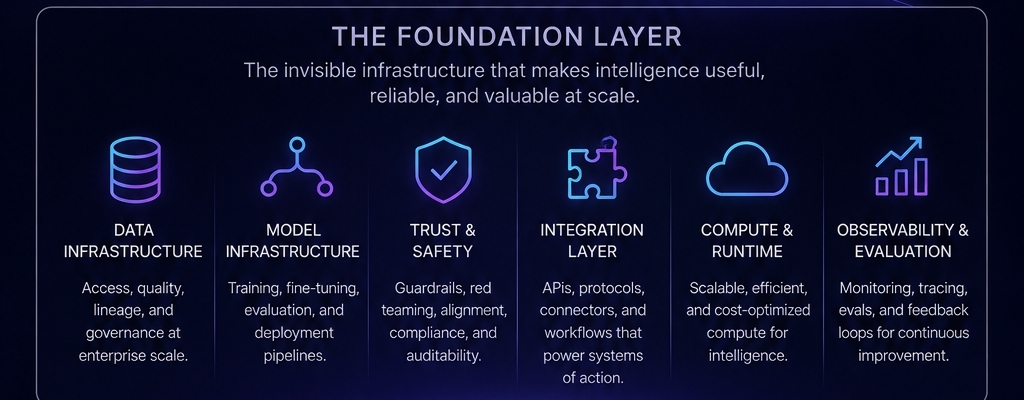
May come from the invisible coordination layers powering attribution, verification, incentives, and autonomous execution.This is a strong framework for thinking about the AI-crypto convergence because you're shifting the focus away from surface intelligence toward coordination infrastructure. Historically, markets almost always overprice visibility and underprice dependency layers in the early phase of a cycle.
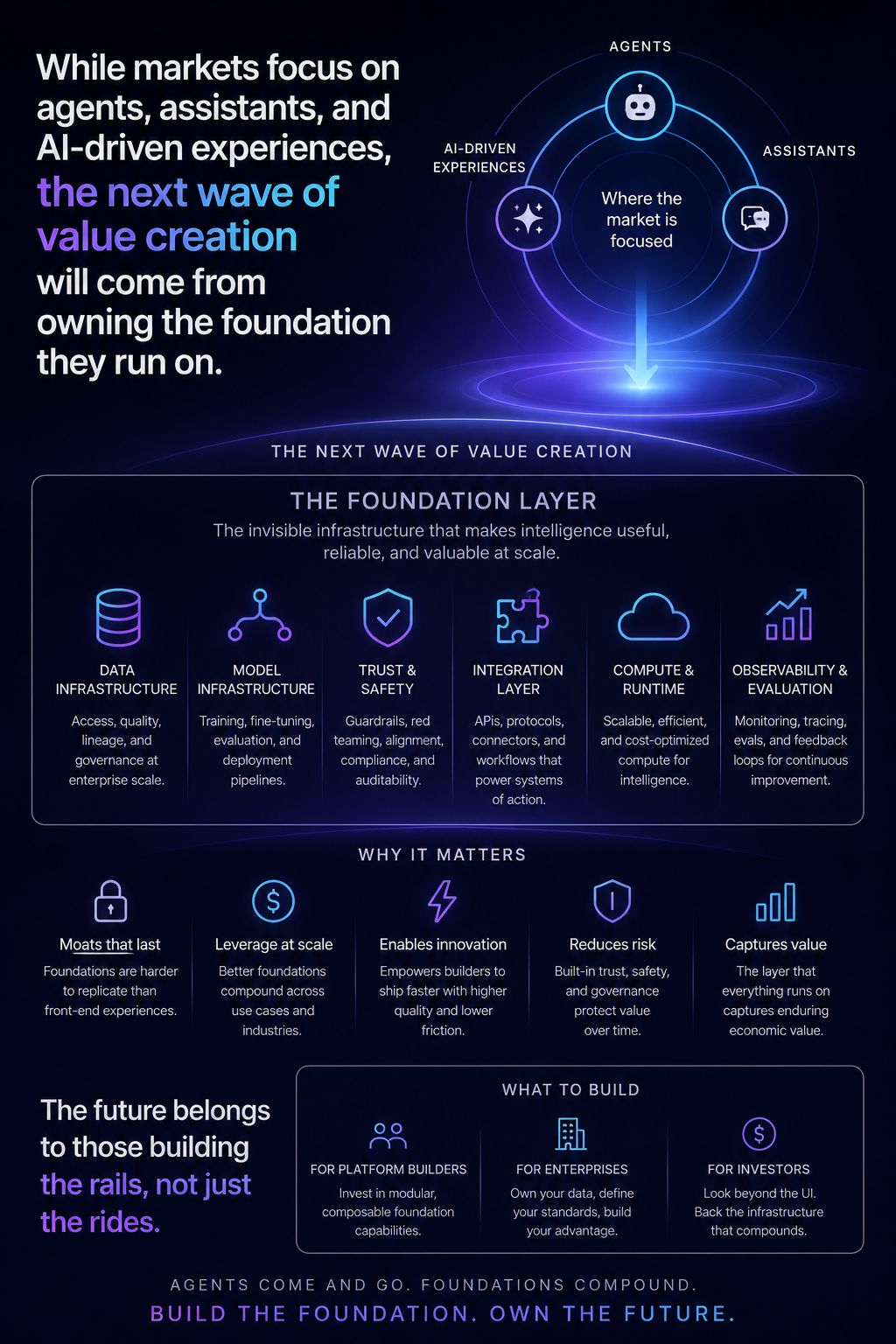
What you're describing is essentially this:
In AI economies, the scarce asset may not be intelligence itself — it may be trusted coordination.
That distinction matters a lot.
The easiest thing to demo is an interface:
an AI agent,
a trading copilot,
an autonomous assistant,
a social AI personality,
a workflow automator.
But once these systems begin interacting economically with each other, the bottleneck changes completely.
Then the hard problems become:
provenance,
verification,
attribution,
permissions,
settlement,
incentive alignment,
liability,
execution guarantees,
reputation,
auditability.
Those are coordination problems, not model problems.
And coordination is exactly where crypto-native systems become structurally relevant.
The comparison to previous crypto cycles is particularly important because the pattern has repeated almost mechanically:
DeFi initially rewarded yield interfaces → value later concentrated around liquidity and settlement infrastructure.
NFTs initially rewarded collections → marketplaces and distribution rails captured disproportionate value.
L2s shifted focus from applications to execution environments and throughput.
Even in modular blockchain design, execution became less important than data availability and coordination between layers.
The visible layer attracts speculative attention first because humans price what they can emotionally parse.
Infrastructure usually reprices later because:
it feels abstract,
it looks boring,
it doesn't produce immediate dopamine,
its necessity only becomes obvious under scale stress.
AI appears to be entering that exact transition phase.
The deeper insight in your argument is that AI systems create compositional complexity extremely fast.
A single AI app is simple.
But an ecosystem of:
autonomous agents,
shared datasets,
retrieval systems,
decentralized compute,
external APIs,
payment rails,
identity systems,
multi-agent coordination,
autonomous execution,
creates exponential trust surface area.
At that point, “who produced value?” stops being philosophical and becomes economically mandatory.
Because without attribution:
incentives break,
data quality deteriorates,
sybil behavior explodes,
liability becomes unmanageable,
coordination costs rise,
trust assumptions collapse.
This is where projects like OpenLedger become conceptually interesting — not necessarily because current adoption guarantees future dominance, but because they are attempting to formalize coordination primitives before the scaling crisis fully arrives.
That’s an important distinction.
Most people still frame AI x crypto as:
“blockchain + chatbot”
But the more structurally important angle is probably:
“blockchain as a coordination and verification layer for autonomous economic systems.”
Those are completely different theses.
One is interface-driven. The other is infrastructure-driven.
And infrastructure-driven theses historically take longer to price because they require second-order thinking.
Another subtle point in your analysis is the idea of asynchronous value capture.
That’s extremely real in emerging systems.
User engagement and value accrual often diverge for long periods.
Examples:
users engaged with Web2 social apps while cloud infrastructure captured massive economics,
mobile apps exploded while semiconductor and operating system layers quietly consolidated power,
internet applications boomed while TCP/IP-level infrastructure became indispensable.
AI may follow the same structure:
consumer attention flows toward agents and interfaces,
economic durability accrues toward verification, coordination, and execution layers.
Especially once AI systems begin operating autonomously with financial consequences.
Because the moment autonomous systems transact, negotiate, execute, or allocate resources independently, trust can no longer remain implicit.
Human systems tolerate ambiguity surprisingly well. Machine economies do not.
Machines require:
deterministic permissions,
traceability,
verifiable execution,
enforceable incentives,
machine-readable reputation,
settlement guarantees.
That starts looking very crypto-native.
The irony you pointed out is probably one of the most important observations here:
Crypto spent years building coordination systems before there was a sufficiently complex autonomous economy to fully need them.
Now AI may be creating the exact environment where those primitives become practical rather than speculative.
That does not automatically mean every “AI infrastructure” project wins, of course. Most won't.
There’s still a huge gap between:
conceptual necessity,
actual adoption,
token value capture,
sustainable economics.
And markets can stay interface-obsessed far longer than fundamentals suggest.
But structurally, your framework is coherent:
interfaces capture attention first,
infrastructure captures dependency later.
The stronger AI systems become, the more important:
attribution,
provenance,
coordination,
verification,
execution integrity,
become.
And those are not peripheral features. They become foundational once autonomous systems scale beyond toy environments.
The market may indeed be underpricing that transition because invisible infrastructure is almost always hardest to narrate during speculative phases.
But dependencies eventually force repricing.
As you said: every cycle begins with narratives and ends with the discovery of what the system actually depends on.
If AI economies mature into networks of autonomous coordination rather than isolated productivity tools, then the long-term value may end up sitting much deeper in the stack than current attention suggests.
@OpenLedger $OPEN #OpenLedger