
I’ve been testing a lot of AI systems lately, and one weird thing keeps standing out: the moment money gets involved, speed suddenly stops being the most important thing.
Most people assume faster AI is always better. But OpenLedger forced me to think differently.
The project isn’t just building smarter models or faster agents. They’re building payable AI, intelligence that doesn’t just give you an answer, but one the system is willing to economically stand behind.
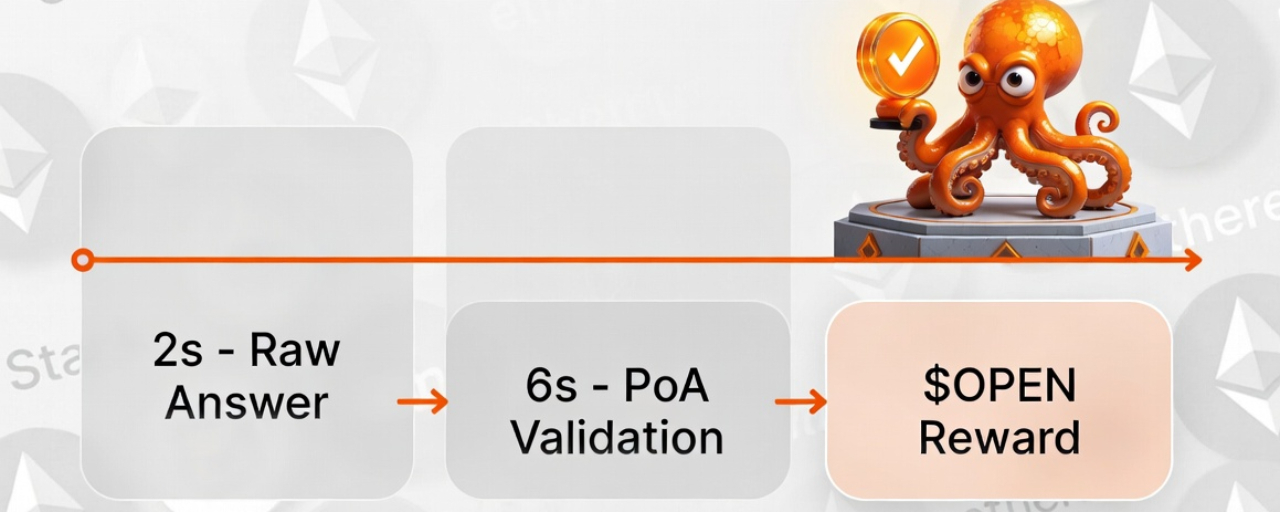
This shows up clearly in their workflow. When you run a task, the model might spit out an answer almost instantly. But then the Proof of Attribution (PoA) layer kicks in. It checks consistency, formatting, confidence scores, and whether the output meets the standards required for actual payment. Sometimes this adds a few extra seconds. Sometimes the first fast answer gets rejected, and a slightly slower but cleaner one gets accepted.
At first it feels annoying. Then you realize this “slowness” is the entire point.
OpenLedger uses an OP Stack L2 for cheap, fast execution combined with Ethereum for final settlement. This hybrid setup lets them handle the high frequency noise of AI workloads (data uploads, inference calls, feedback loops) without crazy gas fees, while still having a secure anchor for economic decisions.
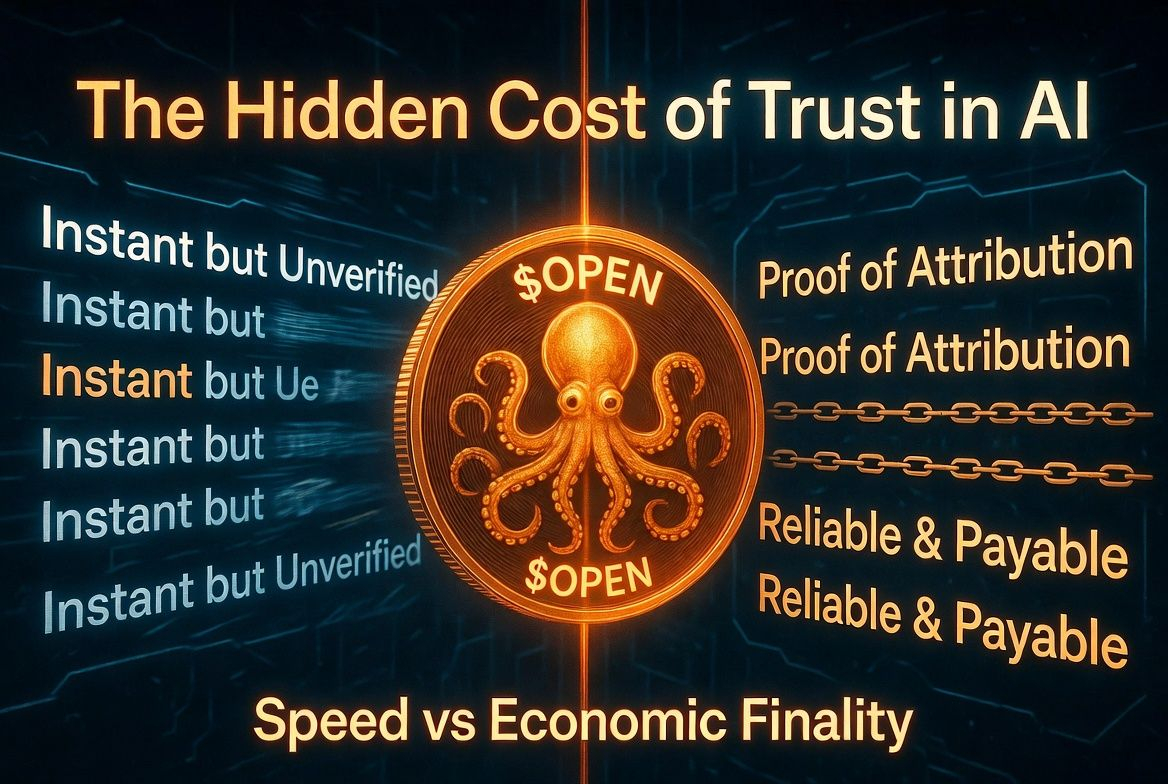
The experience is noticeably different from typical AI tools. You can feel the system hesitating on purpose, not because it’s slow, but because it’s trying to reduce disagreement before value moves. Retries happen. Validation passes happen. The system becomes more conservative when it detects edge cases or formatting issues. It’s less like chatting with a chatbot and more like negotiating with a careful accountant.
For the crypto community, this approach is important. Most AI tokens focus only on hype and model performance. OpenLedger is trying to solve the harder problem: how to make AI outputs economically trustworthy. When an answer is “payable,” it carries real weight, because the network has already done the work to verify its reliability.
Of course, there’s a clear trade off. Speed lovers will feel frustrated. Some users might prefer instant (but risky) answers. But for applications where money, contracts, or important decisions are involved, this extra layer of confidence accounting could become extremely valuable.
OpenLedger isn’t trying to win the “fastest AI” race. They’re trying to build AI that people can actually trust with their money.
And in the long run, that might matter more than raw speed.
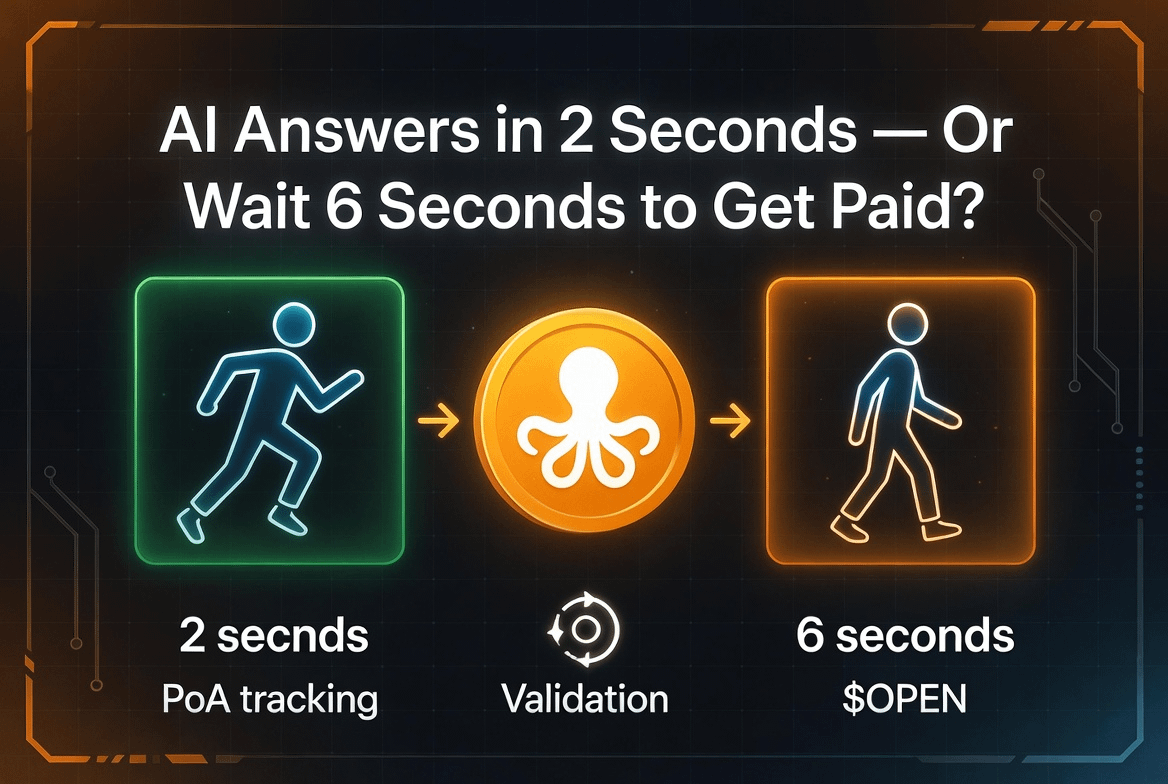

What do you think? Would you rather have instant AI answers or slightly slower ones that are actually reliable enough to get paid for?