I keep thinking about how quickly AI has moved from being a “future” topic to something that is already shaping how we work, create, and build online. And somewhere inside that shift, one big question keeps coming up again and again: who actually owns the value?
That is why OpenLedger (OPEN) feels worth paying attention to. Not because it sounds futuristic, but because the idea behind it feels tied to something very real. Data, models, and AI agents are becoming valuable assets. Yet in most cases, the people helping create that value do not really get a fair share of it.
That part has always bothered me a little.
We live in a world where data is everywhere. Every search, every interaction, every bit of usage helps train systems that can later generate massive value. But most of the time, that value ends up concentrated in centralized platforms. Users contribute, systems improve, and the money flows somewhere else. It is not a new problem, but AI has made it much more visible.
OpenLedger seems to be trying to answer that in a different way.
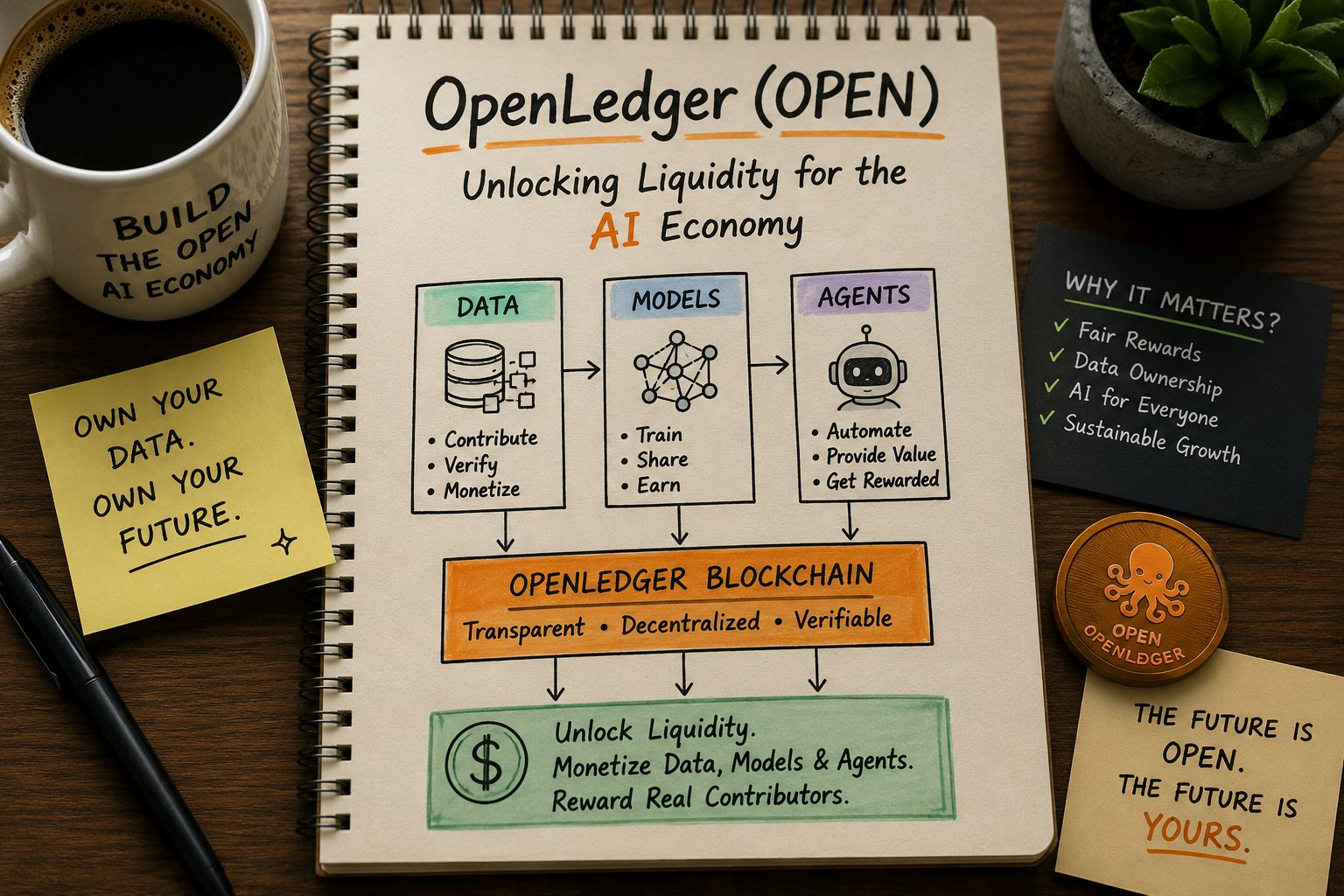
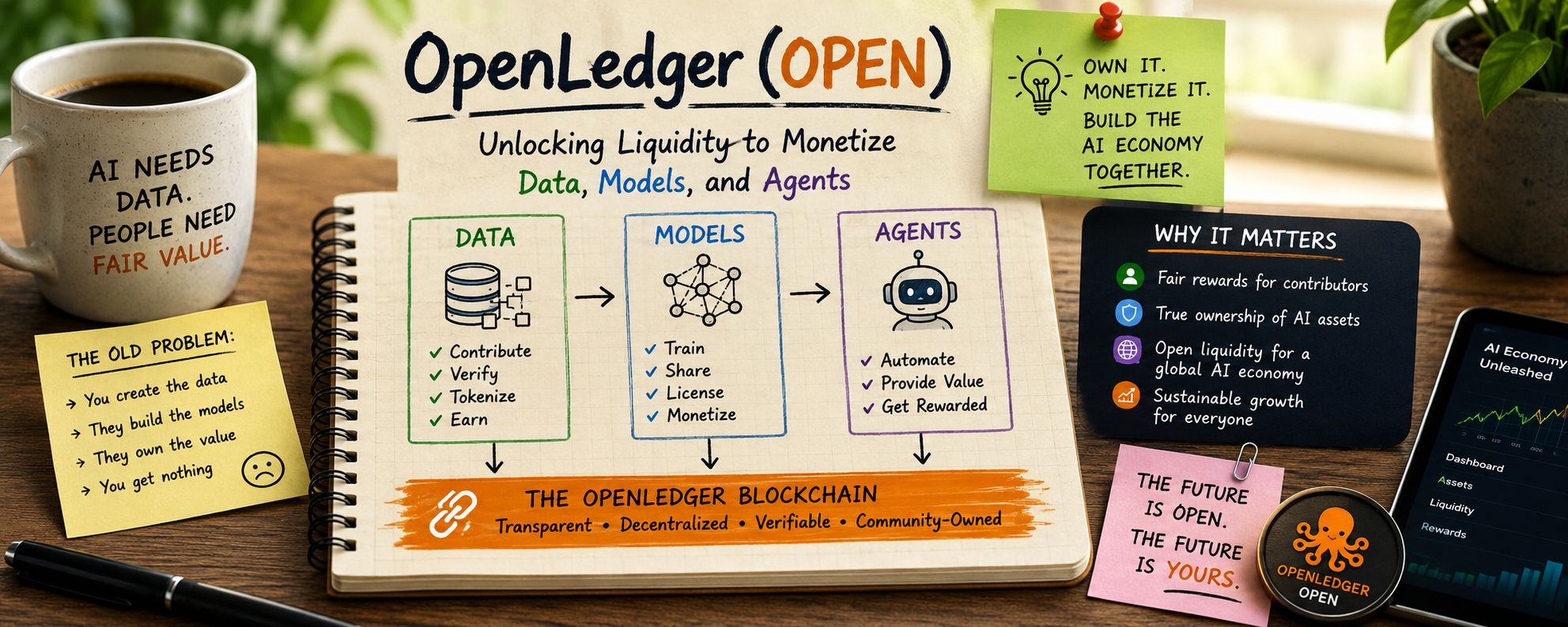
At its core, the project is about turning AI-related assets into something more open and liquid. In simple terms, it wants data, models, and agents to be easier to value, exchange, and monetize. That might sound technical, but the idea itself is pretty easy to understand. If something helps create value, maybe it should also be something people can actually own and benefit from.
I like that direction. It feels practical, not just flashy.
The data angle is especially interesting to me. Good AI depends on good data, and good data is not easy to come by. It takes time, effort, and quality control. But in most systems today, once data is used, the original contributor is basically out of the picture. OpenLedger’s idea seems to challenge that setup by giving data a more active economic role.
That is a big shift if it works the way people hope.
Instead of data being treated like a hidden ingredient behind the scenes, it starts to look more like a living asset. Something that can keep creating value, not just disappear into a closed system. From where I stand, that is the kind of thinking crypto was supposed to encourage in the first place.
Then there are models.
And honestly, this is where things get even more interesting. AI models are not just code anymore. Some of them are becoming highly specialized and genuinely valuable. A model built for research, trading, healthcare, or productivity can have real market demand. But access to those models is still usually controlled by a few large players.
OpenLedger appears to be looking at a different structure, one where models can be part of a more open economy. That matters because it gives creators and builders more room to participate directly. It is not just about using AI. It is about being part of the value it creates.
That is a pretty meaningful distinction.
And then we get to agents, which I think people still underestimate a bit. Agents are not just another AI trend word. They are slowly becoming the layer that actually does things. They can take actions, interact with systems, and handle tasks in ways that feel much closer to real work.
Once that becomes normal, ownership becomes a serious issue.
Who owns an agent? Who gets rewarded when it keeps producing output? Who benefits from its ongoing activity? These are not small questions. They are the kind of questions that will matter more and more as AI becomes less like a tool you open and more like a system that keeps working in the background.
That is why I respect the direction OpenLedger is taking. It does not feel like it is only reacting to the AI wave. It feels like it is trying to build the economic layer that could sit under it.
Of course, the hard part is always execution. A lot of projects have great ideas, but building a real market around them is another story. Liquidity needs users. Value needs trust. Incentives need balance. And if the system is too complicated, people will simply move on.
That is just how crypto works.
Still, I do think OpenLedger is touching something important. There is a growing sense that digital systems should not only extract value from people. They should also give something back. That idea is showing up more often now, and not just in crypto. People want transparency. They want ownership. They want a clearer relationship between contribution and reward.
OpenLedger fits into that conversation in a natural way.
It is not trying to solve every problem in AI. It is focusing on a specific one: how value moves, who owns it, and how it can be made more accessible. And to me, that makes the project more believable than the usual overhyped narratives.
I have learned over time that the strongest projects are not always the loudest ones. Sometimes they are the ones asking the right questions before the market fully catches on.
And that is the feeling I get here. OpenLedger is not just talking about AI. It is trying to rethink the structure around AI value. That makes it interesting, and honestly, a little refreshing too.