
The ETF race is turning into a serious liquidity war, and XRP is suddenly back in the conversation.
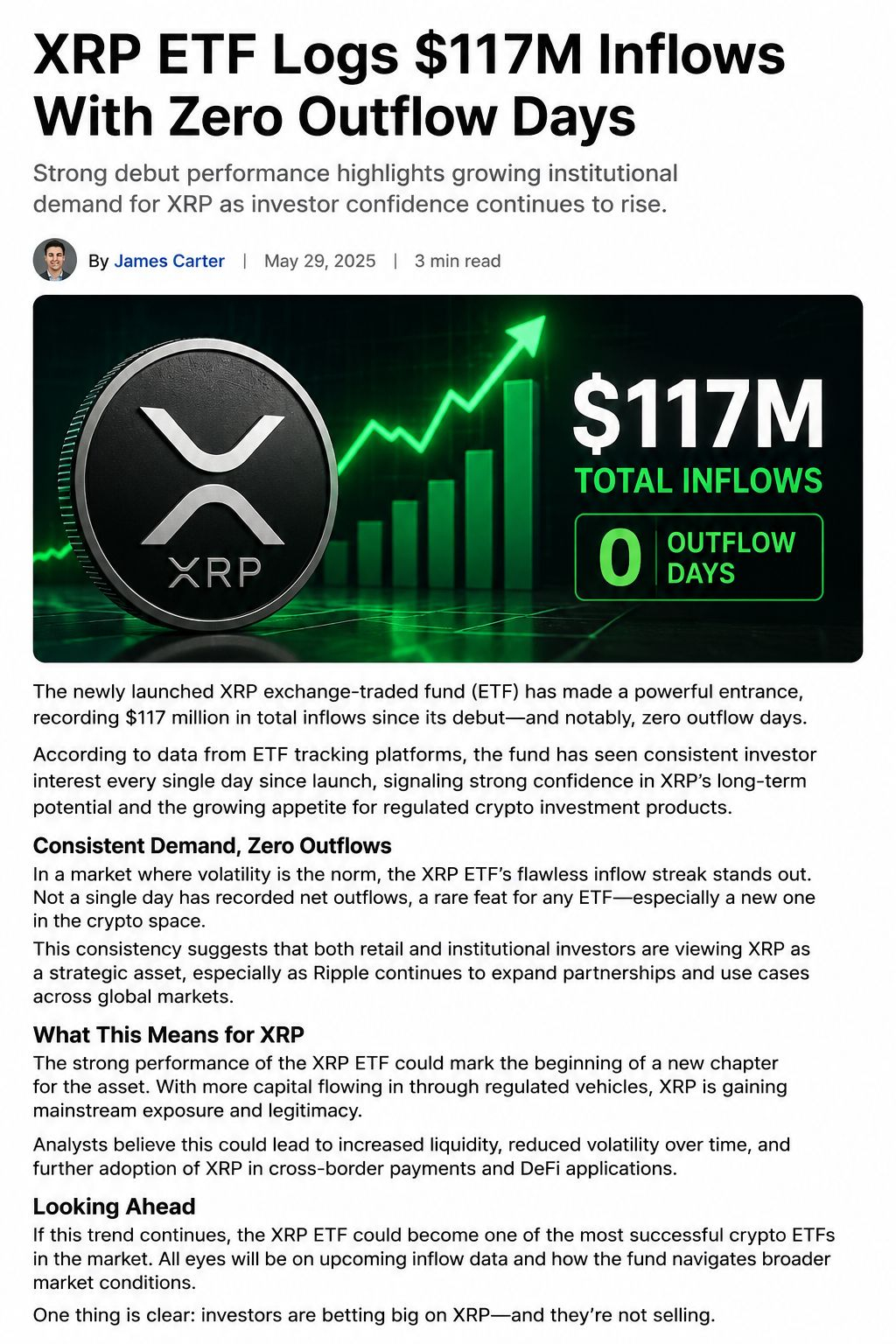
According to recent market data, XRP-focused investment products have now pulled in roughly $117 million in inflows without recording a single outflow day. In a market where capital rotates fast and sentiment flips overnight, that kind of consistency stands out.
It signals something important: institutional appetite for XRP exposure is growing quietly, even while most retail traders remain distracted by Bitcoin and AI-token momentum.
Why Zero Outflow Days Matter
Inflows alone don’t tell the full story. ETFs regularly attract capital during bullish phases. What’s more revealing is the absence of exits.
Zero outflow days suggest investors are not simply chasing short-term price action. They’re holding positions instead of de-risking after volatility spikes. That usually points toward conviction-based positioning rather than speculative momentum trading.
For XRP, this is a notable shift.
The asset spent years trapped in regulatory uncertainty following the SEC lawsuit against Ripple. During that period, many institutions stayed on the sidelines due to compliance concerns and unclear legal status in the US market.
Now the tone has changed.
With Ripple securing partial legal wins and broader crypto ETF adoption accelerating after spot Bitcoin approvals, XRP is increasingly being viewed as a viable institutional asset rather than a regulatory liability.
Institutions Are Hunting the Next ETF Narrative
Bitcoin ETFs opened the floodgates. Ethereum followed. The market is now trying to front-run the next major ETF-driven liquidity cycle.
That’s where XRP enters the meta.
Unlike smaller altcoins, XRP already has:
- Deep global liquidity
- Established exchange infrastructure
- Strong brand recognition
- Long-standing institutional relationships
- A payments-focused narrative tied to cross-border settlements
For traditional finance firms looking beyond BTC and ETH, XRP offers familiarity combined with asymmetric upside if a US spot ETF eventually gets approved.
That possibility alone is enough to attract speculative institutional capital early.
Liquidity Changes Everything
ETF flows matter because they create structural demand.
Unlike retail trading, ETF allocations often represent slower-moving capital with longer investment horizons. Once large allocators establish exposure, liquidity conditions can shift dramatically across the market.
That doesn’t automatically mean XRP price explodes tomorrow.
But sustained inflows with no redemption pressure create a healthier on-chain and market structure environment. It reduces forced selling while reinforcing bullish sentiment across derivatives and spot markets.
In crypto, perception drives flows — and flows eventually drive price.
XRP’s Momentum Is Quietly Building
The interesting part is how under-discussed this trend still is.
Most headlines remain focused on Bitcoin dominance, meme coin rotations, or Ethereum scaling narratives. Meanwhile, XRP investment products are steadily absorbing capital without major hype cycles attached.
That’s often how larger market moves begin.
Not with retail euphoria.
With slow, boring accumulation.
If ETF momentum continues and regulatory clarity improves further, XRP could transition from a legacy altcoin into one of the primary institutional beta plays of the next cycle.
And the market may not be fully priced for that yet.